Camping Pantry List: Staples for a Weekend Trip
Build a compact camping pantry with useful staples, sensible package sizes, a weekend example, and a simple routine for using and replacing leftovers.
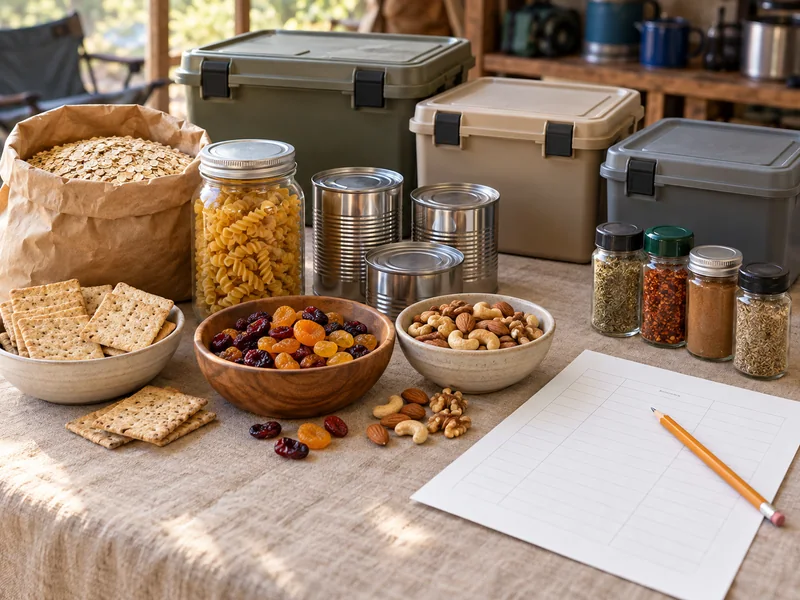
AI-generated illustration: breakfast grains, dry meal bases, canned food and seasonings for a small camping pantry.
Keep a small collection of oats, meal bases, canned or pouched ingredients, seasonings, and snacks ready for camping. Choose useful package sizes, pack the dry box for easy access, and bring leftovers into your home cooking before replenishing the next trip's supply.
A camping pantry can be small: oats for breakfast, a couple of meal bases, beans or fish in sealed packages, oil, seasonings, and something easy to eat when you arrive. Keep the foods you enjoy using, then replenish them between trips. You will have fewer last-minute purchases and fewer forgotten packets at the bottom of the food box.
The list below is a starting collection for a portable car-camping pantry. Add fresh and refrigerated ingredients when you choose the meals. For the quantities to buy for a particular trip, use the camping grocery list; the pantry is the familiar stock you can draw from each time.
A compact camping pantry list
Start by choosing a few foods from each useful group. There is little benefit in carrying rice, pasta, couscous, and noodles when you only plan to cook one of them.
Breakfast and bread
- Rolled or instant oats: use the kind you already eat and can prepare with your camp equipment.
- Dry cereal or granola: useful for an early departure, with a suitable milk option or eaten as a dry snack.
- Tortillas, crispbread, or crackers: choose one or two that fit your meals. Protect fragile crackers from heavier food.
- Dried fruit: raisins, apricots, or cranberries can go into breakfast and a snack pouch.
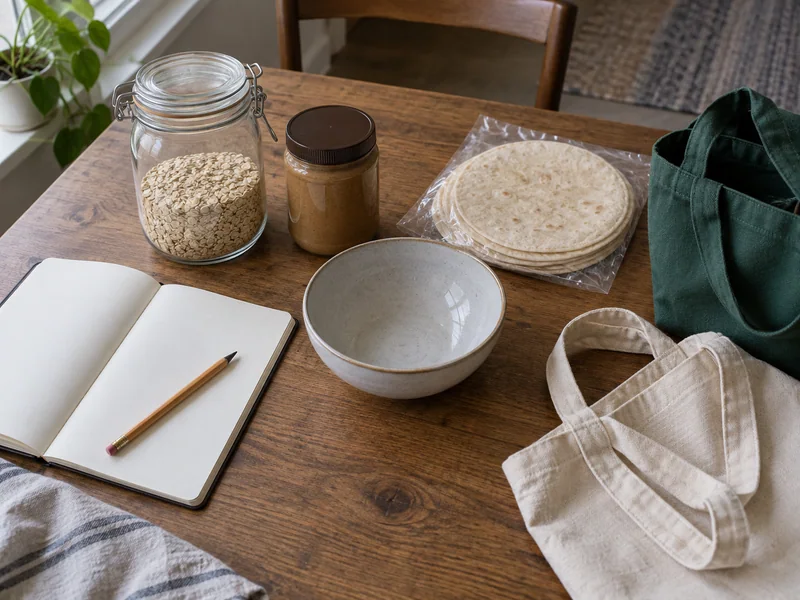
Tortillas are convenient when you want the same bread for a wrap and a warm dinner. They still need their own storage check; a short-lived opened packet belongs in the current trip’s food, rather than being forgotten until the next outing.
Lunch and dinner staples
- Rice, pasta, couscous, or noodles: choose by the cooking method and water your setup can support.
- Canned or shelf-stable pouched beans, lentils, or chickpeas: useful in bowls, wraps, and simple pan meals.
- Shelf-stable fish or chicken pouches: an option for people who eat them; check whether the product is ready to eat or requires heating.
- A small can or carton of tomatoes: carry it when a planned meal needs it.
- Soup or a familiar shelf-stable ready meal: helpful for a late arrival when its preparation directions work with your equipment.
For a weekend, cooked beans in a sealed can or pouch can save the soaking and cooking involved in dried beans. Dry pasta and rice still need preparation. Our one-pan pantry meal guide helps you put the ingredients in a workable order.
Oil, spreads, and flavor
Keep cooking oil, salt, pepper, and two or three seasonings you regularly use together. A paprika-cumin mix, curry powder, or dried herbs gives a small supply a clear purpose. Bring only the sauce or condiment your meals call for, rather than a miniature version of every bottle in the refrigerator.
Nut or seed butter can serve breakfast and lunch when it suits everyone’s dietary needs. Read the storage directions for that particular product, including what happens after opening.
Drinks, snacks, and a simple fallback
Add coffee or tea, your usual sweetener, and any suitable powdered milk or unopened shelf-stable milk you intend to use. Dry nuts, dried fruit, bars, and crackers are useful snack choices. The USDA’s camping food suggestions include many of these foods.
Keep one easy fallback together, such as ready-to-eat pouches and crackers. Choose enough for your group and leave it sealed until needed. If the fallback depends on cooking, it will not help when cooking is unavailable.
Start with this small weekend supply
Here is an illustrative pantry contribution for two adults on a two-night trip, alongside their chosen fresh and refrigerated foods. It assumes they want oats at both breakfasts and will use tortillas, rice, and beans in selected meals. Change the amounts for your eaters, menu, and arrival time; this is not a complete weekend menu.
| Pantry item | Example amount to take | Where it earns its space |
|---|---|---|
| Oats | 200 g | Two shared breakfasts, if this matches the portions you normally eat |
| Tortillas | 8 | Lunch wraps and a dinner accompaniment |
| Dry rice | 200 g | One shared dinner base, prepared as directed |
| Canned beans | Two 400 g cans | Two planned meals that will each use a whole can |
| Ready-to-eat fish or other suitable protein pouches | Two individual packs | One lunch or the fallback meal |
| Nut or seed butter | 150 g | Chosen breakfast and wrap fillings |
| Nuts and dried fruit | 200 g combined | Breakfast additions and snacks |
| Cooking oil | 60 ml | The planned pan meals |
| Coffee or tea | Your usual number of drinks | Breakfast and any afternoon drinks |
| Salt and two seasonings | Small labeled containers | Shared flavorings for the meals above |
The portions in this example are choices, not serving recommendations. If both adults prefer cereal for breakfast, swap the oats instead of adding a second full breakfast supply. If the beans are only for one dinner, take one can. Adjusting the collection is easier when the foods have familiar uses at home too.
Choose packages you can comfortably finish
Small packages earn their space when opening a large one would create a refrigerated remainder. Two smaller packs can let you open one now and keep the second sealed. A bigger package may suit a group sharing a meal, or a staple you will use several times and can store as directed.
For example, compare the amount of canned beans your dinner uses with the can you intend to take. If half would remain and you have no suitable cold storage, choose a smaller package or another meal. USDA explains that unused canned food needs refrigeration after opening. A lid on the can does not make that remainder pantry stock again.
The same question matters with milk, sauces, and spreads. Some can remain in the pantry after opening; others need refrigeration. The shelf-stable food guide compares actual manufacturer examples, so you can see why the package format alone is not enough to decide.
For dry staples you already buy in bulk, take a suitable portion in a clean food container and keep the ingredient, allergen, and preparation information with it. Label similar-looking powders clearly. Leave the rest at home, where it can go into ordinary meals instead of traveling back and forth all season.
Pack a dry box you can reach into
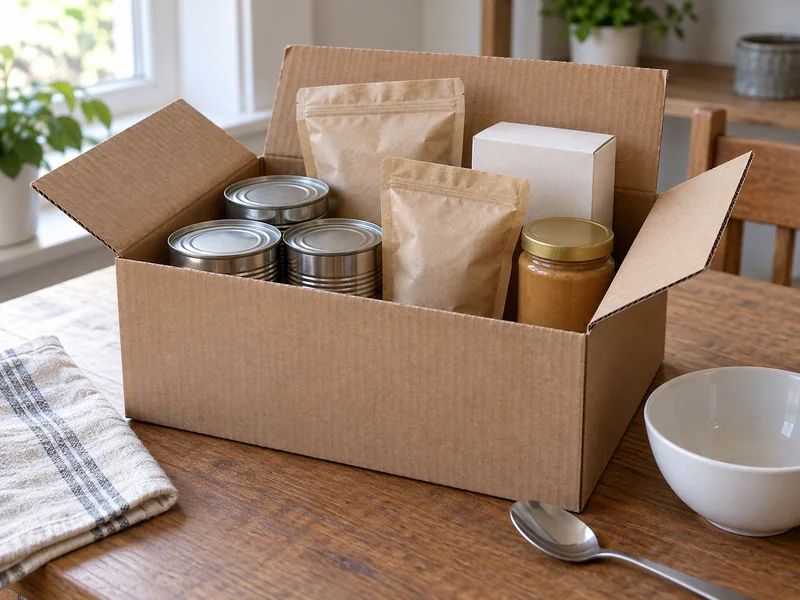
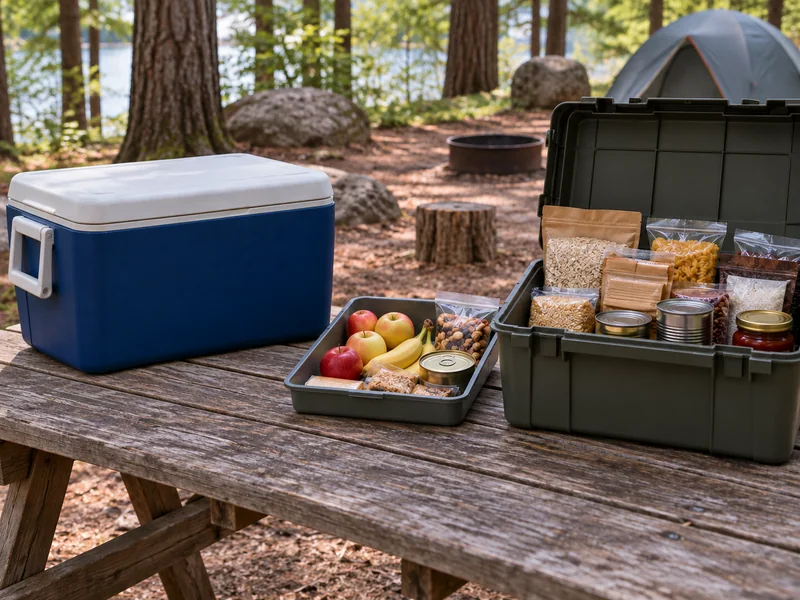
Put dense cans low in the box and protect cartons, pouches, and crackers from being crushed. Group breakfast foods together, keep seasonings in a small upright container, and put the first meal’s packages near the top. An opener should be easy to find before you reach for a can.
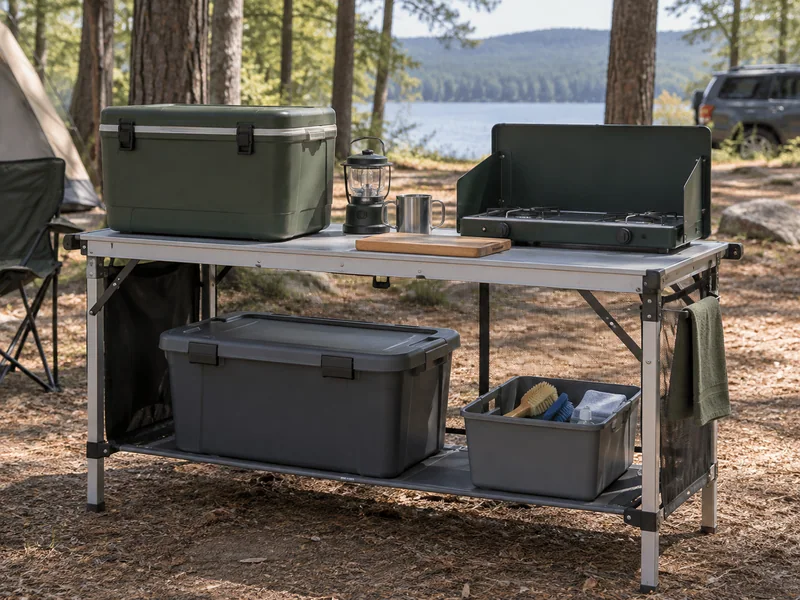
Use a shallow removable basket for the dry ingredients currently in use. Bring it to the table for preparation, then put the food away after the meal. Keep the cooler separate for foods that need refrigeration, including any opened package that has changed storage needs. The camping food storage guide covers cooler temperatures and food handling in detail.
Choose the box’s location with the destination rules in mind. The National Park Service notes that canned food and other scented supplies still attract bears, and storage requirements vary by park. A closed ordinary tote does not replace a required food locker or approved container.
Bring the pantry indoors between trips. USDA recommends cool, dry storage for shelf-stable foods; a parked vehicle can expose a forgotten food box to unsuitable conditions. Keep fuel and cleaning chemicals out of the food box, as the FDA’s storage guidance advises.
Reset the pantry when you get home
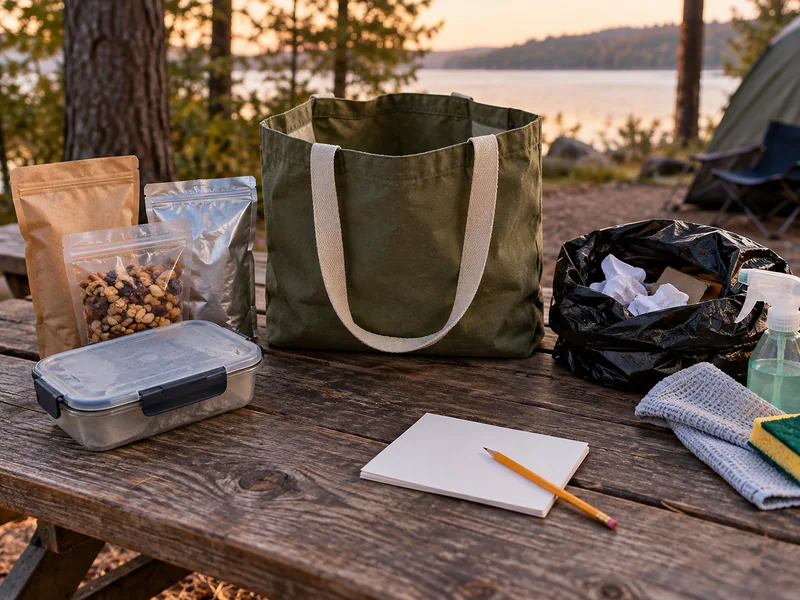
Unpack the food with the kitchen equipment. Return suitable unopened packages to your home pantry, and bring opened dry foods into view for the week’s cooking. Finish the remaining oats at breakfast, add the last tortillas to lunch, and use the small spice supply before refilling it.
Check packages as you unpack. FDA advises discarding leaking, swollen, or seriously damaged cans. Its food storage guidance also warns that appearance and smell cannot establish safety. Food with an uncertain storage history should not simply become next trip’s reserve.
Wash the empty box as appropriate for its material, dry it thoroughly, and remove crumbs from corners. Put clean, empty portion containers back with the kit. Avoid topping old food up with a new supply before you have checked what is already there.
Keep the following short worksheet with your regular packing list. Use specific food names in the final two columns; there is no need to inventory every cupboard.
| Pantry group | Regular choices | Use at home first | Replace for next trip |
|---|---|---|---|
| Breakfast and bread | Oats, tortillas | ________ | ________ |
| Meal bases and sealed ingredients | Rice, beans, pouches | ________ | ________ |
| Oil and seasonings | Oil, salt, two seasonings | ________ | ________ |
| Drinks and snacks | Coffee, nuts, dried fruit | ________ | ________ |
Review the replacement column when the next menu is decided. A sauce that came home untouched twice may not deserve another ride. Keep a few dependable staples ready, let the rest return to everyday cooking, and build the next trip around what you actually enjoy eating.
Sources & further reading
Use these original sources for the full context and the latest guidance.
Prepared with AI assistance. Read our editorial approach.
This is a researched planning guide, not a report of a hands-on product test.
Last updated .