One-Pan Camping Meals from Shelf-Stable Ingredients
Plan one-pan camping meals from shelf-stable ingredients. Compare meal ideas and cooking sequences, then work out portions, package sizes, and cleanup.
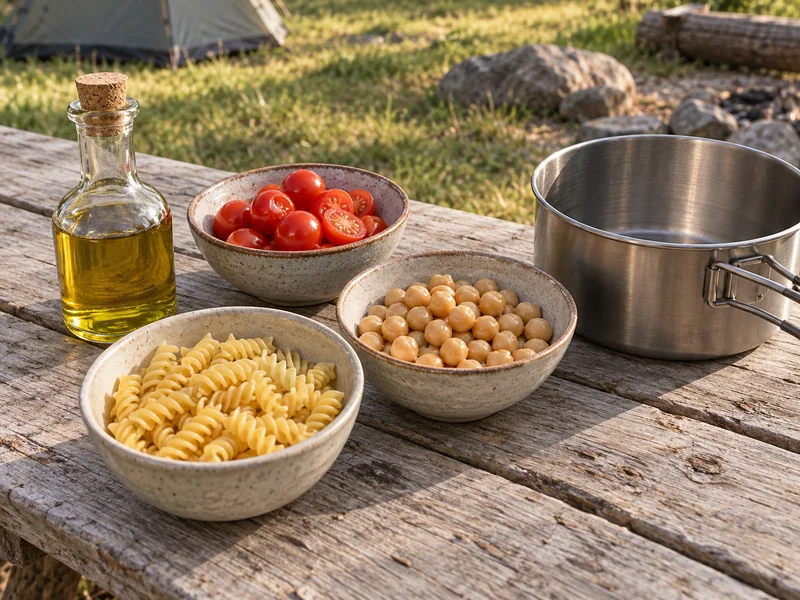
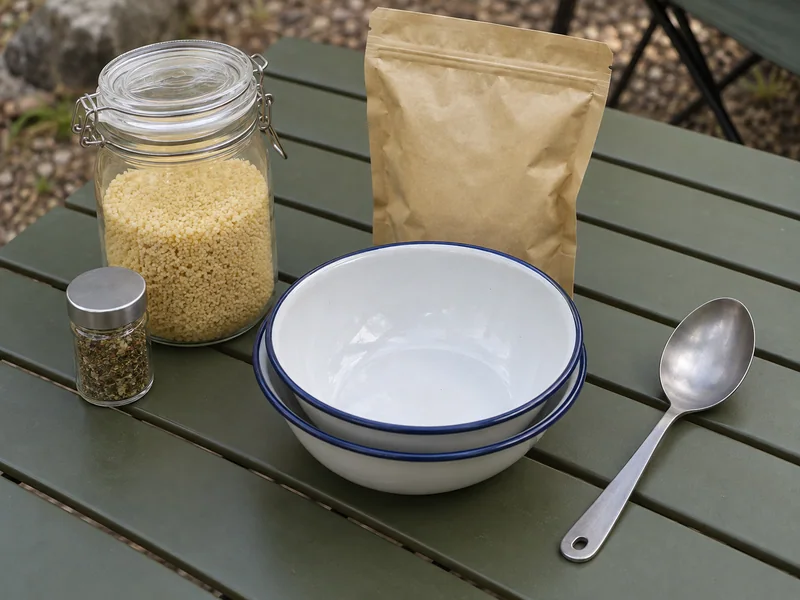
AI-generated illustration: a conceptual pantry meal arrangement, not a cooked or tested recipe.
Build a small camp pantry around a quick base, ready-to-use protein, and flavors you can use in more than one meal. The combinations below include the sequence and packing questions to resolve before your trip. They are meal-planning ideas, not tested recipes; follow the directions on the products you choose.
Give each ingredient a job
A workable meal needs more thought than putting a starch and a can in the same box. Choose a base you enjoy, something that makes it substantial enough for your appetite, and a flavor you will want after a day outside. Then decide how those ingredients will share one pan.
Start with a short list: couscous or quick pasta, a grain pouch approved for stovetop preparation, ready-to-eat canned beans or lentils, and a few small sauce or seasoning packages. Buy products labeled for room-temperature storage before opening. A can or pouch is a package shape, not a guarantee that its contents are shelf stable.
Use overlapping flavors to keep the pantry manageable. Tomato sauce might work with lentils and pasta; cumin might work with beans and rice. Choose package sizes that suit one meal when you cannot reliably refrigerate the remainder.
Five combinations to turn into your own meals
These ideas use commercially prepared, shelf-stable ingredients that are ready to eat or have short package-directed preparation. They do not apply to dried raw beans, uncooked meat, or products that require a different cooking method. Check allergens and the actual label for every ingredient.
| Combination | Base and protein | Sequence to plan | Water and equipment check | What could remain after opening? |
|---|---|---|---|---|
| Tomato lentil pasta | Quick pasta, ready-to-eat canned lentils, small tomato sauce package | Cook pasta as directed; drain if required, then combine and heat the other ingredients as their labels require | Enough boiling water, safe draining method, and a pan large enough for the combined food | Part of a sauce container or can if portions are mismatched |
| Chickpea couscous bowl | Couscous, ready-to-eat chickpeas, individually packed dressing | Prepare couscous as directed; stir in chickpeas and dressing only as their preparation instructions permit | Correct water ratio, a lid if required, and room to stir | Chickpeas or dressing from an oversized pack |
| Rice and bean skillet | Shelf-stable rice pouch, ready-to-eat beans, dry taco seasoning | Use a rice pouch with stovetop directions; follow those and the bean instructions | Any added water or oil specified on the pouch; do not assume a microwave-only product suits the stove | Beans if the can provides more than the meal needs |
| Savory mashed potato bowl | Instant potato flakes, ready-to-eat lentils, dry herb blend | Heat the lentils as directed, set them in serving bowls, then prepare the potatoes in the same pan | Check whether the flakes require milk, butter, or other ingredients you have not packed | Prepared lentils or potatoes, both requiring a leftover plan |
| Peanut noodles | Quick noodles, ready-to-eat chickpeas, single-meal peanut sauce | Cook and drain noodles as directed, then combine with the other ingredients according to their labels | Draining water, sauce thickness, and a utensil that can mix the noodles | Sauce or chickpeas; peanut and other allergen information must stay with the meal |
The potato option uses one cooking pan plus serving bowls. The pasta and noodle options may need a separate draining tool. Count that equipment before deciding that “one pan” means less cleanup for your trip.
Match the preparation methods
Read the base ingredient’s directions first. They determine whether you need a measured amount of absorbed water, excess water to drain, or a covered resting period. A second ingredient should fit that process or have a clear place earlier or later in the sequence.
Do not guess a new water ratio by adding sauce to a pasta package’s instructions. Choose a compatible method and try it at home with your actual pan. Record quantities and results if you want to repeat it. None of the combinations here has an established cooking time or tested water quantity.
Before packing, answer these four questions for each dinner:
- What goes into the pan first, and what instructions govern that step?
- Does anything need draining or moving to a bowl?
- Can the combined meal fit without crowding the pan or making it hard to stir?
- What happens to each opened package after serving?
If your intended meals need two pans hot at once, revisit the sequence or use the camping stove selection worksheet to decide whether a second burner has a real job.
If you are open to chilled ingredients or another cooking method, compare the camping dinners by cookware and serving work. That wider selection includes cold assembly, reheated chili, skillet meals and burgers, so you can choose a different approach when a pantry dinner does not fit the evening.
Portion for the people at the table
Use familiar household portions as the starting point, then adjust for appetite and the day’s activity. Package serving counts help with shopping arithmetic, but they do not establish the right dinner size for every person.
Illustrative packing example: assume two adults each want one of a fictional package’s stated portions of grain, and each unopened package contains two portions. One package covers that grain component for one dinner; two packages cover two dinners. This is arithmetic using invented package sizes, not a nutrition recommendation. Do the same calculation separately for beans, sauce, and anything else in the meal.
Fill in a meal card before shopping
Copy or print this blank table for each dinner. Keep the actual preparation, allergen, and storage labels with any repacked food.
| Planning field | Your meal |
|---|---|
| Dinner name and number of people | ________ |
| Base: product, amount, package directions | ________ |
| Protein: product, amount, preparation needed | ________ |
| Sauce and seasonings: amounts and allergens | ________ |
| First pan step, then next step | ________ |
| Cooking water, oil, or other required additions | ________ |
| Serving bowls, draining tool, and utensils | ________ |
| Opened food remaining and storage plan | ________ |
| No-cook alternative if the stove cannot be used | ________ |
Put the dinner’s unopened ingredients together, with its meal card on top. This makes it easier to see whether a small but necessary item, such as a can opener, is missing.
To turn several meal cards into a shopping trip, combine the ingredient quantities and subtract what you own. If you want to do some of the cooking or preparation before departure, use the make-ahead camping meal guide to account for the cooling, transport, and work still left at camp.
Read storage instructions before and after opening
USDA explains that shelf-stable food can be stored at room temperature, but some canned products still require refrigeration. Read the label before buying and again when opening; the storage instructions can change at that point. USDA’s shelf-stable food guidance distinguishes unopened shelf storage from storage after opening.
Prepared meals and opened perishable ingredients need temperature control. FDA advises keeping cold perishables at 40°F or below and refrigerating them promptly, within two hours, or one hour when the outdoor temperature is above 90°F. Discard food that has exceeded the applicable time limit. FDA’s outdoor food guidance covers handling and serving.
If reliable cold storage is unavailable, plan quantities you can finish at that meal. Do not save opened beans or cooked rice for tomorrow simply because their unopened packages lived in the pantry. Use the camping food storage guide for cooler checks, leftovers, and wildlife storage requirements.
For specific package examples, the shelf-stable food label comparison records what changes after opening. Use those checks when choosing pantry ingredients; the shape of the container does not settle the storage question.
Budget water and effort for cleanup
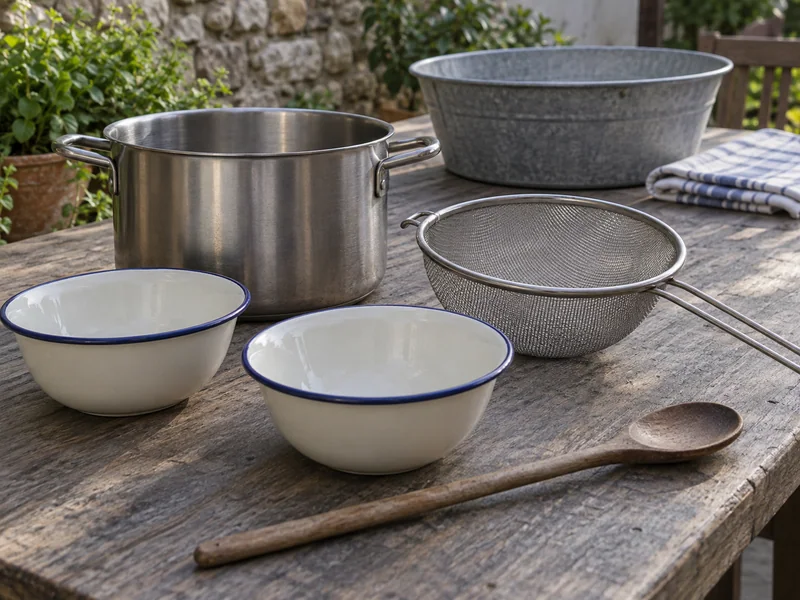
A one-pan dinner can still leave a colander, spoon, bowls, and food containers to wash. Include cooking, handwashing, and dishwashing water in the trip plan. Use a suitable clean water source, pack soap, and follow the campground’s washing and wastewater arrangements.
Use the camp dishwashing steps and water-use log to record the water your actual meal kit needs, including rinses and cleaning the basin afterward.
Before leaving home, run this check for each meal:
- Every ingredient’s storage and preparation label has been read.
- The package sizes match the portions and leftover plan.
- The pan fits the stove and holds the full meal within safe cookware limits.
- Water, required additions, and a can opener are accounted for.
- Draining or transferring food has a clear, safe step.
- Hands, utensils, and dishes can be cleaned.
- Food scraps and packaging have a contained waste destination.
- A separate meal can be eaten if cooking is unavailable.
If finding space to serve and wash up is the difficult part, use the campervan kitchen measurement sheet with a full meal laid out. Decide where the dirty pan goes while you eat, before it becomes the object blocking everything else.
If your limit is a single flame, the one-burner meal guide shows how to put a complete dinner together with cold sides and a clear serving order.
Sources & further reading
Use these original sources for the full context and the latest guidance.
Prepared with AI assistance. Read our editorial approach.
This is a researched planning guide, not a report of a hands-on product test.
Last updated .