Camping Food That Needs No Refrigeration Before Opening
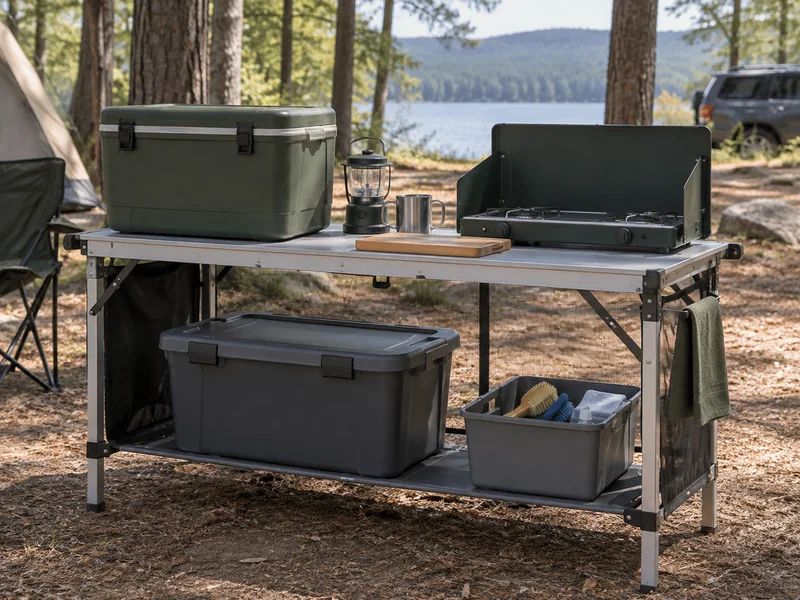
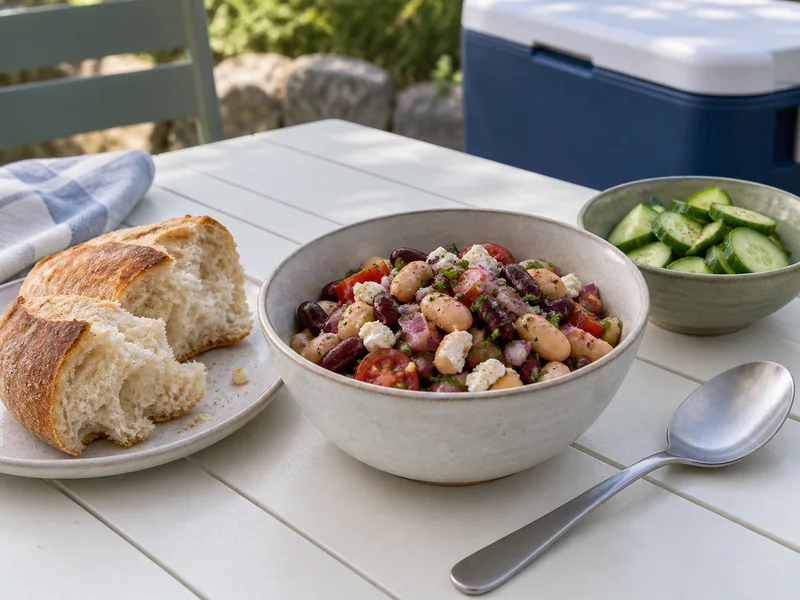
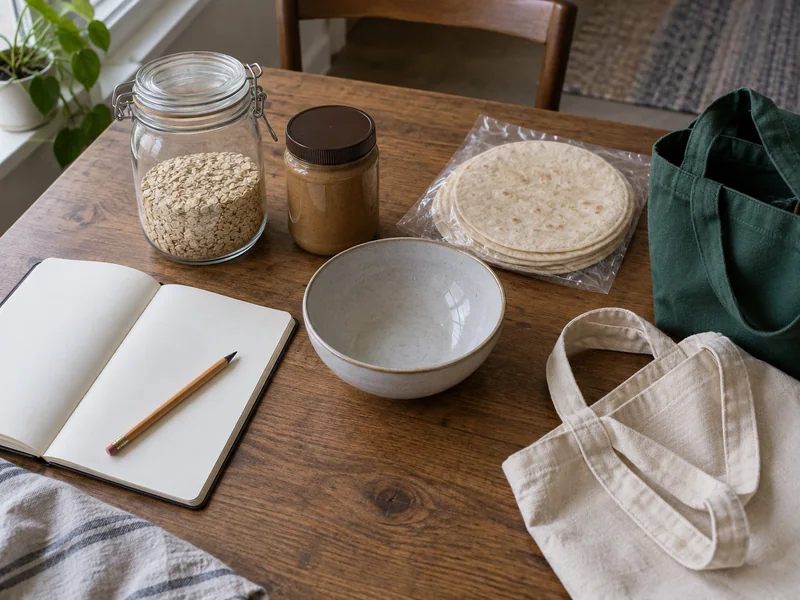
Choose shelf-stable camping food, check storage instructions after opening, and match package sizes to meals before deciding whether to leave the cooler at home.
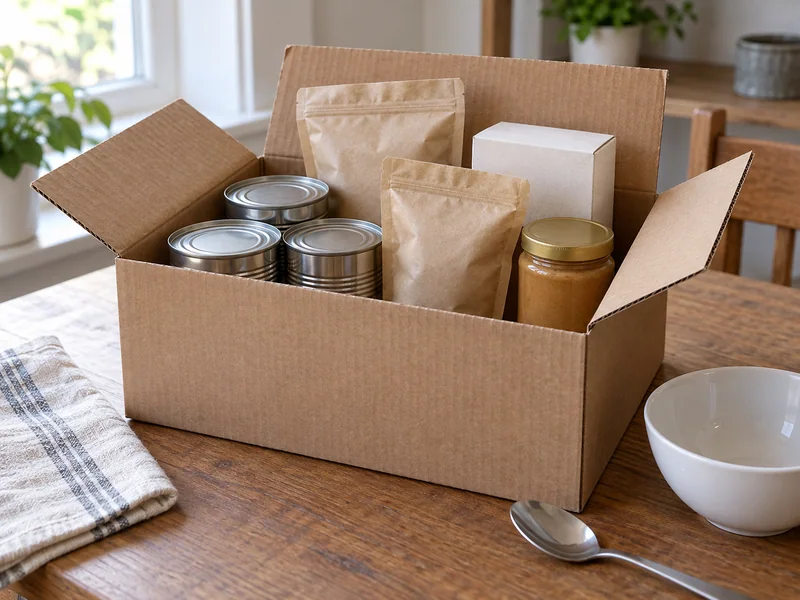
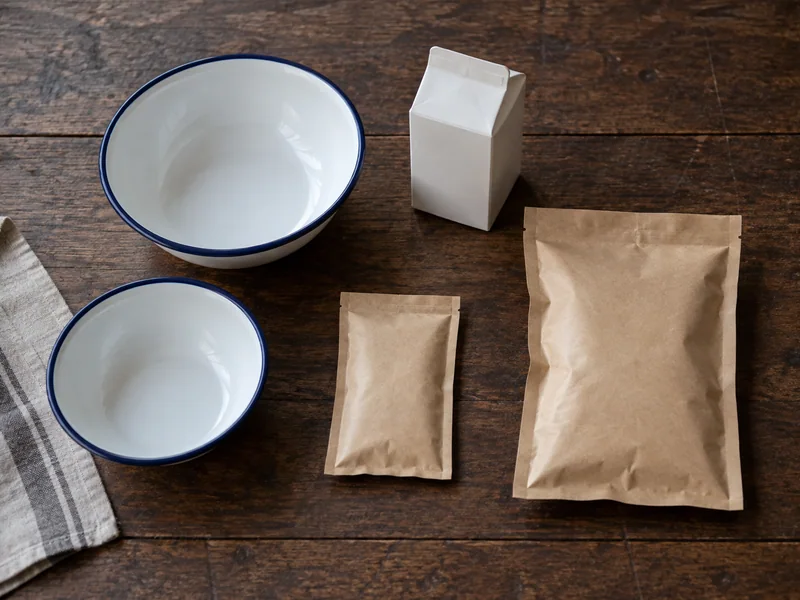
AI-generated illustration: generic package forms, not verified labels or a guarantee of shelf-stable storage.
Shop for the unopened storage conditions and the amount you will actually open. Five US manufacturer examples show why a pantry jar, a ready-to-eat pouch, a fruit can, and a milk carton need different plans after the seal is broken.
Camping food can travel without refrigeration when its unopened storage instructions allow the conditions you can provide. To leave the cooler at home, you also need a workable plan for every package after opening. A large shelf-stable carton that must be refrigerated once opened can be a poor choice for a meal that uses only a little of it.
Start with three checks: unopened storage, preparation instructions, and opened storage. Then compare package sizes with the amount your group intends to eat. Those checks are more useful than a broad list that treats all cans, pouches, spreads, or milk boxes alike.
The five US product examples below were researched through manufacturer product pages and storage FAQs. They are examples of label decisions, not taste reviews or a ranking of the best camping food. No packages were purchased, photographed, or tested for this guide. The planning examples use package amounts, not prescribed portions. Read the actual package you buy, since a different size, flavor, or formulation may have different instructions.
Check the label before assigning a pantry space
Find the storage statement first. Then read the directions for use and look for a separate instruction that applies after opening. Check that the brand’s general FAQ actually covers the product and package in your hand.
FDA advises following package storage instructions and checking canned food for damage. It also warns that food can cause illness without looking or smelling spoiled. See its food storage guidance. Smelling an uncertain product is not a substitute for knowing how it was stored.
Use this short record when comparing two packages of the same food:
| Label field | What to write down | What it changes |
|---|---|---|
| Exact product | Brand, flavor, and package type | Prevents borrowing instructions from a different version |
| Net quantity | Weight or fluid volume on this package | Lets you compare the amount opened with the amount needed |
| Unopened storage | Temperature range or storage wording, if supplied | Determines whether your food-storage location is suitable |
| Preparation | Ready to eat, or the required cooking method | Determines whether a stove, water, or extra ingredient is needed |
| Opened storage | Refrigeration, resealing, and any stated use limit | Determines whether you can keep a remainder |
| Meal assignment | Which meal opens it, and how much is used | Prevents opening a package with no place for the rest |
If the package and website disagree, do not select the more convenient instruction. Follow the package and resolve any uncertainty with the manufacturer before relying on the food for a no-cooler trip. The camping food storage guide covers the broader cooler and campsite decisions.
Five manufacturer examples, with the opening decision included
Two spreads are included because each manufacturer’s instructions must be checked separately; one brand’s guidance does not establish a rule for the whole aisle.
| US product example | Package amount checked | Before opening | After opening | Decision for a trip without refrigeration |
|---|---|---|---|---|
| StarKist Light Tuna in Water pouch | 2.6 oz, also labeled 74 g | Manufacturer says its unopened cans and pouches do not need refrigeration | Transfer leftovers to a separate food-safe container, refrigerate, and use within two days | Choose a package you expect to finish at the meal; do not plan to save an opened remainder in the pantry |
| Jif Creamy Peanut Butter | 16 oz plastic jar, one of the listed sizes | Store in a cool, dry area according to the brand FAQ | Jif says refrigeration is not required and describes pantry storage after opening | A resealed remainder can fit this product’s pantry instructions; check whether you want to carry a full jar |
| Justin’s Classic Almond Butter | 16 oz jar | Manufacturer recommends room-temperature storage for its nut butters | Its jar FAQ says refrigeration is not needed after opening | A jar can cover several planned uses when stored as directed; do not extend the instruction to every other spread |
| Dole Canned Tropical Fruit in Blend of Juice | 15.25 oz can | Manufacturer says to keep unopened canned fruit in a cool, dry place | Manufacturer directs refrigerating the contents in a glass or plastic container | Assign the can to a meal that uses it, or provide refrigeration for what remains |
| Organic Valley Organic 1% Low Fat Milk, Single Serve | 8-ounce carton | Manufacturer permits unopened shelf storage between 33°F and 85°F | Refrigerate after opening | Open for a meal that will use the carton; do not leave a partly used carton for a later drink |
For StarKist, the product page supplies package sizes and the FAQ supplies storage instructions. Jif lists the jar sizes on its Creamy Peanut Butter page and opened storage in its FAQ. Justin’s identifies the 16 oz almond butter jar and answers the opened-jar question in its nut butter FAQ.
Dole publishes the can size and after-opening direction on its Tropical Fruit product page, with unopened storage in its US FAQ. Organic Valley provides storage directions on the single-serve 1% milk page; its shelf-stable milk explanation identifies the 8-ounce format.
These instructions create two different types of remainder. The checked spread jars permit pantry storage after opening. The tuna, fruit, and milk examples require refrigeration for unused contents. Moving food from one package into another does not change which instruction applies.
The products also have different ingredients and allergens. Do not choose an almond butter as a universal substitute for peanut butter, or use the milk and fish examples for someone whose dietary needs exclude them. Check the current ingredient and allergen statements while making the menu.
Package amount is not the same as meal size
The net quantity tells you what you will open. A nutrition label’s serving size serves a different purpose, and neither number decides how much your group wants for a particular meal.
Consider a two-person lunch in which each eater has independently chosen one 2.6 oz tuna pouch as part of their meal. The purchase is two pouches, containing 5.2 oz in total. If both are finished at that lunch, there is no opened tuna remainder. Bread or crackers, sides, and the eaters’ preferred quantities still need separate decisions.
A larger pouch is not automatically a better fit. Compare the planned amount against each available size, then decide whether any surplus can be stored. A lower price per ounce, if you check prices yourself, does not solve a refrigeration requirement.
The same reasoning applies to a milk carton. If a recipe uses only part of it, the rest needs an immediate job in that meal or suitable cold storage. For a drink, the carton may match the amount someone wants more closely. The package has not changed; its fit with the meal has.
Use the camping grocery worksheet for the full calculation from meal demand to packages purchased. Here, concentrate on the point at which a sealed product becomes an open one.
Work through a no-cooler decision for one lunch
Suppose two adults plan to eat at a picnic table and want a lunch assembled without heat. Use their chosen components to work out what will be opened and what might remain.
| Item | Amount assigned to this lunch | Expected remainder | Does the no-cooler plan work? |
|---|---|---|---|
| Checked 2.6 oz tuna pouches | Two, one selected by each eater | None if both finish their chosen pouch | Yes for this component, when unopened storage conditions are met and it is eaten at the meal |
| Crackers | Each person’s chosen amount, taken from a package whose label permits the plan | Possible dry crackers | Follow the actual cracker package’s opened-storage instructions |
| Checked 15.25 oz tropical fruit can | The group chooses whether it wants the full can with this meal | Possible fruit and juice | Only if the can is finished at the meal; otherwise choose a different amount or bring refrigeration |
| Optional checked single-serve milk | One carton for anyone who chooses that amount | Possible milk if a carton is not finished | The same opening decision applies: use now or refrigerate the remainder |
The fruit can is the useful decision point. If the two people do not want its full contents, do not force the amount simply to make the shopping list tidy. Choose a more suitable package, select a different side, or bring cold storage. A no-cooler menu should suit the people eating it.
Do not open all packages at once. Leave an optional second item sealed until someone wants it. An unopened package that remained within its storage conditions may still be available for a later meal; opening it removes that flexibility.
Separate a pantry ingredient from a no-cook ingredient
This label audit answers a storage question. It does not mean that every shelf-stable grocery is ready to eat without preparation.
Dry pasta, a soup requiring preparation, or a product with a required heating step can belong in a pantry menu while still needing a stove and water. Check how the exact package is intended to be prepared. A microwave-only method does not give you an established camp-stove method.
For a day without a stove, use the no-cook camping meal guide to assemble meals from appropriate ready-to-eat components. If you are bringing cooking equipment, the one-pan pantry meal guide helps plan the sequence without assuming that all ingredients share the same directions.
For food between meals, the camping snack guide applies the opening-and-storage check to fruit pouches and jerky, then compares the containers, utensils and returning packaging each choice needs.
Give unopened packages a suitable place in the vehicle
Shelf-stable is not permission to ignore the manufacturer’s storage conditions. The checked Organic Valley product specifies an upper storage temperature of 85°F. A place that exceeds that limit is unsuitable for that product even though the carton is sealed. Other products may use wording such as cool and dry rather than a numerical range; keep those instructions with the food instead of replacing them with a general camping rule.
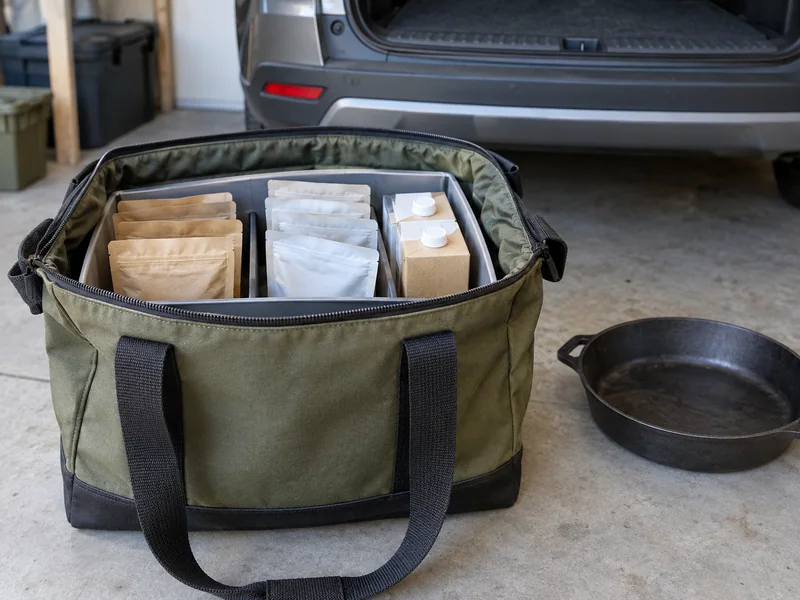
Think about what can press against a pouch, puncture a carton, or damage a can during travel. Use a container that lets you retrieve the food without handling sharp tools in the same space. Keep heavy items from crushing lighter packages, and keep the product name and storage directions readable.
Finally, decide where opened food and packaging go after the meal. Your campsite’s wildlife-storage requirements still apply to a pantry-based menu and its waste. Leaving out the cooler changes the grocery choices; it does not remove the need to store food according to the place you are camping.
Sources & further reading
Use these original sources for the full context and the latest guidance.
- FDA: Are You Storing Food Safely? (opens in a new tab)
- StarKist: Light Tuna in Water Pouch (opens in a new tab)
- StarKist: Frequently Asked Questions (opens in a new tab)
- Jif: Creamy Peanut Butter (opens in a new tab)
- Jif: Frequently Asked Questions (opens in a new tab)
- Justin's: Classic Almond Butter, 16 oz (opens in a new tab)
- Justin's: Questions About Nut Butters (opens in a new tab)
- Dole: Canned Tropical Fruit in Blend of Juice (opens in a new tab)
- Dole: US Frequently Asked Questions (opens in a new tab)
- Organic Valley: Organic 1% Low Fat Milk, Single Serve (opens in a new tab)
- Organic Valley: What Is Shelf-Stable Milk? (opens in a new tab)
Prepared with AI assistance. Read our editorial approach.
This is a researched planning guide, not a report of a hands-on product test.
Last updated .