Camping Snacks for Travel, Camp, and Short Walks
Choose camping snacks by activity, cooler needs, portion size, and packaging. Plan a compact snack box that fits travel days, campsite breaks, and short walks.
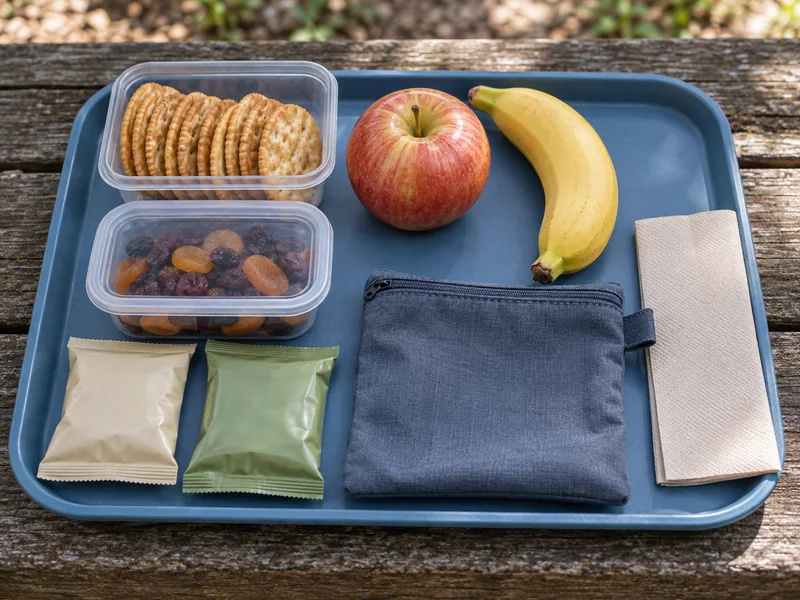
AI-generated illustration: a conceptual snack kit, without measured packing advantage or portion advice.
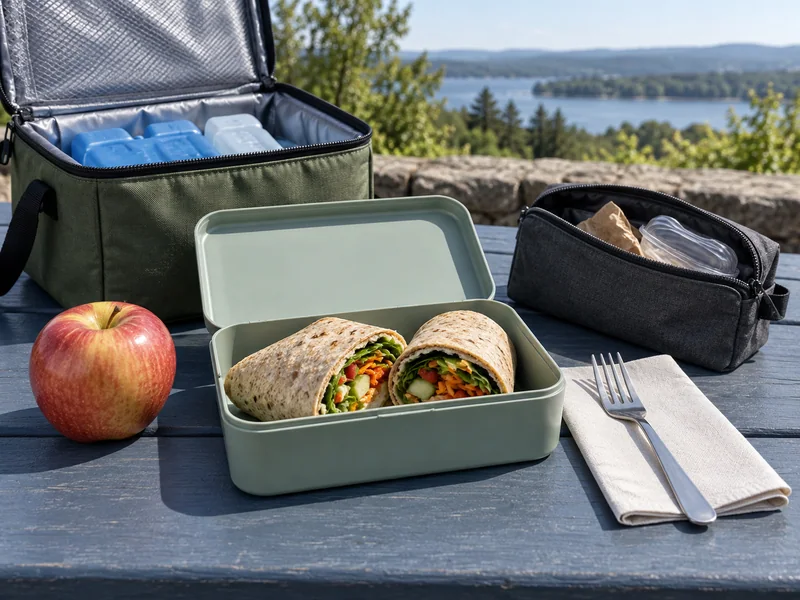
Choose camping snacks around the break when you will eat them. Protect crackers and soft fruit from crushing, keep dairy and prepared dips cold, and check what changes when a pouch or jerky bag is opened. Separate today's choices from unopened reserve food, keep ingredient labels available, and leave room to bring packaging and scraps back.
A snack can be easy to buy and awkward to eat. Crackers arrive under a water bottle, the dip needs a spoon nobody packed, and an opened family-size bag becomes tomorrow’s storage problem. Choosing the food is only part of making a useful camping snack box.
Start with the breaks you expect to take. Put the day’s choices where you can reach them at a safe stopping place, keep reserve food separate, and decide where the empty packaging will go. Then choose foods people already enjoy, in amounts they would normally want between meals.
The ideas below are for general adult snack planning. Several are choking hazards for young children; use the dedicated child-safety guidance later in this article when packing for them. This is a researched packing guide, not a tested recipe collection or a nutrition plan for a long hike.
Twelve camping snacks and the packing job each creates
Use the last column to choose between foods that otherwise seem equally convenient. A snack with a spoon can work well at the camp table, while the same food may be inconvenient during a brief roadside stop. The storage column describes the stated food; additions and the exact package can change the answer.
| Snack idea | When it can fit | Storage check | Packing detail to resolve |
|---|---|---|---|
| 1. Nuts and dried fruit | A stopped break with little assembly | Follow every ingredient’s label | Portion the mixture so the large supply stays closed; keep allergen information |
| 2. Packaged roasted chickpeas | A savory snack without a utensil | Choose a ready-to-eat product with suitable storage directions | Keep small pieces contained and leave room to close the container |
| 3. Crackers or pretzels | A travel stop or camp-table snack | Plain dry products and chilled toppings have different needs | Protect against crushing and account for crumbs |
| 4. An oat or granola bar | A short stop where you want one item to open | Check the particular bar, coating and ingredients | Choose a texture you enjoy and contain the wrapper |
| 5. Whole fruit | A stop with time to peel or eat it | Check the fruit’s handling needs; prepared fruit may need refrigeration | Protect soft fruit and carry peels or cores back |
| 6. A fruit puree pouch | A stop where a bowl would be awkward | Check unopened and after-opening instructions separately | Keep the cap with the empty pouch and plan for an unfinished one |
| 7. A suitable nut or seed butter with crackers | A seated break with a clean place to spread | Check the spread and any additions | Pack the spreading utensil; keep sticky packaging contained |
| 8. Jerky or a meat snack | A savory option during a stopped break | Some products require refrigeration after opening or throughout storage | Read the exact package before taking a large bag away from the cooler |
| 9. Chilled cheese with crackers | A camp-table break | Keep the cheese under its required refrigerated conditions | Separate dry crackers from the chilled food |
| 10. Refrigerated yogurt with a dry topping | A break at camp with a bowl or suitable cup | Keep refrigerated yogurt cold | Pack a spoon, leave room for the topping and close the waste container |
| 11. Hummus with vegetables or crackers | A camp-table snack with serving space | Follow the dip’s label; chilled dip and prepared vegetables need cold storage | Use clean serving utensils and protect dry food from moisture |
| 12. Ready-to-eat popcorn or a small chocolate-and-pretzel mix | A relaxed break when you can manage loose pieces | Follow ingredient labels; chocolate can soften in warmth | Protect the snack from crushing and contain crumbs or melted residue |
Choose a few options that fit your trip instead of packing all twelve. If a break needs to replace lunch, use the camping lunch guide to plan a complete meal rather than assuming a snack package covers it.
Make dry snacks easy to share without opening everything
Nuts, dried fruit and ready-to-eat roasted chickpeas
Pack a familiar mixture, or keep the ingredients separate if people want different combinations. Separate containers also make it easier to see what remains. A shared bag that everyone reaches into repeatedly is less useful when you need to keep ingredients apart or preserve the next day’s supply.
For a specific label example, Biena Sea Salt Roasted Chickpeas lists chickpeas, high oleic sunflower or safflower oil, and sea salt, with a Nutrition Facts serving of 1 oz (28 g). That gives you a documented label quantity to compare with the amount you choose to pack. It does not establish a recommended snack portion or tell you how much space your container needs.
Choose a commercially prepared crunchy snack if that is what you want to carry. This guide does not provide a home-roasting process or a storage life for homemade roasted chickpeas. Check the actual flavor and label, including any ingredients that differ from the plain version.
Crackers, pretzels and bars
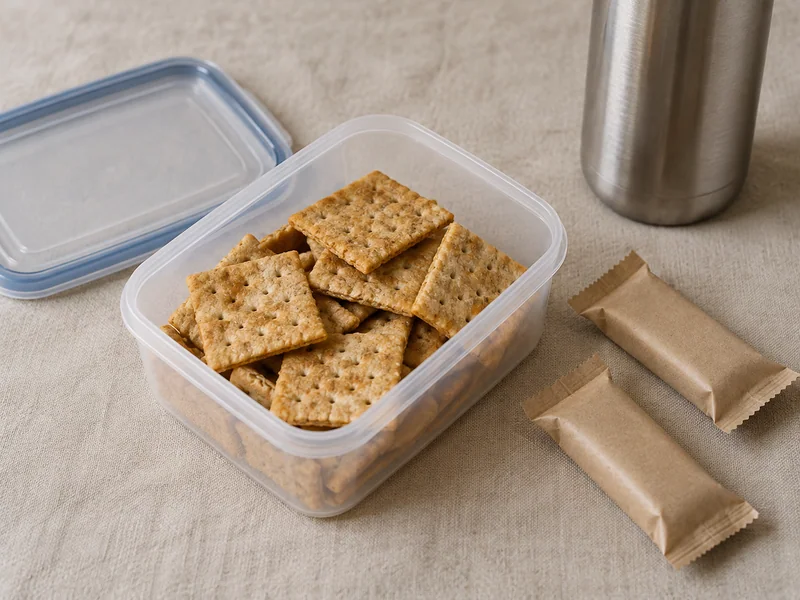
Use a firm-sided food container when a soft bag would put fragile food beneath heavier items. Test the fit with your own crackers before filling the container for the trip. A large box that protects one small packet may be inconvenient to carry; the useful size depends on what you actually pack.
Keep damp foods and spreads separate until eating. If crackers are also assigned to lunch, reserve that amount before using the same package for snacks. A label on the snack container can identify the food and the meal or day it belongs to.
Read product claims alongside the ingredient information. The US manufacturer page for Triscuit Original Whole Grain Wheat Crackers, 17 oz describes the product as vegan and lists wheat as an allergen. Vegan does not make it suitable for someone avoiding wheat. Different flavors and formats need their own check.
A bar can be convenient when you want one package to open. Choose one you already like, then check whether its coating or texture fits the conditions. Do not use a protein or energy label as a promise that it supplies everything needed for an outing.
Check what happens after a fruit pouch or jerky bag opens
Whole fruit and a puree pouch solve different packing problems. A banana needs protection from heavy objects and somewhere for the peel; an apple may leave a core. A pouch avoids a bowl but still leaves a cap and food-smeared packaging. Neither option makes the waste disappear.
GoGo squeeZ FruitZ Apple Apple lists a 90 g pouch and says it needs no refrigerator. The brand’s general pouch FAQ changes the instruction after opening: refrigerate it and consume it within 24 hours. Treat that as a requirement for an appropriately stored remainder, not permission to leave an open pouch in a warm bag all day. Check the specific pouch you buy.
The same distinction matters with jerky. John F. Martin & Sons Original Beef Jerky instructs refrigeration after opening. Its product page does not provide an opened-storage period that this guide can apply. A large jerky bag is therefore a poor choice for an outing without cold storage if you expect to open it, eat a little and save the rest unrefrigerated.
Choose package sizes and amounts that fit the stop, or keep the opened food under its required conditions. The shelf-stable food label guide explains the wider difference between unopened pantry food and the storage job created by opening or preparing it.
Save spoon-and-dip snacks for a suitable stop
Cheese with crackers, refrigerated yogurt with a dry topping, and hummus with vegetables can be appealing when you have a camp table and dependable cold storage. Keep the dry components separate so they do not have to spend the whole trip beside wet food.
For yogurt, check whether the cup has enough room to add the topping. If it does not, either pack a bowl or eat the components separately. For hummus, set out a clean serving utensil and put the amount being served into a suitable dish. Keep unused perishable food cold instead of leaving the whole supply on the table through a long break.
A nut or seed butter introduces a different job: opening, spreading and containing sticky leftovers. Put the utensil with the crackers, and keep the label available if you repack the spread. A seed-based product is not automatically suitable for every allergy; make that decision for the actual person and product.
Choose between individual packs and reusable containers
There is no single package format that works best at every stop. Compare the number of things to open, the amount that might remain, and the cleanup you can manage. The table describes planning tradeoffs; no package volume, weight or waste reduction was measured.
| Format | Useful feature | Extra job | When to reconsider |
|---|---|---|---|
| Original individual packs | Keep unopened reserve food separate | Retain the outer carton label if an inner pack lacks it; carry wrappers, lids and caps back | A person needs several small packs for the amount they want |
| A larger package divided into clean reusable containers | Let each person choose an amount and keep fragile food protected | Preserve labels, clean containers and follow storage after opening | Repacking removes information or creates more dirty containers than you can handle |
| A mixed kit | Pair protected dry food with separately packed fruit or chilled food | Keep the storage groups distinct and count all the pieces | A chilled addition turns an otherwise simple carry bag into a cooler-dependent kit |
Repacking does not extend a food’s shelf life. Keep preparation and opening dates when they matter, and retain the original ingredient and storage information. Use food-safe containers suitable for the contents. Check that the lids close with the food inside; empty containers alone do not establish a workable fit.
Give returning trash a separate place. A closable waste bag or suitable container can keep sticky wrappers away from unused snacks. Wash reusable food containers after use before filling them again.
Build the day’s kit around snack stops
For travel, choose food you can reach once parked without unloading the main kitchen. Pair the snack with its napkin, utensil if needed and waste container. Keep cold food with its cold sources until serving rather than moving it into a convenient door pocket before departure.
At camp, take out the amount you intend to serve. Keep the rest properly stored and return it to its required location when the break ends. The snack box does not need to become a permanent buffet on the picnic table.
For a short walk, carry the food, drinking water, any serving supplies and a way to bring scraps back. Protect soft or crushable food from hard equipment. Check the destination’s requirements and the outing’s needs separately; this snack guide does not establish the food or water supply for a backcountry trip.
Use a simple example to check the plan. Two adults expect a roadside snack stop and a separate afternoon break. Each selects an amount for each break, so there are four planned snack occasions to account for. Those four choices might differ in food, quantity and number of packages. They are not four mandatory label servings.
The FDA’s serving-size explanation says a Nutrition Facts serving is not a recommendation of how much to eat. Use familiar amounts as a starting point, then account for the people and the outing. Record reserve food separately so the same bar or portion has not been promised to both the afternoon break and a delay.
| Snack-plan field | Your day’s choices |
|---|---|
| People, food needs and expected breaks | ________ |
| Food and amount chosen for each break | ________ |
| Unopened or prepared state; relevant label instructions | ________ |
| Cold storage needed and how it will be maintained | ________ |
| Container, utensil, clean-hand access and drinking water | ________ |
| Reserve food kept separate from planned snacks | ________ |
| Opened remainder and returning packaging or scraps | ________ |
| What to change after the trip | ________ |
Turn these choices into purchases with the camping grocery worksheet. Keep snacks assigned to their own breaks when the same crackers, fruit or spread also appears in a meal. For the full trip’s meal schedule, use the three-day menu planning example and add your snack choices explicitly.
Keep cold snacks cold and ingredient information available
The FDA’s outdoor food guidance advises keeping cold perishable food at 40°F or below, with ice or frozen gel packs. Keep it chilled until serving. Discard perishable food left without temperature control for more than two hours, or one hour when the outdoor temperature exceeds 90°F. A short planned walk does not prove that a particular bag will maintain the required temperature.
Wash produce as appropriate before packing, use clean hands and serving equipment, and keep ready-to-eat snacks away from raw-meat juices. Those handling jobs still apply to a small snack. The camping food storage guide connects them to the cooler and campsite routine.
For allergies, read the actual ingredient list and any Contains statement. FDA’s food-allergy guidance identifies nine major allergens, including sesame, and explains that precautionary wording such as may contain is voluntary. Its absence alone does not establish the absence of cross-contact. Keep labels with repacked food and avoid treating a different flavor, a vegan label or a seed-butter substitution as an allergy decision.
Adapt the plan carefully for young children
Do not use the adult comparison above as a child-safe snack list. The CDC’s choking guidance identifies hazards that include whole or chopped nuts and seeds, dried fruit, uncut grapes, hard raw apple or carrot, popcorn, granola bars, meat sticks and chunks or spoonfuls of nut butter. Food size, shape and texture need to match the child’s development; chopping nuts is not a general solution.
CDC advises having children sit upright, keeping snack time calm and supervising throughout. It specifically advises against eating in a car or stroller. Build a suitable seated stop into the plan, and use its full preparation guidance when selecting food for a young child. Ask the child’s clinician about individual feeding concerns.
Bring back the crumbs, peels and wrappers
A fruit peel is still something to pack out. Check the place where you ate for cracker pieces, dropped snacks and small caps as well as obvious wrappers. The National Park Service explains that scraps and crumbs can unintentionally feed wildlife. Clean the eating area and secure both food and trash using the destination’s rules.
A reusable snack box is a packing choice, not proof that it meets wildlife-storage requirements. Put it away with the rest of the food when required, including during stops when nobody is eating. The car-camping checklist helps keep food storage and waste handling in the arrival and departure routine.
After the trip, note what was actually useful: which food was eaten, which container was awkward, what came home opened and what remained as reserve. Use those observations to adjust the next kit. A smaller selection of snacks that people enjoy and can handle at the planned stops is more useful than a box full of unrelated possibilities.
Sources & further reading
Use these original sources for the full context and the latest guidance.
- FDA: Handling food safely while eating outdoors (opens in a new tab)
- FDA: Serving size on the Nutrition Facts label (opens in a new tab)
- FDA: Food allergies (opens in a new tab)
- CDC: Choking hazards (opens in a new tab)
- National Park Service: Feeding wildlife (opens in a new tab)
- Biena: Sea Salt Roasted Chickpeas (opens in a new tab)
- GoGo squeeZ: FruitZ Apple Apple (opens in a new tab)
- GoGo squeeZ: Consumer care and FAQs (opens in a new tab)
- John F. Martin & Sons: Original Beef Jerky (opens in a new tab)
- Snackworks: Triscuit Original Whole Grain Wheat Crackers, 17 oz (opens in a new tab)
Prepared with AI assistance. Read our editorial approach.
This is a researched planning guide, not a report of a hands-on product test.
Last updated .