A 3-Day Camping Meal Plan for Two with a Grocery List
Plan three days of camping meals for two with a shared-ingredient menu, prep schedule, and grocery list. Adjust the plan for your cooler, stove, and appetite.
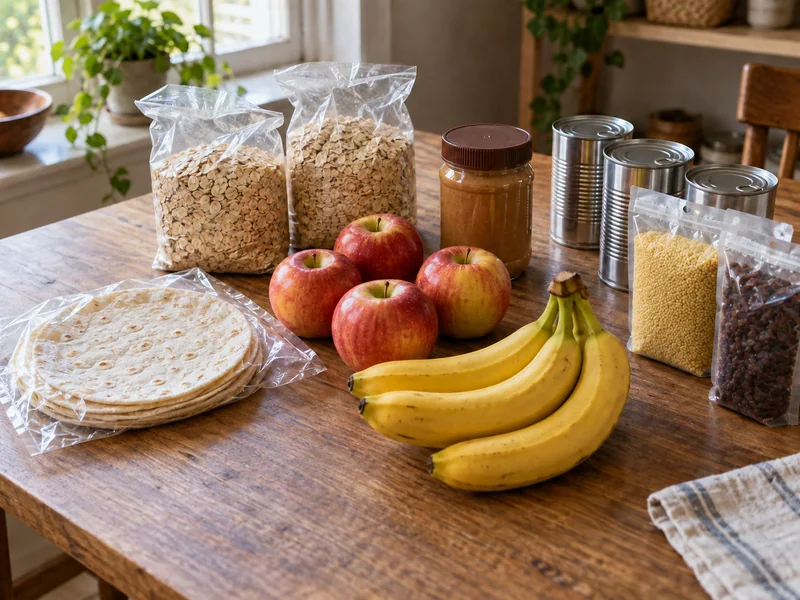
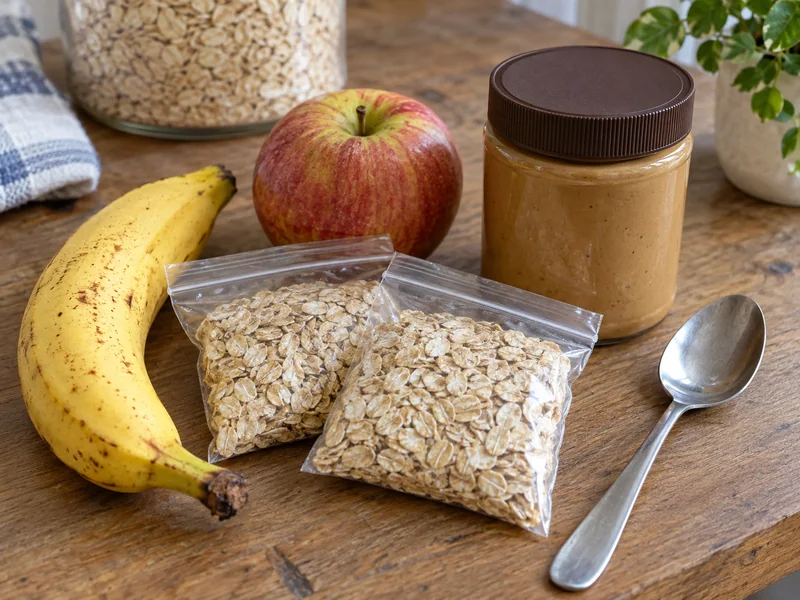
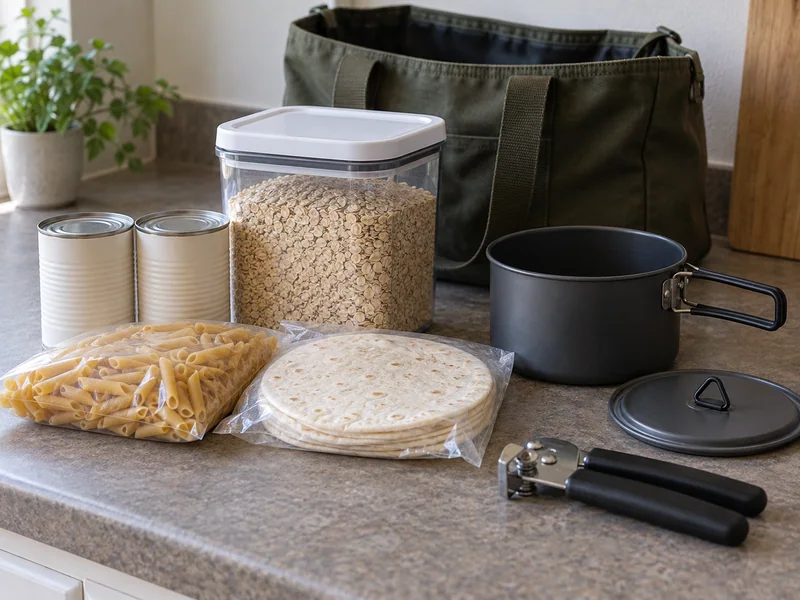
AI-generated illustration: sample-menu ingredients, without exact quantities or a tested meal plan.
This example covers lunch on day one through lunch on day three: seven main meals for two people. The grocery table accounts for shared ingredients, whole packages, and unused balances. Change the meal amounts to suit your appetite, then add drinks, water, extra snacks, and a reserve meal before you shop.
A three-day camping menu becomes easier to pack when every opened can has a meal and every shared ingredient has a reserved amount. Otherwise, the peanut butter you use freely on Saturday can disappear before Sunday’s breakfast.
This plan starts with lunch on day one and ends after lunch on day three. That is seven main meals for each person, or 14 person-meals, across a two-night trip. Breakfast before departure and dinner after returning are outside the plan.
The menu and quantities below are an illustrative planning example, not a set of camp-tested recipes or a nutrition prescription. The arithmetic is checked; cooking results, appetite, and equipment fit need your own judgment. Read it once before shopping, change what you would not enjoy eating, and take a familiar reserve meal.
Check whether this menu fits your trip
This is a car-camping plan with access to safe water and a permitted outdoor stove. It uses canned beans, a few dry staples, whole fruit, and ready-to-eat lunch ingredients. Cans are convenient here because the car carries them; a backpacking trip has a different weight and waste problem.
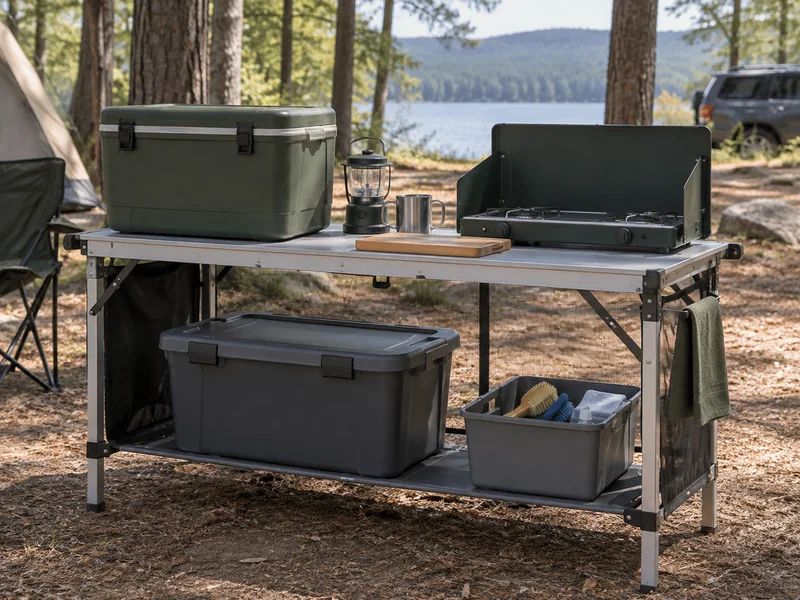
The hot meals require a pot, suitable lid, utensils, and a way to handle and drain cooked pasta safely. You can use one burner sequentially. That does not mean any small pot will hold both people’s dinner. Compare the full ingredient volume with your pot before departure and keep within its manufacturer’s limits. Our camp kitchen setup guide connects the menu to the equipment you actually need.
The example includes wheat, peanuts, tree nuts, and fish. Check every label for your own dietary needs and choose replacements before recalculating the list. A different spread, grain, or protein may change both package size and storage instructions.
There is no fixed calorie target. If the portions look smaller than your normal meals, increase them. Plan extra food for the activities and people on this particular trip, rather than treating “for two” as a universal serving size.
The three-day menu
Each row is one meal for both campers. The second breakfast repeats the oat base so you can portion two breakfast bags at home, while the fruit changes. Lunches need assembly rather than a stove.
| Day and meal | Menu | Allocation | Work at camp |
|---|---|---|---|
| Day 1: lunch | Tuna and white beans with crackers and apples | 2 people | Open, drain, squeeze lemon, and assemble. |
| Day 1: dinner | Couscous with chickpeas and tomatoes | 2 people | Cook couscous by its label; warm the canned ingredients separately in the same pot sequence. |
| Day 2: breakfast | Oatmeal with raisins, peanut butter, and bananas | 2 people | Cook oats with safe water, then add the toppings. |
| Day 2: lunch | Peanut butter and banana wraps | 2 people | Spread, slice, and roll four tortillas. |
| Day 2: dinner | Pasta with white beans and tomatoes | 2 people | Cook pasta by its label, drain responsibly, and warm the beans and tomatoes. |
| Day 3: breakfast | Oatmeal with raisins, peanut butter, and apples | 2 people | Cook oats and cut the apples at serving time. |
| Day 3: lunch | Lemon chickpea wraps | 2 people | Drain and mash chickpeas with lemon, oil, and seasoning; divide across four tortillas. |
The snack allocation is six bars and 180 g of nuts across the trip. That gives each person one bar and a 30 g nut allocation per day. It is an accounting example, not a claim that those snacks will meet everyone’s needs. Add more, replace them, or remove them to fit your plans.
If your first stop is a short roadside break, keep the first lunch together rather than unpacking the whole kitchen. The camping lunch guide has options organized around travel days, time at camp, and short walks.
How to use the cooking sequence
These are meal assemblies, so the preparation instructions on the ingredients remain important. Keep them when you portion food into smaller containers.
To replace either dinner, compare the pot, skillet and assembly dinner options before changing the grocery list. A different meal can change the cold-storage space, cookware and ingredients reserved for the following day; update those allocations together.
First dinner: Prepare the quick-cooking couscous according to its package, then transfer it to the eating bowls while you warm the chickpeas and tomatoes in the pot. The allocated 15 mL of oil covers the whole dinner, including any used to prepare the couscous; add only the balance with the seasoning. If your chosen preparation needs more oil, revise the grocery allocation. Do not replace plain quick-cooking couscous with pearled couscous and assume the same process will work. For example, Near East’s plain couscous instructions use a covered rest after the water boils; the brand also gives separate altitude directions. Follow the instructions for the amount and product you pack.
Breakfasts: The grocery total assigns 100 g of dry oats to each morning for the two of you. Use your package’s preparation ratio for that amount. Stir in that morning’s 30 g of peanut butter and 40 g of raisins, then serve the fruit alongside or cut it into the bowls. Quaker’s instructions illustrate why the water amount depends on the oats and the quantity being cooked. The table does not prescribe a universal water ratio.
Second dinner: Cook the pasta using the package directions, drain it with a method appropriate to your campsite, and set it in the bowls. Warm the beans and tomatoes in the same pot, add the remaining dinner oil and seasoning, and combine. This plan does not assume uncooked pasta will absorb a can of tomatoes correctly. If you prefer a different method, choose it before allocating your water and equipment. See the one-pan camping meal ideas for other ways to organize pantry ingredients.
Last lunch: Use the complete drained chickpea can, mash with the lemon juice, oil, and seasoning, and divide among four tortillas. The lemon is for flavor. Adding it does not make a prepared filling safe to store without refrigeration.
The cold lunches use products labeled ready to eat. Wash produce with safe running water, following the FDA’s outdoor food guidance, and cut it at serving time.
Grocery list and package assumptions
The shopping column below assumes you have none of these ingredients at home. Actual store packages vary. The sizes for oats, couscous, jars, and other dry ingredients are sample arithmetic inputs, not a claim that a particular store sells that size.
For canned beans and chickpeas, the menu uses cans of about 15 oz net weight. Tomato cans are about 14.5 oz, and tuna pouches about 2.6 oz. Net can weight includes liquid; the menu allocates whole drained cans instead of pretending net and drained weights are interchangeable.
| Ingredient | Trip allocation | Example pack size | Packs to buy from zero stock | Balance outside the menu |
|---|---|---|---|---|
| Rolled oats | 200 g | 500 g | 1 | 300 g |
| Raisins | 80 g | 200 g | 1 | 120 g |
| Peanut butter | 120 g | 340 g | 1 | 220 g |
| Ready-to-eat tortillas | 8 each | 8 each | 1 | 0 each |
| Crackers | 100 g | 200 g | 1 | 100 g |
| Plain quick-cooking couscous | 160 g | 300 g | 1 | 140 g |
| Dry pasta | 180 g | 454 g | 1 | 274 g |
| Ready-to-eat canned white beans | 2 cans | 1 can | 2 | 0 cans |
| Ready-to-eat canned chickpeas | 2 cans | 1 can | 2 | 0 cans |
| Canned diced tomatoes | 2 cans | 1 can | 2 | 0 cans |
| Ready-to-eat tuna pouches | 2 pouches | 1 pouch | 2 | 0 pouches |
| Whole apples | 4 each | 1 each | 4 | 0 each |
| Whole bananas | 4 each | 1 each | 4 | 0 each |
| Whole lemons | 2 each | 1 each | 2 | 0 each |
| Olive oil | 50 mL | 250 mL | 1 | 200 mL |
| Dry herb and spice mix | 6 g | 20 g | 1 | 14 g |
| Snack bars | 6 each | 6 each | 1 | 0 each |
| Nuts | 180 g | 200 g | 1 | 20 g |
“Balance outside the menu” means the amount left from the purchased supply after the planned allocation. Much of it can stay at home: for example, buy the sample 500 g oat package and pack 200 g, leaving 300 g at home. It is not a prediction of cooked leftovers.
Use the camping grocery worksheet to subtract usable food you already own. It also shows what happens when three tortillas remain in the cupboard but the trip calls for eight.
Add these before the shopping trip
The calculated basket covers the listed food and snacks. Finish it with your own choices for:
- Drinking water and the water required by your actual cooking directions, handwashing, and cleanup.
- Coffee, tea, milk, or other drinks, including their storage needs and preparation equipment.
- Any optional salt or condiments beyond the allocated herb and spice mix.
- Additional food for your appetite, activity, arrival time, or a delayed return.
- A familiar reserve meal that works if the stove is unavailable.
Check whether the campground’s water supply is operating, not merely whether a tap appears on a map. The National Park Service’s camping packing guidance includes water for drinking and food preparation. There is no water total here because the travel conditions and selected cooking directions have not been fixed.
Keep shared ingredients assigned to their meals
This is the allocation behind the grocery totals. Quantities in each row are for both people together. Dry grains are weighed before cooking; fruit and tortillas are counted individually.
| Meal for two | Total ingredients allocated to that meal |
|---|---|
| Day 1: lunch | Ready-to-eat tuna pouches: 2 pouches; Ready-to-eat canned white beans: 1 can; Crackers: 100 g; Whole apples: 2 each; Whole lemons: 1 each |
| Day 1: dinner | Plain quick-cooking couscous: 160 g; Ready-to-eat canned chickpeas: 1 can; Canned diced tomatoes: 1 can; Olive oil: 15 mL; Dry herb and spice mix: 2 g |
| Day 2: breakfast | Rolled oats: 100 g; Raisins: 40 g; Peanut butter: 30 g; Whole bananas: 2 each |
| Day 2: lunch | Ready-to-eat tortillas: 4 each; Peanut butter: 60 g; Whole bananas: 2 each |
| Day 2: dinner | Dry pasta: 180 g; Ready-to-eat canned white beans: 1 can; Canned diced tomatoes: 1 can; Olive oil: 15 mL; Dry herb and spice mix: 2 g |
| Day 3: breakfast | Rolled oats: 100 g; Raisins: 40 g; Peanut butter: 30 g; Whole apples: 2 each |
| Day 3: lunch | Ready-to-eat canned chickpeas: 1 can; Whole lemons: 1 each; Olive oil: 20 mL; Dry herb and spice mix: 2 g; Ready-to-eat tortillas: 4 each |
The useful cross-meal checks are small: 30 + 60 + 30 = 120 g of peanut butter; 100 + 100 = 200 g of oats; and four tortillas at each of two lunches use all eight. Once you change a meal, cross out its old allocation before adding the replacement.
The bars and nuts are additional trip snack allocations, already included in the grocery table. They are not hidden ingredients in the seven meal rows.
Download the menu, allocations, and grocery list as a CSV. It contains the same numbers as these tables and opens in a spreadsheet. To take the guide on paper, use Print this guide below or your browser’s print command.
Prepare at home without creating extra cold-storage work
| Before departure | What to do | What stays clear at camp |
|---|---|---|
| Review the menu | Replace foods you will not eat; revise every affected total. | No unwanted ingredient bought just to follow the example. |
| Check the packages | Read preparation, allergen, and storage directions, including after opening. | You know which food belongs in the cooler. |
| Portion dry ingredients | Label the two oat and raisin portions, couscous, pasta, and seasoning allocations. | Breakfast and dinner amounts remain separate. |
| Reserve shared food | Mark which amounts of peanut butter, oil, and tortillas belong to later meals. | The last day’s supplies do not disappear on the first day. |
| Check equipment | Match each preparation step to a pot, utensil, opener, or cleanup item. | The first can does not reveal a missing can opener. |
| Load the first lunch | Keep its unopened ingredients and clean utensils together. | The first stop needs a small unpacking job. |
There is no need to cook the dinners at home to follow this example. If you decide to take cooked grains, prepared fillings, or chopped produce instead, reassess the storage plan. Use the make-ahead meal guide to separate preparation that saves work from preparation that adds a cooling and reheating job.
Plan for opened food, dirty dishes, and a change in weather
Using a whole can in one meal avoids an intended remainder in the can. It does not guarantee that both people finish the meal. Keep a safe plan for food left in the bowls or pot, and do not save it by habit when refrigeration is unavailable.
Use the camping food-storage guide to resolve refrigeration and leftovers before packing. Check the specific products; this menu is not a blanket cooler-free claim.
Set aside clean utensils for ready-to-eat lunches and a container for food scraps and packaging. FoodSafety.gov’s four-step guidance provides the basis for clean preparation and separation. Follow the site’s rules for food storage and wastewater disposal, including scented packaging after meals.
If a restriction, weather change, or equipment fault prevents cooking, do not turn dry pasta or oats into an improvised uncooked dinner. Choose a ready-to-eat backup before the trip. The no-cook meal guide helps you make that replacement while keeping refrigeration needs visible. Buying backup food changes the grocery total, so add it as its own line.
Before you leave, check three things together: the meal table, the bags you have actually packed, and the equipment those meals require. If each ingredient and preparation step has a place, the plan is ready for your own trip adjustments.
Sources & further reading
Use these original sources for the full context and the latest guidance.
- FDA: Handling Food Safely While Eating Outdoors (opens in a new tab)
- FoodSafety.gov: Four Steps to Food Safety (opens in a new tab)
- National Park Service: What to Bring Camping (opens in a new tab)
- Near East: Original Plain Couscous Preparation Instructions (opens in a new tab)
- Quaker: Old Fashioned Oats Preparation Instructions (opens in a new tab)
Prepared with AI assistance. Read our editorial approach.
This is a researched planning guide, not a report of a hands-on product test.
Last updated .