Easy Camping Dinners Organized by Cooking Method
Choose easy camping dinners by burner count, cookware, and cleanup. Compare ten meal ideas and plan prep, serving order, and leftovers for your camp kitchen.
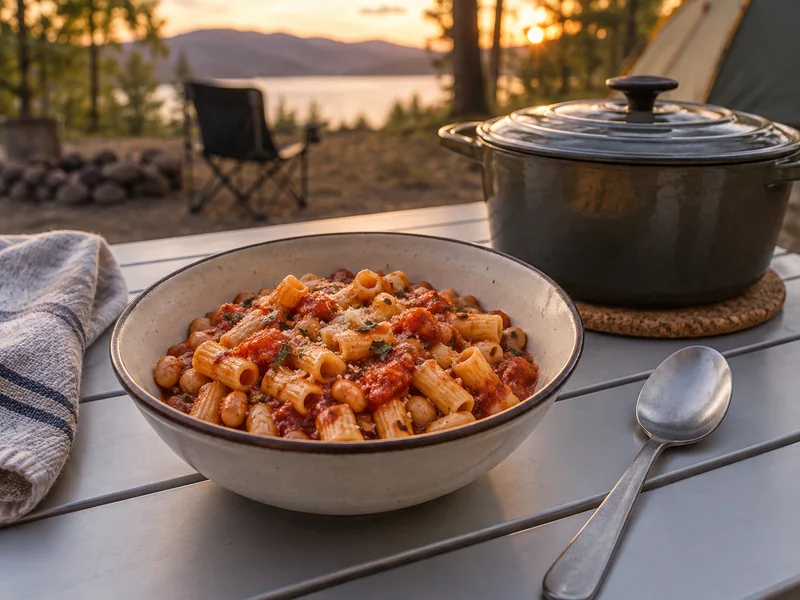
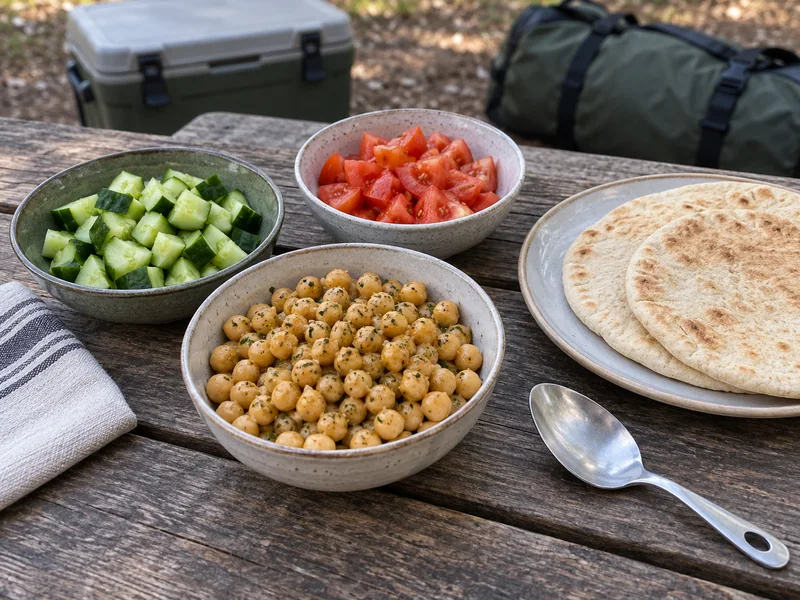
AI-generated illustration: a conceptual dinner combination, not a tested Camp & Clover recipe.
For an easy camping dinner, choose the cooking method before the menu. Cold wraps avoid the burner, pot meals need a clear order for heating their components, and skillet or grill dinners depend on cooking space and serving batches. Match the whole meal, including sides and cleanup, to your arrival time, cold storage and equipment. Keep a ready-to-eat alternative for an evening when cooking is unavailable.
Dinner often arrives at the busiest part of a camping day. Someone is pitching the tent, another person is finding the water, and the food box may still be under the sleeping bags. A meal that works well on a settled afternoon can be awkward on arrival night.
Choose a dinner you want to eat, then look at everything it asks of the kitchen. A second hot side, a raw-meat cutting board or a pan that serves only one person at a time can change the plan more than the number of ingredients does.
These ten ideas compare those jobs across assembly, pot, skillet and grill cooking. They are researched meal suggestions, not tested recipes. Use a familiar complete recipe or the directions on your chosen products for amounts and preparation; the comparisons help you decide which meal belongs on which evening.
Compare the whole dinner before choosing a method
The cookware column lists the main cooking equipment, not every dish you will wash. Include serving bowls, knives, boards and a food thermometer where needed. Cold storage refers to the ingredients described; changing a filling or topping can change that requirement.
| Dinner idea | Main method and cookware | Cold-storage job | What makes the meal more involved? | Useful evening |
|---|---|---|---|---|
| 1. Chickpea salad pitas | Cold assembly; mixing bowl | Prepared salad and any chilled dressing | Chopping produce, draining beans and storing unused filling | Arrival with little kitchen unpacked |
| 2. Chicken and slaw wraps | Cold assembly; bowl and utensils | Cooked chicken, slaw and suitable dressing | Keeping the filling cold until people eat | No stove available, but reliable refrigeration |
| 3. Tomato and white bean pasta | Pot; draining tool if the pasta requires it | Depends on sauce, toppings and opened ingredients | Cooking pasta and heating sauce in the right order | A hot meal from a small ingredient list |
| 4. Couscous and chickpea bowls | Pot with the lid required by the product | Depends on additions and any prepared food | Matching the couscous method to the other ingredients | One burner and bowls ready for serving |
| 5. Rice and bean bowls | Pan suited to the rice product’s directions | Chilled toppings and unused prepared food | Choosing a rice pouch that actually has a stovetop method | A short cooking sequence after setup |
| 6. Make-ahead chili with bread | Pot, stirring spoon and thermometer | Fully cooked chili throughout the journey | Cooling at home and reheating the center thoroughly | First dinner with a dependable cooler |
| 7. Bean and cheese quesadillas | Skillet and turning utensil | Cheese and any opened filling requiring it | Limited pan area and repeated serving batches | An evening when eating in rounds is fine |
| 8. Sausage and pepper skillet | Skillet; board and utensils | Refrigerated sausage and prepared vegetables | The sausage’s actual cooking directions and pan capacity | A cooked meal served with bread |
| 9. Chicken fajitas | Skillet; separate raw-food tools | Raw chicken and chilled toppings | Raw-meat handling, thorough cooking and batches | A settled evening with a proper prep area |
| 10. Burgers with a cold side | Permitted grill or suitable skillet | Raw patties and perishable toppings | Cooking surface, temperature checks and serving order | When the cooking method is part of the evening |
For a smaller selection limited to pantry ingredients and one cooking vessel, use the one-pan shelf-stable meal guide. That guide works through package sizes and water requirements in more detail. Here, a refrigerated skillet dinner and a cold assembled meal are equally valid choices.
Dinners you can assemble without lighting the stove
Cold assembly can be useful on arrival night, especially when the first job is making camp habitable. Pack the needed utensils where you can reach them. A no-cook dinner still needs clean hands and a place to prepare food.
1. Chickpea salad pitas
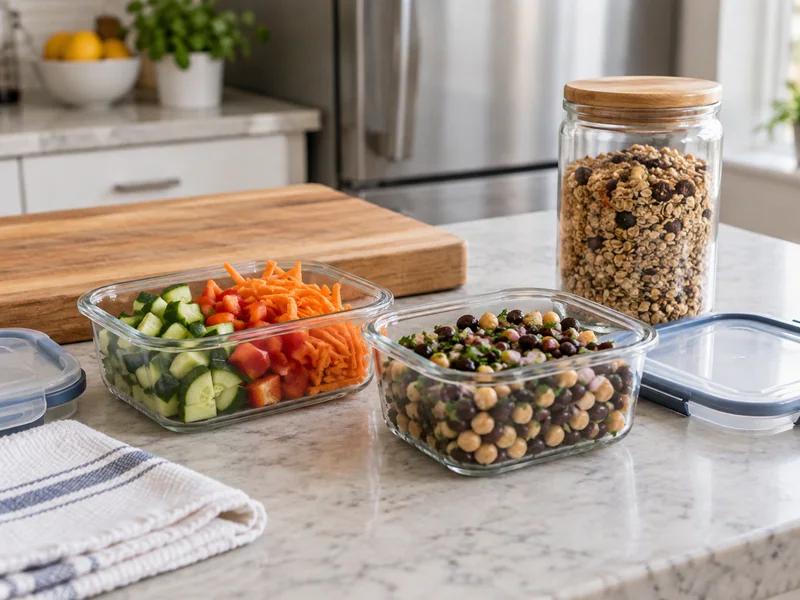
Combine ready-to-eat canned chickpeas with cucumber, tomatoes and a dressing your group likes, then serve in pitas or with bread alongside. Keep the bread separate until eating so each person can fill it without leaving the whole batch sitting in dressing.
Decide whether to chop the vegetables at home or at camp. Doing it at home removes a board-and-knife job from arrival, but the prepared salad needs suitable cold storage. At camp, drain or rinse beans as appropriate to the product and dispose of that liquid using the campground’s arrangements. Count the mixing bowl in the washing kit.
Bush’s canned-bean guide confirms that its canned variety beans are already cooked and can be eaten cold. It also distinguishes beans you might drain from its baked, chili and other sauced products, whose liquid is part of the dish. Check the specific beans you choose rather than treating every can alike.
Choose a familiar dressing and check its label, including allergens and refrigeration instructions. If some people prefer the ingredients apart, serve them separately without preparing a second meal. For an evening with no cooler, choose a different combination of foods explicitly suitable for your unrefrigerated conditions rather than treating a prepared salad as pantry food.
When vegetarian suitability is part of the meal decision, use the vegetarian camping meal guide to check sauces, cheeses and substitutions alongside the cooking method. Removing meat alone does not settle every ingredient question.
2. Chicken and slaw wraps
Use fully cooked chicken suitable for cold serving, a slaw mixture you enjoy and tortillas. Pack dressing separately and assemble only what people are about to eat. Bread or rolls also work if wrapping a generous filling becomes more trouble than eating it from a plate.
This option depends on dependable cold storage. Chicken cooked ahead needs a preparation date and a safe storage period; commercially prepared chicken must be handled as its label directs. A ready-to-eat canned product changes the unopened storage job, but opening it and adding chilled slaw creates a new one.
Set aside any portion intended for a later meal before putting the rest on the table, and keep that reserved food refrigerated. If you cannot maintain the required storage, plan quantities for the current meal. The no-cook camping meal guide separates cold serving from meals that can travel without refrigeration.
Pot meals with a clear order of work
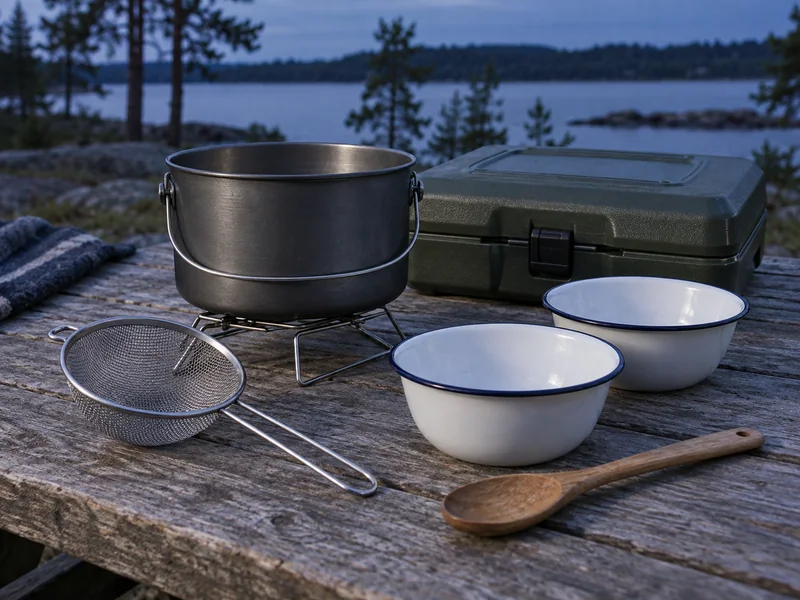
The main question with one burner is what happens while the pot is occupied. Can another ingredient wait in a serving bowl? Does it need a second cooking step? Will the combined food still fit comfortably in the cookware?
3. Tomato and white bean pasta
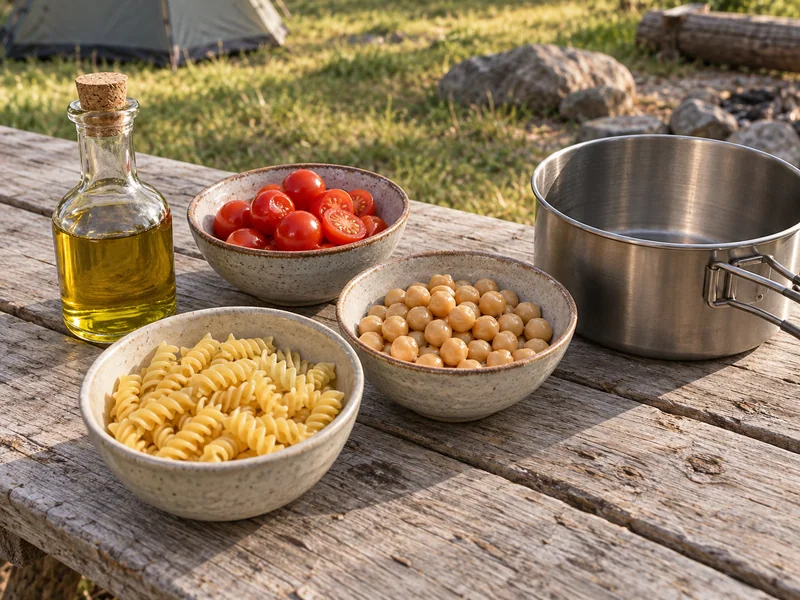
Pair pasta with ready-to-eat canned white beans, tomato sauce and a seasoning you already use at home. This can be a straightforward dinner, but choose the pasta before deciding how much cooking water and draining equipment to pack.
With dried pasta, follow its directions and plan a safe way to drain it when required. Transfer it to suitable serving bowls while you heat the other components, or use a complete recipe designed for cooking everything together. Adding dry pasta to sauce without a tested liquid ratio does not establish a workable one-pot recipe.
Fully cooked pasta with a stovetop method offers another route. For example, Barilla’s Ready Pasta instructions describe skillet heating with two teaspoons of olive oil and direct you to the particular package. That is a different preparation from boiling dried pasta and draining it. Follow the full heating instructions before combining components; the brand’s component timing does not measure this complete camp dinner.
Serve with a cold side if you want one without adding a second hot-pan job. A salad brings its own washing, preparation and storage needs, so include those instead of counting only the pasta pot.
4. Couscous and chickpea bowls
Choose couscous, ready-to-eat chickpeas and a flavor combination such as lemon and herbs or tomato and spices. Read the exact couscous method: quick-cooking couscous that rests under a lid and pearled couscous that simmers are different plans.
For a product prepared with a covered rest, work out when the chickpeas or sauce will be heated if their directions or your chosen recipe call for it. You may need to transfer one component to the eating bowls before the next goes into the pot. Bring a utensil that can serve the finished food as well as stir it.
Measure dry ingredients for the people eating, and keep the product directions with any repacked portion. The three-day meal plan for two includes a specific pantry-based couscous allocation. Use its stated assumptions if borrowing that menu; this dinner list does not add a second set of portion claims.
5. Rice and bean bowls
Use a fully cooked rice product with a method your stove can support, ready-to-eat beans, and toppings such as salsa, cheese or chopped vegetables. Keep toppings separate so they can be added after the hot food reaches each bowl.
Check the rice instructions before buying. Ben’s Original Ready Rice Whole Grain Brown Rice gives a skillet method: empty the separated rice into the pan, add two tablespoons of water, and heat with occasional stirring until thoroughly heated. It requires refrigeration of the unused portion. Its microwave timing is not a stove timing, and these directions are specific to that product.
The beans need their own preparation check. Ready-to-eat canned beans are a different ingredient from dried beans that require soaking or extended cooking. Match the amounts so a small meal does not open several large containers you have no way to refrigerate. For package-storage comparisons, see the camping food without refrigeration guide.
6. Make-ahead chili with bread
Cook a familiar chili recipe fully at home, cool and refrigerate it promptly, and pack the dinner’s portion in a suitable labeled container. Bring bread that can be served directly so the chili has sole use of the burner.
The useful home preparation is the completed cooking, not a half-cooked meat mixture waiting to be finished days later. Choose a pot that allows you to stir the chili without crowding it. At camp, reheat thoroughly to 165°F and check with a food thermometer, including the center. Steam at the edge does not establish the temperature throughout the pot.
Pack grated cheese or other chilled toppings separately and keep them cold until serving. If reheating a dense meal is impractical with your equipment, choose a different arrival dinner. The make-ahead camping meal guide helps compare prepared components with a whole cooked meal, including the cooling and transport work each creates.
Skillet dinners that fit your cooking surface
A skillet’s useful area matters as much as its capacity. Food may physically fit while leaving little room to turn it. Use the cookware limits and a familiar recipe when deciding whether to cook in batches.
7. Bean and cheese quesadillas
Fill tortillas with suitable ready-to-eat beans and refrigerated cheese, then cook using your familiar quesadilla method. Set out a cold topping or side before lighting the stove. This leaves the cooking person free to turn and serve instead of chopping salsa between batches.
Use a manageable layer of filling and a tortilla size that fits the pan. Decide whether people will eat in rounds or share each batch as it comes off the heat. If everyone needs a complete hot dinner at once, a pot meal may fit the evening better.
Do not automatically add rice as a hot side. On one burner, that creates another heating and serving problem. Tortillas already provide a base, so add a side only if you want it, then account for the additional equipment and food storage.
If you prefer a chip-based shared dish, the campfire nachos planning guide considers the layers, pan, heat source and topping order. Treat the pan and the particular preparation method as part of that choice.
8. Sausage and pepper skillet
Choose a sausage product whose label clearly states whether it is fully cooked or requires cooking from raw. Serve with peppers, onions and bread, using a familiar method for cooking the vegetables and heating or cooking the sausage as required.
Words such as smoked or browned do not settle the raw-versus-cooked question. Even a fully cooked product can direct you to heat it thoroughly. Keep its actual preparation instructions with the meal, and do not substitute a raw sausage while following a reheating-only plan.
Hillshire Farm’s Smoked Sausage product page is a useful example: it identifies this sausage as fully cooked but still instructs thorough heating. Use the preparation method on the package you buy.
Chopping vegetables at home can simplify dinner; packing them separately from the sausage keeps the components easier to handle. Bread avoids a second pan for a starch. If you prefer potatoes, choose and plan their preparation explicitly: raw potatoes and cooked leftovers require different work, and cooked potatoes need cold storage.
9. Chicken fajitas
Use chicken, peppers, onions and tortillas with a familiar fajita recipe. Prepare ready-to-eat toppings first, then handle raw chicken using a separate board and utensils. Keep the chicken cold until needed and cook it to 165°F, checked with a food thermometer.
This meal suits an evening when the preparation area and washing supplies are already set up. If marinating at home, refrigerate the chicken and keep any sauce intended for serving separate from the raw-meat marinade. Clean utensils and a clean serving plate need a place before cooking starts.
Pan size affects whether you can cook the recipe in one batch. Do not add more chicken simply because another person has joined dinner and assume the same cooking sequence will work. Choose a batch plan or a different meal, and include raw-food cleanup in the time before the kitchen closes.
A compact Blackstone griddle changes the available surface and serving sequence. The Blackstone camping meal planning guide connects model-specific instructions to batches, ingredient preparation and cleanup.
A grill dinner when the site and weather allow it
10. Burgers with a cold side
Choose patties, buns and toppings, then decide whether the burgers will use an allowed grill or a skillet suitable for your stove. Make the side something that can be served without competing for the cooking surface, such as a salad kept under the appropriate storage conditions.
Raw ground beef burgers need to reach 160°F; chicken or turkey burgers need 165°F. Use a food thermometer. Surface browning is not a reliable check, and a plant-based patty should follow its own package instructions rather than borrowing a meat temperature or cooking method.
Prepare the buns and toppings before handling raw patties, and keep a clean plate and utensils for the cooked food. Think about how many burgers the surface can hold without crowding. People can eat in rounds, but they should know that is the dinner plan before everyone sits down expecting food together.
The National Park Service’s campfire guidance says to check local rules and conditions shortly before visiting or on arrival. Check the specific restrictions for wood, charcoal, gas equipment and your location; permission for one method does not establish permission for another. Use cooking equipment outdoors as its instructions require. If the planned method is unavailable, switch meals rather than improvising a cooking shelter or relying on an unapproved fire.
Foil packets and Dutch oven meals need a recipe written for that method, suitable equipment and control of the heat source. They are not direct substitutions for a skillet instruction. Save those choices for an evening when you can follow the complete method; no untested foil-packet or Dutch oven recipe is included here.
When you want a different cooking method
The foil packet meal guide focuses on ingredients, packet preparation and the particular heat method. The Dutch oven recipe-selection guide starts with the pot, lid and heat arrangement. Use those method checks before adapting a familiar dinner to different equipment.
Give each hot component a turn on the burner
Two burners help only when both have a useful job and the cookware can be used together within the stove’s instructions. Compare the plan with the camping stove selection worksheet before adding equipment.
Here is a workflow for a pasta dinner using one burner. It assumes the chosen dried pasta requires boiling and draining, and that the ready-to-eat sauce and beans will be heated separately. It describes the order of jobs, not a tested recipe or a cooking-time estimate.
| Stage | Burner job | Work off the burner | Decision to settle |
|---|---|---|---|
| Before cooking | None | Set out bowls, draining equipment, sauce, beans and utensils | Where will the hot pasta go while the sauce heats? |
| Cook the pasta | Follow its package directions | Prepare only the cold side and toppings needed | Is enough potable water allocated for cooking as well as washing? |
| Change components | Heat sauce and beans as their directions require | Drain safely, then divide pasta between the eating bowls | Can the switch happen promptly, or does the menu need a different method? |
| Serve and close | Turn off the stove when cooking is complete | Add the sauce, put food away, then wash and pack as appropriate | What needs refrigeration, and where does the dirty water go? |
If the food will wait before serving, keep hot food at 140°F or above. A covered bowl sitting on the table is not a verified hot-holding arrangement. For a larger meal where the sequence becomes awkward, use a suitable complete one-pot recipe, change a component or plan a second approved cooking position. The camp kitchen setup guide helps give preparation, serving and washing their own space.
Keep the cooking and storage checks with the meal
Use the applicable row from FoodSafety.gov’s minimum temperature chart, measured with a food thermometer. These are food-safety endpoints, not estimates of how long dinner will take on your stove.
| Food in this dinner list | Cooking or reheating check |
|---|---|
| Raw chicken, including pieces or ground chicken; raw turkey burgers | 165°F |
| Raw ground beef burgers or raw pork/beef sausage | 160°F |
| Previously cooked leftovers being reheated, including homemade chili | 165°F |
| Commercially prepared sausage, grain pouches and other packaged components | Follow that product’s preparation instructions; fully cooked does not override a required heating step |
The FDA’s outdoor food guidance calls for cold perishable food to stay at 40°F or below. Keep raw meat sealed away from ready-to-eat food, and use clean serving dishes. Discard perishable food left without temperature control for more than two hours, or one hour when the air is above 90°F. Time already spent out during preparation counts too.
For food cooked ahead, USDA’s leftover guidance recommends shallow containers for rapid cooling and using refrigerated leftovers within three to four days. That period includes time at home. A cooler keeping food cold is not automatically a suitable way to cool a large pot of hot chili; plan that work at home and maintain cold storage during transport.
At camp, decide before cooking whether you can handle leftovers safely. If not, choose amounts intended for the current meal. Keep any shorter product instruction with the food. The camping food storage guide covers the cooler, pantry and overnight campsite storage plan in more detail.
For more people, the large-group camping meal guide separates portion demand, actual cookware capacity, serving waves and who handles each job. Scaling ingredients does not establish a new cooking time or enough room in the pot.
Assign dinners to the evenings you actually have
Use your trip schedule before choosing a different cooking project for every night:
- Arrival after a long drive: prioritize an accessible assembly meal or a fully cooked dinner you can safely reheat. Put its utensils with the food, not at the bottom of the full kitchen kit.
- A day spent around camp: use the skillet or grill meal that needs more preparation, batches or attention. Include the complete cleanup before leaving the site or going to bed.
- An evening after a long outing: choose a meal with fewer remaining decisions. Confirm what is still safely usable before relying on ingredients opened earlier in the trip.
A backup meal should work under the actual failure you are planning for. A second stove dinner does not solve a ban on cooking, and a chilled wrap does not solve the loss of safe cold storage. Choose ready-to-eat ingredients with storage conditions you can maintain, and keep them assigned to the backup until they are needed.
Before shopping, fill in this dinner card. It ties the meal to a specific evening and prevents sides or toppings from becoming unplanned cooking jobs.
| Dinner decision | Your plan |
|---|---|
| Evening, arrival time and people eating | ________ |
| Meal, familiar recipe or exact product directions | ________ |
| Main cooking method and whether it is allowed | ________ |
| Every hot component, including sides; order or batches | ________ |
| Cold ingredients, preparation dates and storage limits | ________ |
| Pan, utensils, thermometer, serving space and water | ________ |
| Ingredients reserved for another meal | ________ |
| Opened food, leftovers, washing and waste destination | ________ |
| Alternative if the planned cooking method cannot be used | ________ |
Use the camping grocery worksheet to combine quantities across those cards. If tortillas, cheese or beans appear at more than one dinner, allocate each meal’s share before shopping. Overlapping ingredients simplify the list only when the same food has not been counted twice.
Finish with the camp dishwashing routine. An easy dinner leaves enough room and supplies to clean the equipment, store the remaining food and enjoy the rest of the evening.
Sources & further reading
Use these original sources for the full context and the latest guidance.
- FDA: Handling food safely while eating outdoors (opens in a new tab)
- FoodSafety.gov: Safe minimum internal temperatures (opens in a new tab)
- USDA: How do I handle leftovers safely? (opens in a new tab)
- National Park Service: Campfires (opens in a new tab)
- Barilla: How to use Ready Pasta (opens in a new tab)
- Ben's Original: Ready Rice Whole Grain Brown Rice (opens in a new tab)
- Bush's: How to cook canned beans (opens in a new tab)
- Hillshire Farm: Smoked Sausage (opens in a new tab)
Prepared with AI assistance. Read our editorial approach.
This is a researched planning guide, not a report of a hands-on product test.
Last updated .