Vegetarian Camping Meals for a Compact Kitchen
Plan vegetarian camping meals by cooking method, cooler needs, and shared ingredients. Compare practical options for a compact kitchen and flexible meal plan.
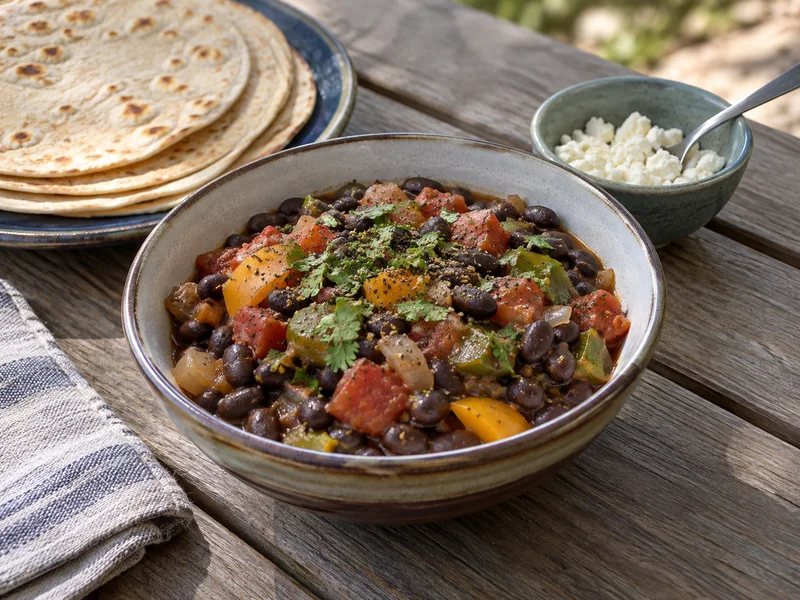
AI-generated illustration: a conceptual vegetarian meal; ingredients and dietary suitability require separate checks.
Build vegetarian camping meals around ingredients that have a clear job: a satisfying main component, a base, vegetables and a flavor you want to eat again. Check sauces and cheese as carefully as the main ingredient, then choose meals that share groceries without requiring the same preparation at every sitting.
A vegetarian camp menu needs a main meal that people want to eat, not a meat dinner with something removed. Start with a bean filling, tofu dish, egg meal or another familiar centerpiece. Then decide how it reaches the table with the equipment and cold storage you have.
Ask the people eating what vegetarian means for their choices. Some include eggs and dairy; others want a vegan meal. Preferences about cheese enzymes and shared cookware can also differ. Write those answers beside the menu before buying food for someone else.
This guide compares meal structures and ingredient decisions. It does not provide tested recipes, prove that a substitution behaves like the original ingredient, or calculate anyone’s nutritional requirements. Use complete recipes you already trust or the preparation instructions on your chosen products.
Give the main ingredient a purpose
Beans, tofu, eggs and cheese create different cooking and storage jobs. Choosing between them is more useful than adding several substitutes to the cooler without deciding which meal uses each one.
| Main component | Useful meal structure | Preparation question | Packing consequence |
|---|---|---|---|
| Ready-to-eat canned beans | Cold bean salad, warm filling or a bowl | Does this dish use the liquid, or require draining? | Can opener, serving utensil and an opened-remainder plan |
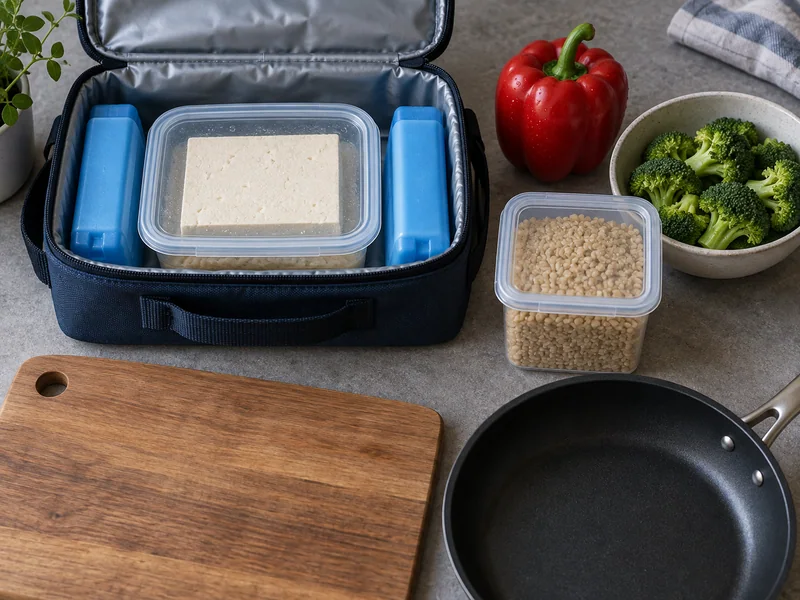
| Refrigerated firm tofu | A skillet meal with a separately prepared base | Does the recipe require draining, pressing or marinating? | Cold storage, a leak-resistant container and space for the preparation |
| Eggs | Scramble, cooked egg sandwich or an egg-based skillet | Will the recipe be prepared at home or cooked at camp? | Cold storage and utensils that separate raw egg handling from serving |
| Cheese suitable for the eater | A filling or topping alongside other ingredients | Does the manufacturer identify the enzymes, if that matters to the eater? | Refrigerated storage when required; separate serving utensil |
| A prepared meat alternative | Burgers, sausages or a crumbled filling | Is it ready to eat or does it require cooking? | The exact package determines preparation, allergens and storage |
Do not replace raw meat with a meat alternative and keep every instruction unchanged. A refrigerated plant-based burger can still require cooking, and a product may be unsuitable for someone avoiding soy, wheat or another ingredient. The name of the meal does not answer those questions.
For meals that also need to avoid gluten, use the separate gluten-free planning and label guide. Vegetarian and gluten-free are different checks.
Six meal directions for different parts of the trip
The combinations below are starting points for choosing a meal, with the work still needed made explicit. They are not quantities or cooking instructions for a finished recipe.
1. A bean salad with bread for the arrival stop
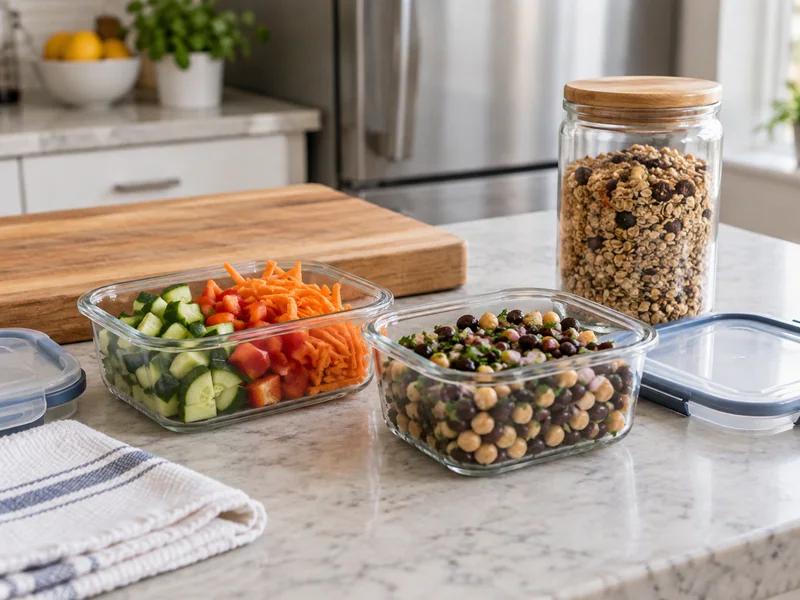
Choose commercially prepared beans intended to be eaten without further cooking, washed produce and a dressing that fits the storage plan. Keep any refrigerated ingredients chilled, and open the beans when you are ready to assemble the meal.
Bush’s explains that its canned variety beans are already cooked. That supports using an appropriate product in a cold dish; it does not make every bean product ready to eat. Dried beans and products with different preparation directions are different choices.
Decide whether the dressing stays with the main supply or is portioned for this meal. If everyone wants a different dressing, two small appropriate packages may be easier to handle than several partly used bottles. The no-cook meal guide can help coordinate the rest of a stove-free day.
2. Tofu and vegetables with a separately planned base
Use a familiar tofu recipe and read its preparation steps before departure. Pressing tofu requires a clean setup and somewhere for the liquid; marinating it creates another container. Doing that work at home can make sense when you have the time and cold transport it needs.
Rice or noodles have their own instructions. Decide whether the base is cooked first, prepared at home and safely reheated, or made on a second burner. Do not assume the tofu and base will finish together simply because they are served in one bowl.
House Foods’ storage guidance says unused tofu from an opened pack should be refrigerated in clean, cold water, with the water changed daily, and cooked and consumed within two or three days. That is a specific storage task. If you cannot carry it out, choose an amount you can use at the planned meal instead of opening a large pack casually.
3. Bean-filled tortillas with toppings kept separate
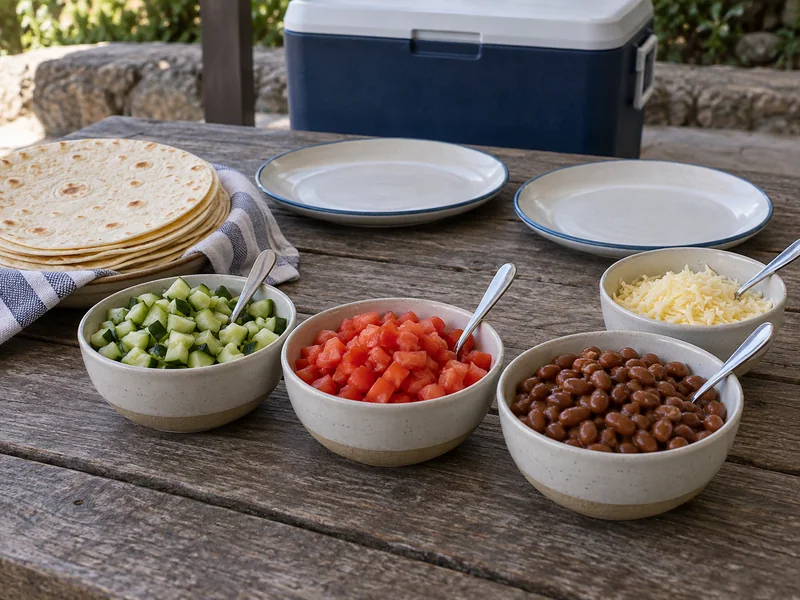
A bean filling can be served in tortillas with vegetables and optional cheese. Choose the filling first, then check how it needs to be prepared. A plain bean product, refried beans and seasoned chili beans do not necessarily have the same ingredients or texture.
Keep toppings out of the main pan until each person serves themselves. This allows someone to leave off cheese without requiring a second version of the entire meal. It only works when the filling itself meets everyone’s agreed requirements and the utensils do not mix ingredients between dishes.
If the tortilla meal is cooked in batches, decide who eats first and where finished food goes. A second pan is useful only if the stove and working space can support it. Dinner choices by cooking method covers that serving decision.
4. A vegetable and bean soup with bread
Use a complete soup recipe with a vegetarian broth and a preparation sequence you know. Broth, soup bases and sauces deserve their own ingredient check; a dish full of vegetables can still contain a meat stock.
Count the pot, serving spoon and bowls. Bread served alongside the soup may be simpler than a second hot side, but it still needs a dry place and a serving plan. If the soup is made before the trip, separate home cooking, cooling and transport from the reheating step at camp. The make-ahead meal guide helps record those tasks.
5. An egg meal for breakfast or an early dinner
For people who eat eggs, a familiar scramble or egg sandwich can use vegetables already assigned to another meal. Reserve those vegetables before dinner preparation uses them all. An ingredient on two menu lines needs two allocations, even when it comes from one package.
Keep raw egg handling separate from the plates and utensils used for serving. FoodSafety.gov says to cook raw eggs until the whites and yolks are firm; its temperature chart gives 160°F for egg dishes and 165°F for casseroles. Choose the rule for the food you are actually making.
6. Stuffed peppers when you have a suitable grill
This option deserves a recipe with an identified cooking method. Bush’s Grilled Chile Rellenos uses its vegetarian baked beans and cheese, with filling prepared in a skillet before the peppers go on the grill. The useful equipment lesson is that a grilled main course can still need a pan and preparation space.
Follow that recipe at its source if it suits your equipment, and check every purchased ingredient. We have not reproduced or tested it. A one-burner stove without the specified grill is a reason to choose another dinner, not to improvise the same result from the recipe’s name.
Check the small ingredients before calling the menu finished
Cheese is a useful example of why a category name is not enough. Cabot’s FAQ identifies microbial enzymes for its cheeses, but explicitly excludes its processed American slices and Shredded Mexican Blend from that assurance because they are sourced from other plants. Use the answer for the exact product it covers.
| Ingredient to check | Question to settle | Practical action |
|---|---|---|
| Cheese | Are the enzymes suitable for this eater? | Check the product and manufacturer information, including exceptions |
| Broth or soup base | Does it contain meat or fish ingredients? | Choose a confirmed suitable product before packing |
| Beans or prepared filling | Does seasoning add meat, fat or another unwanted ingredient? | Read the full ingredient list rather than the front name |
| Sauce or dressing | Does it contain fish, dairy, egg or another ingredient the eater excludes? | Keep a known suitable option with the meal |
| Meat alternative | What preparation and allergen instructions apply? | Retain the label and follow its cooking method |
If a manufacturer does not resolve an ingredient question, use something whose composition you can confirm. Do not make the diner accept uncertainty because the food has already been packed.
Share ingredients without serving the same meal repeatedly
Overlap can reduce the number of opened packages while leaving the meals distinct. Think in jobs: tortillas carry a filling, vegetables add a side or topping, and a checked sauce provides a particular flavor. Change the meal structure instead of repeatedly heating the same mixture.
| Shared ingredient | First assigned use | Separate later use | What must be reserved? |
|---|---|---|---|
| Tortillas | Bean-filled dinner | Egg breakfast for those who eat eggs | Each meal’s chosen count |
| Bell pepper | Tofu skillet | Cold side or cooked egg addition | Separate amounts and appropriate storage |
| Suitable cheese | Optional dinner topping | Another eater’s sandwich | A clean, refrigerated portion when required |
| Beans | One meal’s filling | Another dish only if storage permits | An explicit portion and opened date |
Use the three-day menu example for scheduling and the grocery worksheet for quantities. Neither requires you to adopt its original menu.
Finish the menu with a cold-storage and serving check
Vegetarian food can still be perishable. FDA advises keeping cold food at 40°F or below and preventing contamination during preparation and serving. See its outdoor handling guidance. Cheese, tofu, cooked grains and prepared mixtures need the storage conditions appropriate to them.
Before departure, complete one card per meal:
| Meal decision | Your answer |
|---|---|
| People eating; eggs and dairy included or excluded | ________ |
| Main component and complete recipe or product instructions | ________ |
| Sauce, broth, cheese and other ingredients checked | ________ |
| Home preparation and cold transport | ________ |
| Burner, pan and serving sequence | ________ |
| Shared ingredients reserved for another meal | ________ |
| Unopened backup if cooking is unavailable | ________ |
After the trip, record which preparation steps were awkward and which groceries returned unopened. Those observations can guide the next menu. They are more useful than assuming that every vegetarian alternative saves space, cooks faster or works for every member of the group.
Sources & further reading
Use these original sources for the full context and the latest guidance.
- Cabot Creamery: Frequently asked questions (opens in a new tab)
- House Foods: How to store tofu (opens in a new tab)
- Bush's: Grilled Chile Rellenos (opens in a new tab)
- Bush's: How to cook canned beans (opens in a new tab)
- FDA: Handling food safely while eating outdoors (opens in a new tab)
- FoodSafety.gov: Safe minimum internal temperatures (opens in a new tab)
Prepared with AI assistance. Read our editorial approach.
This is a researched planning guide, not a report of a hands-on product test.
Last updated .