Camping Meals for Large Groups with a Cooking Schedule
Plan group camping meals around pot capacity, serving order, and shared prep. Use a portion worksheet and cooking schedule before scaling up a small recipe.
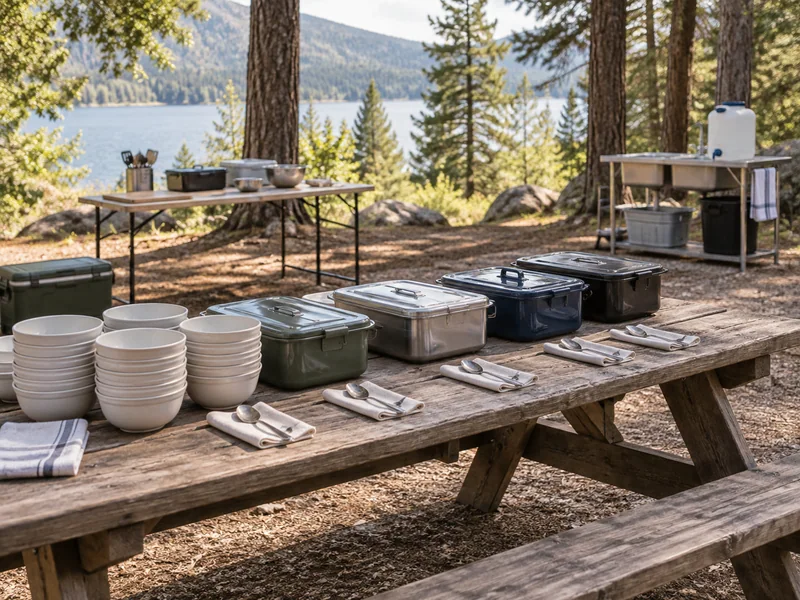
AI-generated illustration: a conceptual group serving arrangement, without a capacity or service-time trial.
Choose group camping meals by what the kitchen can prepare and serve, then assign quantities and jobs. A larger shopping list does not create more cooking surface or a safe place to hold finished food. Work backward from serving, give each dish an owner and keep a separate plan for late arrivals.
The difficult part of a group camping dinner is often the last ten feet between the stove and the table. The main dish is ready, the serving spoon is missing, somebody is still cutting toppings and the first cooked batch has nowhere suitable to wait.
Plan that part before increasing the ingredients. Choose a meal that fits the pans, cooking space and people doing the work. Then write down who prepares each component, how it reaches the table and what happens if someone arrives late.
This is a planning guide with blank worksheets and illustrative arithmetic. We have not cooked for a test group, measured a pot’s working capacity or timed a serving line. A recipe’s quantities may help with shopping, but multiplying them does not establish the cooking time or equipment needed for a larger batch.
Count eaters by meal, not by campsite
Make a small roster that identifies which meals each person expects. A friend joining after dinner does not need an arrival meal, while someone leaving before breakfast should not be counted automatically. Confirm those details instead of treating the maximum group size as every meal’s demand.
Ask about food requirements before choosing the menu. Record a suitable meal for each person, not just a list of exclusions. An allergy, a vegetarian preference and a request for a smaller portion create different decisions.
For families, let an adult who knows the child decide the food and amount. Do not convert every child into an arbitrary fraction of an adult. The family camping checklist covers the wider coordination around eating, equipment and supervision.
| Person or household | Meals present | Chosen food and amount | Preparation requirement | Who confirms it? |
|---|---|---|---|---|
| ________ | ________ | ________ | ________ | ________ |
| ________ | ________ | ________ | ________ | ________ |
| Late arrival | ________ | ________ | Separate storage and reheating plan | ________ |
Once the roster is settled, one person should combine the meal choices into the shopping list. Several households can contribute ingredients, but each item needs one owner and a recorded quantity.
Choose a meal format the group can serve
Some dinners let people assemble their plate from prepared components. Others need each individual item cooked and delivered. Neither is always better; they put the work in different places.
| Group meal format | Where the work collects | Good question before choosing it | Avoid assuming |
|---|---|---|---|
| Soup or chili with bread | Pot capacity, stirring and ladling | Can the quantity be heated safely and served from the pots available? | One large pot will heat like a small saucepan |
| A tortilla or bowl meal with separate fillings | Component preparation and serving utensils | Which fillings need heat, and can they be served together? | A toppings bar has no cooking or cleanup workload |
| Burgers or individual sandwiches | Surface area and repeated batches | How many items can the equipment actually cook at once? | Everyone’s first item will be ready simultaneously |
| A prepared cold meal | Refrigerated storage and assembly | Can every perishable component stay cold until its serving turn? | No stove means no capacity limit |
| A Dutch oven meal | Recipe size, fuel and access to the hot pot | Does the complete recipe match the exact oven and method? | Stacking more food into the same pot preserves the result |
For a short arrival evening, a meal with one hot component and ready-to-serve sides can be easier to coordinate than several hot pans. The choice still depends on the actual recipe and storage. Use the dinner comparison to choose the format before building the schedule.
Separate recipe yield from working capacity
A pot’s advertised volume is not the amount of every food you can cook in it. Stirring, expansion, safe handling and the recipe’s method all require space. The usable amount has to come from instructions for that equipment and a suitable recipe or from a careful trial with your actual setup.
For example, Lodge’s Mountain Man Breakfast identifies a 12-inch camp Dutch oven and links a 6-quart model. That equipment information is part of the recipe. Its stated yield is not evidence that a different casserole, a deeper pot or a much larger batch behaves the same way.
Do not scale a cooking time in proportion to the guest count. A wider pan may expose more food to the cooking surface, while a deeper pile changes how food heats. The right response to an unknown capacity is a smaller verified batch or a different menu, not a guessed time.
Use arithmetic only after the batch amount is known
Suppose a group chooses 12 filled tortillas, and an actual prior trial with its particular pan established that three can be prepared per batch using the selected method. The starting plan requires four batches: 12 divided by three. This is a fictional capacity example, not a claim about any pan or a recommended portion.
If two people decide they want an extra tortilla, demand becomes 14 and the same assumed capacity would require five batches. That final partially filled batch still takes preparation and attention. It cannot be rounded away because it is inconvenient.
| Capacity field | Record before the trip |
|---|---|
| Meal and complete recipe | ________ |
| Eaters’ total chosen quantity | ________ |
| Exact pan, stove or griddle | ________ |
| Verified amount per batch and where that figure came from | ________ |
| Batches required, rounded up | ________ |
| Where each finished batch goes | ________ |
| What remains unknown and needs a home trial | ________ |
If the fourth row is unknown, leave it unknown. Counting ingredients cannot supply a missing equipment measurement.
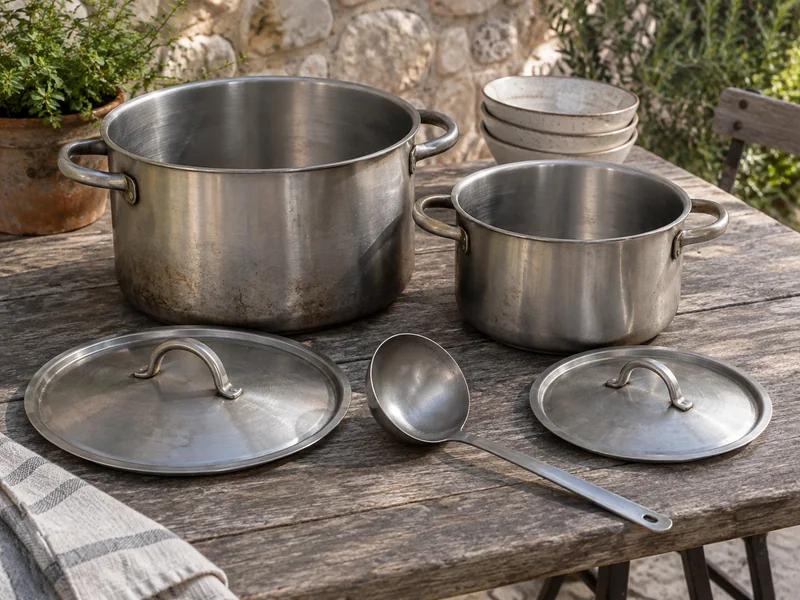
Work backward from the first plate
Choose when the first people will eat, then list what must already be ready at that moment. Plates, serving utensils, a suitable eating area and cold toppings all belong on the schedule. Their absence can hold up a finished meal just as effectively as uncooked rice.
Use stages until you have reliable timing from your own routine. A schedule with invented minute-by-minute estimates looks precise but gives the cooks little help when the first step runs late.
| Stage | Main task | Ready before moving on | Owner |
|---|---|---|---|
| Before departure | Confirm attendance, ingredients and responsibilities | Complete meal roster and shopping allocations | ________ |
| On arrival | Check the cooking area, water and food storage | Suitable equipment setup and clean-hand access | ________ |
| Before heat starts | Prepare the recipe’s initial components and serving area | Raw-food tools separate; dishes and utensils available | ________ |
| Cooking | Follow the established batch method | Required food checks completed before serving | ________ |
| First service | Bring out the assigned food and toppings | Next batch has a clear destination | ________ |
| Later service | Replace serving dishes and handle late arrivals | Storage and temperature plan remains workable | ________ |
| After eating | Deal with leftovers, wash equipment and secure waste | No unassigned food or dirty serving tools | ________ |
Do not have every helper stand beside the stove. One person can handle cold toppings, another can lay out dishes and another can start cleanup away from active cooking. Give the cook room to move hot pans without crossing a line of people carrying plates.
The camp kitchen setup guide helps separate those working areas. NPS also advises planning your cooking method and practicing with unfamiliar equipment in its camp cooking guide.
Decide whether everyone eats together or in rounds
Simultaneous service needs somewhere suitable to hold the early batches. Serving in rounds needs clear expectations, so the last people are not surprised to discover that their food has not started cooking.
For a meal served in rounds, group the orders before cooking and keep the next set of ingredients ready under their required storage conditions. Have someone track which plates have been served. Keep any specially prepared meal clearly identified from preparation through serving.
For shared dishes, use smaller serving amounts and replenish deliberately. FDA’s buffet guidance recommends replacing serving dishes rather than adding fresh food to a dish already in use. It specifies cold holding at 40°F or below and hot holding at 140°F or above. Check food temperatures instead of assuming a warmer or the edge of a griddle provides safe holding.
The same FDA guidance says to discard perishables left without temperature control beyond two hours, or one hour above 90°F. A long conversation or a late arrival does not extend that limit. Assign somebody to track food that is set out rather than leaving the job to whoever happens to notice.
Cooking and holding are separate checks. FoodSafety.gov’s temperature chart calls for 165°F when reheating leftovers. A holding device should not be assumed to reheat a chilled meal safely just because it can keep already-hot food warm.
Build the late-arrival meal before the delay happens
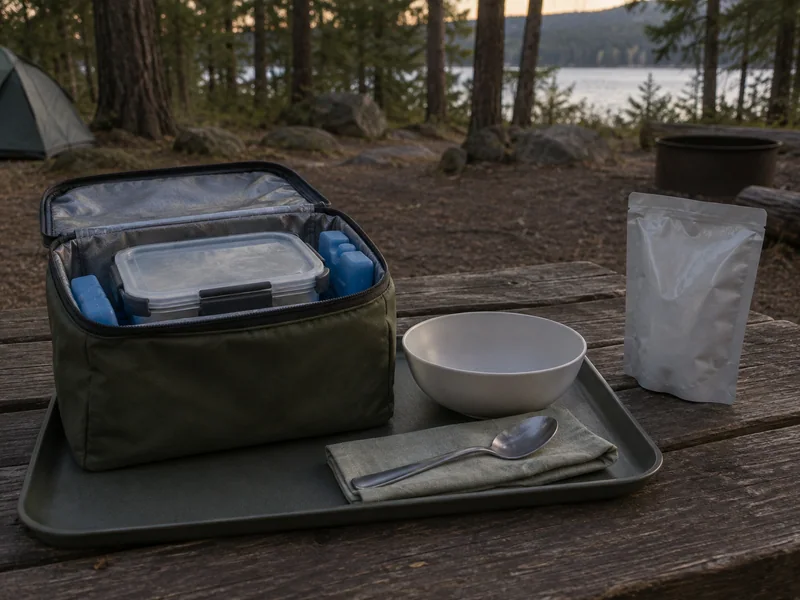
Put late arrivals on the menu as their own service decision. A portion reserved under appropriate cold storage can be reheated when the person arrives. Alternatively, choose an unopened ready-to-eat meal that meets their needs. Do not keep a plate sitting out through an uncertain arrival window.
Label the reserved food with the person’s name and the relevant preparation or storage information. Tell the person where it is and who can help with reheating. Otherwise, a neatly labeled portion can still disappear into the general leftovers.
Reserve food also needs a quantity separate from the planned meal. If the spare wraps are already assigned to lunch tomorrow, they are not an uncommitted backup for tonight.
Consolidate groceries without hiding responsibility
Use the camping grocery worksheet to add ingredient demand, subtract usable stock and round purchases to actual package sizes. Keep a meal reference beside each quantity so that a change in attendance has an obvious place in the calculation.
One household might bring the main filling while another brings bread and toppings. Record the complete assignment, including serving equipment and storage. “Bring chili” can leave the group without a ladle, and “bring drinks” can leave a cooler full of beverages with no room for food.
The three-day menu example shows how ingredients can be allocated across meals. Use its method of tracking shared ingredients, not its two-person quantities as a ready-made group plan.
After the trip, record the actual batch quantities, any delays and what the group would change. Keep those observations tied to the equipment and food used. They can improve the next schedule without becoming a universal promise about how many people a camping kitchen can feed.
Sources & further reading
Use these original sources for the full context and the latest guidance.
Prepared with AI assistance. Read our editorial approach.
This is a researched planning guide, not a report of a hands-on product test.
Last updated .