A Family Camping Checklist for Trips with Kids
Adapt a camping checklist for children by age, sleep routine, clothing, and campsite tasks. Plan practical activities and backups for a manageable family trip.
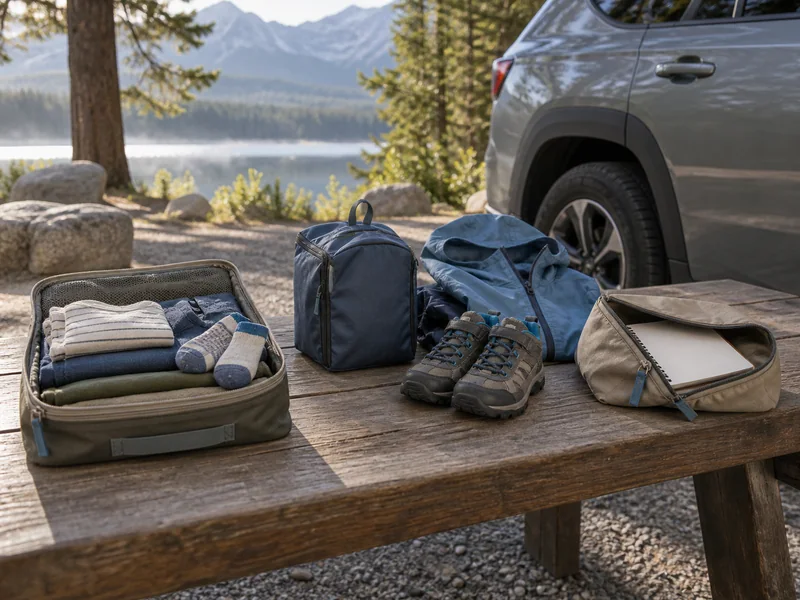
AI-generated illustration: organize family supplies around clothing changes, bedtime and quiet activities.
Build a family camping checklist around the moments when children need help: arrival, meals, clothing changes, bedtime, bathroom trips and departure. Keep the general equipment list separate, name the adult responsible for each routine, and pack the next needed items where they can be reached. Choose tasks by the child's ability and the conditions, with an adult retaining responsibility for supervision and safety.
The sleeping bags can all be packed while the family’s actual bedtime plan is still missing. Who finds the pajamas? Where is the light for the bathroom walk? What happens when one child wants to sleep and another is still eating?
This family camping checklist addresses those transitions. Use the car camping equipment checklist for shared shelter, cooking and road supplies. Add the family decisions below to make that equipment usable for the people coming. The worksheets are original planning prompts; they do not represent a family trip we have carried out.
Describe an ordinary day before packing a special trip
Write down each child’s usual eating, rest, bathroom and sleep routines. Note which parts can move and which need to stay reasonably familiar. Include sensory preferences, mobility needs, dietary requirements and the amount of adult help each task takes. Age alone does not answer those questions.
Then compare that day with the campsite. A long walk to the bathroom matters differently to a child who needs frequent help than to an independent teenager. A shared tent matters differently when bedtimes are several hours apart. Resolve the mismatch before trying to fix it with more equipment.
The National Park Service’s family camping advice encourages reasonable expectations and tasks suited to a child’s age and ability. Make participation specific: a child can match their clothing pouch to their sleeping place without being responsible for setting up a safe sleeping arrangement.
Ask older children what would make the trip enjoyable and what worries them. Give them a real choice within the plan, such as choosing between two suitable activities. They should also know when the family will leave, how privacy will work and where they can put belongings that others should not borrow.
Make a responsibility card for each transition
Two adults assuming the other one is watching a child is not a handover. Agree on responsibilities aloud and make the next task clear. When only one adult is present, simplify the work so supervision does not depend on doing two incompatible jobs at once.
| Moment | Adult responsibility | Child’s possible contribution | Keep accessible | Backup to decide now |
|---|---|---|---|---|
| Arrival | Supervise children while assessing and setting up the site | Put a personal bag in the assigned place with guidance | Water, suitable snack, clothing layer, simple activity | A shorter setup or alternative accommodation if conditions do not fit |
| Meal preparation | Manage heat, sharp tools, food requirements and supervision | Set out suitable unbreakable dishes away from cooking | Clean hands supplies, meal portions, serving kit | A meal that fits the available heat and cold storage |
| Clothing change | Check comfort and manage wet or soiled clothing | Choose between suitable dry items or organize a personal pouch | Full dry change and a bag for wet items | Extra dry supplies and a way to end the outing |
| Bedtime | Prepare the sleep arrangement and settle each child | Follow a familiar sequence and choose a book | Sleep clothing, required personal items, appropriate light | A quiet alternative if the planned arrangement is unworkable |
| Bathroom visit | Provide the help and supervision the child needs | Carry a suitable light when able | Footwear, layers, hygiene items | The campground’s permitted alternative if facilities are unavailable |
| Departure | Check children, belongings, vehicle seating and the final site | Help identify personal belongings in a defined area | Travel clothes, water and the next needed food | Leave optional tasks for home rather than rush essential checks |
Write actual names beside the rows you use. If one adult is preparing dinner and another is supervising, say when that changes. An older sibling can help with a game or carry a bag; that does not silently transfer an adult’s safety responsibility.
Check the site from a child’s point of view
Before unloading everything, look at the route from the sleeping area to the toilets, water, traffic, cooking space and any nearby water. Decide the boundaries the child can understand and what adult accompaniment is required. Point out where to find you rather than describing the entire campground as a place to roam.
Record the site number, campground name and how to contact staff. Keep this information with the adults as well as on a charged device. Ask staff about conditions that may not be obvious on a booking map. The NPS pre-trip safety guide recommends planning around the group’s limits and changing the trip when conditions no longer support it.
Near water, make supervision an explicit job. CDC drowning prevention guidance calls for close, constant supervision by a responsible adult, including for children who have had swimming lessons. Watching should not be combined with scrolling a phone or preparing food. A campsite beside a creek still needs this decision when nobody planned to swim.
Identify suitable severe-weather shelter before it is needed. The National Weather Service advises moving immediately to a substantial building or enclosed metal-topped vehicle with windows up when thunder is heard, and staying sheltered for at least 30 minutes after the last thunder. A tent is not that shelter. Confirm how every family member will reach the location and whether it is available when needed.
Pack clothing as complete changes
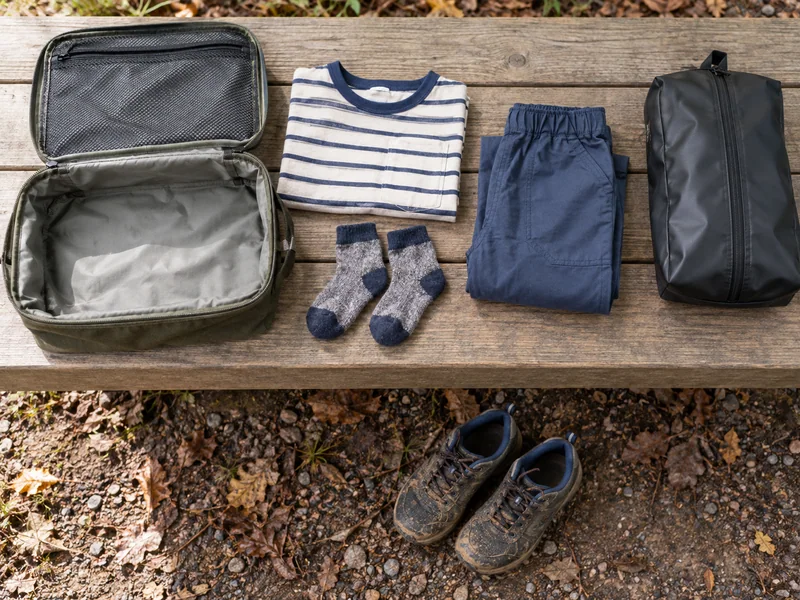
A pile of spare shirts is less useful when the missing item is dry socks. Group clothing in the combinations you expect to use, then adjust for weather and the child’s needs. This is a packing method, not a fixed number of outfits for every child or trip.
Keep one complete change reachable during travel and arrival. Separate bedtime clothing from things worn around a damp campsite. Choose a location for wet and soiled items so they do not get returned to the dry bag by mistake. Check that the chosen storage and laundering arrangements fit the trip.
Give children who can manage their clothes a simple system: one bag for clean items, another for items needing attention, and one place for footwear. Labels can be words, colors or pictures. Let the child practice finding a change at home before expecting the system to work in a dim tent.
Pack necessary personal-care items according to the person’s usual requirements. Keep medications, dosing instructions and any individualized care plan under responsible adult control; discuss changes to that care with the relevant clinician. A generic camping list cannot supply a child’s medical instructions.
Rehearse bedtime with the actual sleeping space
Set out the sleeping equipment at home and check the usable space after bags and footwear have a place. Practice retrieving the bedtime items without emptying the whole vehicle. A rehearsal can reveal a practical problem, but it does not establish that equipment is suitable for every temperature or child.
For older children, a familiar short routine might be changing clothes, a bathroom visit, reading and lowering the light. Keep the routine recognizable without promising the same sleep as home. If someone wakes, decide which adult responds and how they can move without stepping over other sleepers.
Infants need a separately assessed sleep arrangement. CDC safe-sleep guidance calls for placing babies on their backs on a firm, flat sleep surface such as a safety-approved crib, with a fitted sheet and no soft bedding or toys. Do not improvise an infant bed from an adult camping mattress, pillows or a shared sleeping bag. Confirm that the actual approved product and environment can meet the infant’s needs before choosing this trip.
Privacy is also part of comfort. Plan where older children can change and how family members signal that a space is occupied. Keep exits usable and do not put a privacy arrangement across a route someone needs at night.
Make meals easier to share without erasing individual needs
Start with foods the group already knows, with portions and storage based on the actual ingredients. A familiar breakfast can be helpful when sleep has been uneven. Keep appropriate snacks reachable so retrieving one does not disrupt the entire cooking setup.
Write dietary needs before shopping. Check labels and the preparation area, including shared utensils. A dish with a different name is not evidence that it suits an allergy. For several families, the large-group camping meal planner separates requests, quantities and serving responsibilities.
Give children a contribution that fits the conditions. Carrying napkins or naming which cup belongs to them can be enough. Do not make a child’s involvement depend on proximity to flames, boiling water or a sharp tool. When adults are stretched, choose simpler food and fewer separate cooking steps.
Bring a small activity set with a stopping point
Choose a few activities that can be started and packed away easily. An activity with dozens of small pieces may create more work than entertainment in a shared tent. A story, drawing sheet or familiar card game can fit in one labeled pouch.
Keep one option for a tired child who does not want to join the group. Plan something older children can adapt without becoming unpaid entertainers for younger siblings. Our rainy-day activity cards include original prompts and small-space adaptations; they are not a substitute for moving out of unsafe weather.
Avoid assigning every hour. Leave room for rest, food, bathroom trips and a change of mind. If you plan a ranger activity, verify its current location, schedule and suitability through the destination’s own information.
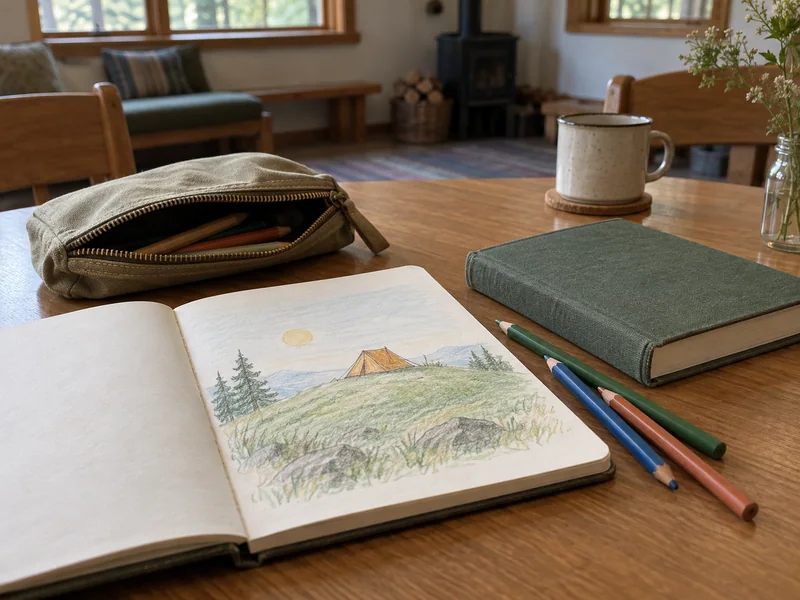
For ideas to use once camp is settled, try these easy campsite activities for children. Each includes a way to adapt the game for different ages or energy levels.
Print the family decisions that remain unresolved
| Family decision | Our answer | Adult to confirm |
|---|---|---|
| Each child’s sleep, food, bathroom and support needs | ________ | ________ |
| Campsite boundaries and nearby hazards | ________ | ________ |
| Arrival supervision and setup roles | ________ | ________ |
| Bedtime equipment, routine and night response | ________ | ________ |
| Dry change, wet clothing and personal-care locations | ________ | ________ |
| Food requirements, portions and backup meal | ________ | ________ |
| Activity choices and an option to rest | ________ | ________ |
| Severe-weather shelter and route to it | ________ | ________ |
| Conditions that mean changing or ending the trip | ________ | ________ |
After the trip, ask what was difficult to find and which routine needed more help than expected. Add one concrete change to the next checklist. Keep the useful arrangement, remove the unused complication and let the family’s experience refine the next trip.
Sources & further reading
Use these original sources for the full context and the latest guidance.
Prepared with AI assistance. Read our editorial approach.
This is a researched planning guide, not a report of a hands-on product test.
Last updated .