Camping Activities for Kids: 11 Easy Campsite Ideas
Try 11 easy camping activities for kids, from sock toss and photo hunts to bird watching and shadow puppets, with age adaptations and a small packing list.
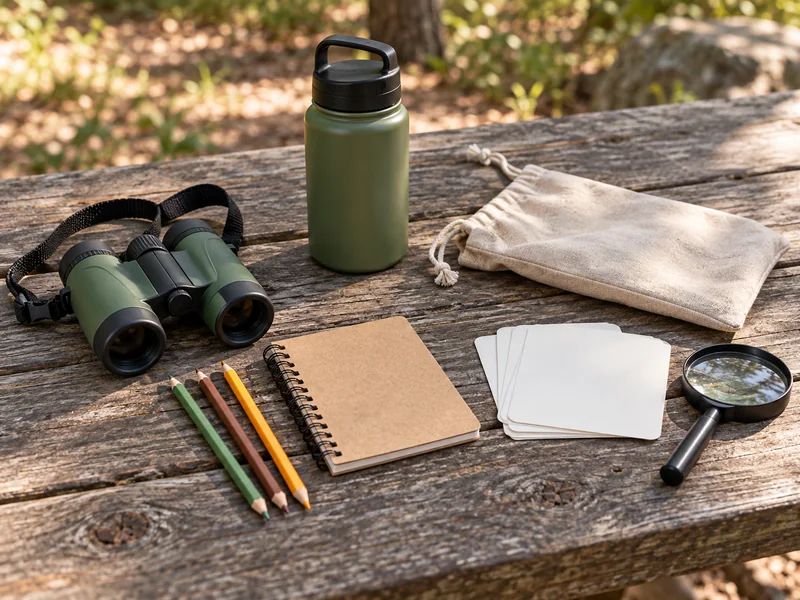
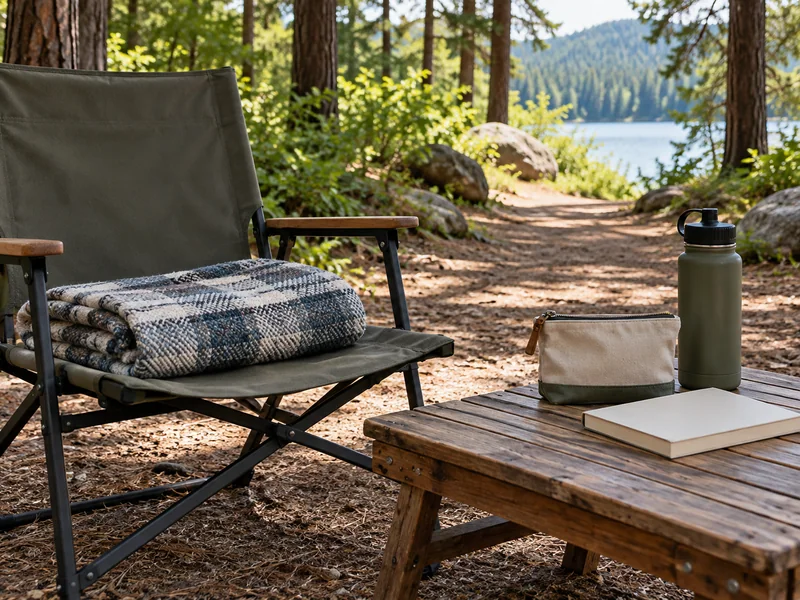
AI-generated illustration: a small kit for campground games, sketching and nature watching.
Turn rolled socks into a target game, take a photo scavenger hunt along a short trail, or settle into the shade to listen for birds. These simple camping activities use a small kit and include easier and harder variations for children of different ages, plus useful camp jobs and quiet evening ideas.
You have pitched the tent, lunch is still a while away, and someone has already asked what there is to do. Start with what is within reach: rolled socks for a throwing game, a bird moving through the trees, or a short path with things to spot along the way.
The camping activities for kids below work with a small kit and ordinary campground space. Pick a couple that suit today’s energy. There is no need to get through them all, and an activity that holds everyone’s interest can last as long as they want to keep playing.
| If the children want to… | Try this | Bring |
|---|---|---|
| Move around near camp | Sock toss or follow the leader | Rolled socks and a bag or bucket |
| Explore with an adult | Color hunt or photo scavenger hunt | Optional phone or camera |
| Watch something closely | Bird watching | Optional binoculars or a field guide |
| Help with camp | Set-the-table challenge | Your usual cups and utensils |
| Slow down in the shade | Sound map or cloud stories | Paper and a pencil, if wanted |
| Stay up for a little evening fun | Shadow puppets or first-star watching | Flashlight and a layer |
Show everyone where play can happen
Walk the permitted play area together before starting a game. Point out the road, neighboring sites, water, cooking area and tent guylines. Give younger children a boundary they can see, such as “between our picnic table and those two chairs,” with an adult close by. Games involving movement need open, level space away from those hazards.
Use the family camping checklist for the clothes, sleep arrangements and supplies that make the rest of the trip work. Age suggestions here are starting points; adjust the movement, reading and instructions to each child’s abilities.
Outdoor games for children who need to move
1. Go on a color hunt
Call out a color and walk together until someone spots it. Yellow could be a flower beside the trail, a tent in the distance or a patch of lichen. Point to the find, then let that child choose the next color. Nothing needs to come back to camp.
For toddlers and preschoolers, offer two easy choices: “Can you see something green or brown?” Older children can look for a particular shade or find three different things of one color. A seated version works from a picnic table or camp chair.
Keep flowers, stones and fallen objects in place. Leave No Trace recommends leaving natural objects as you find them; pointing, sketching or taking a photograph gives the hunt an ending without filling a collecting bag.
2. Turn spare socks into a target game
Roll a few clean socks into soft balls. Put an empty bucket or open tote bag on the ground, then choose a throwing spot a short distance away. Players take turns tossing all the socks before anyone walks forward to collect them.
Move the target closer for a younger child. For older children, try an underarm throw with their less-used hand, or see how many the whole family can land together. A towel laid flat makes a wider target if the bucket proves frustrating. Keep throws low and aimed away from people, tents and cars.
Play on the established campsite surface, count the socks back into the bag, and save running games for a designated recreation area.
3. Follow the leader with animal moves
An adult leads a short route within the agreed play area: take three slow bear steps, stretch tall like a heron, then waddle like a duck. Let each child add a movement before repeating the sequence together.
Small movements are enough. Children can make beaks with their hands or move their arms like wings while seated. Older children can invent a sequence for everyone to remember. Skip balancing on logs, climbing campsite furniture or jumping over gear. The fun is in the imitation, so there is no finish line to race toward.
Nature activities for a short walk
4. Take a photo scavenger hunt
Choose four or five things to spot along an established trail: a crooked tree, something with stripes, a shadow, a trail sign and something smaller than a thumb. One family phone or camera is plenty. Take turns choosing the view, or simply point out each find if you would rather leave the phone packed away.
A preschooler can search for one prompt at a time. Older children might photograph three textures or make a set of pictures that tells the story of the walk. Leave other campers out of the frame and keep feet on the trail; a photograph is not a reason to reach into vegetation or get closer to an animal.
5. Watch one bird for a while
Find a comfortable spot and wait for a bird to appear naturally. Watch what it does: hops along the ground, turns its head, disappears behind a branch or lands in the same place twice. Ask “What did you notice?” before reaching for a species name.
Binoculars are optional. Young children can describe the bird’s color or movement, while older children can use a field guide afterward to narrow down the possibilities. If nothing appears, watch the treetops or try again another time.
Do not offer food, play bird calls to draw birds in or follow one toward a nest. The NPS camping guidance advises against feeding or approaching wildlife and asks visitors to follow the park’s viewing-distance rules.
6. Ask about a Junior Ranger activity
At a national park, ask at the visitor center about the local Junior Ranger program. Activities often come in a booklet and introduce the particular park’s landscape, wildlife or history. Check the requirements and the time to return before setting off.
Let children choose a page that catches their attention rather than treating the book as homework. One child might enjoy an exhibit puzzle while another prefers drawing something outdoors. Follow that park’s instructions for completing the program and receiving a badge. At a state park or private campground, ask whether there is a guided nature walk or family program instead; availability varies by destination.
Give children a useful camp job
7. Make setting the table a matching challenge
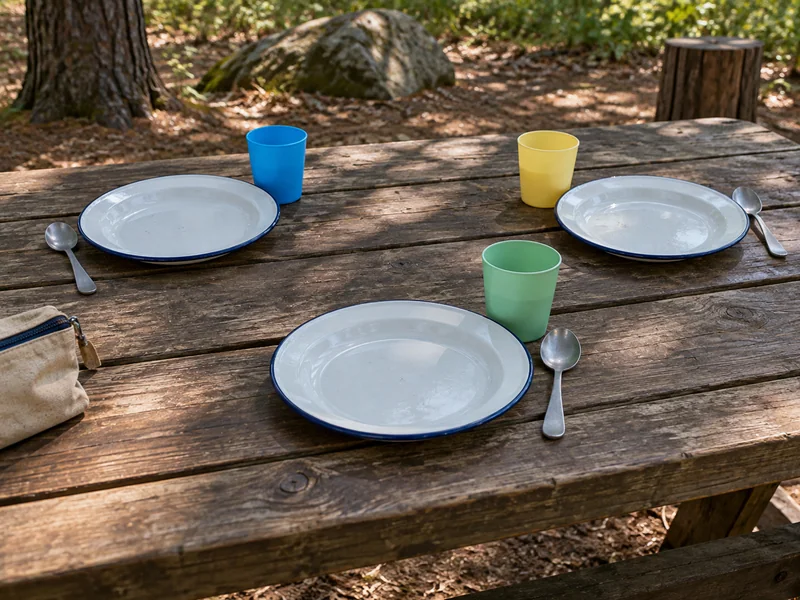
Lay out the unbreakable cups, plates and utensils needed for your next meal. Ask a younger child to put one cup beside each plate. An older child can work out what is missing, arrange the settings or explain the layout to another willing helper.
Make it playful by giving clues: “One person has a cup but no spoon. Can you find the place?” Stop before food arrives, then wash hands for the meal. Keep knives, stove controls, hot pans and fuel with the adult doing the cooking.
The National Park Service recommends involving children in tasks suited to their age and ability. A small real job can fill the gap before dinner without creating a separate activity to set up and clear away.
Quiet activities for a shady afternoon
8. Draw a map of the sounds
Sit in a shady spot and put a dot in the middle of a page to represent where you are. Listen quietly, then add a mark in the direction of each sound: a wavy line for wind, a small bird for a call, a rectangle for a passing vehicle. The drawing can be as rough as you like.
Children who prefer talking can describe a sound while someone else draws it. Older children can compare nearby and distant sounds, or listen again later to see what has changed. Stay in the same place instead of following an interesting noise through the campground.
There is no score for hearing the most. Someone who wants to listen without drawing is already taking part.
9. Tell a story about the clouds
From a shaded chair or blanket, choose a cloud that resembles something: a boat, a dog or a lopsided sandwich. Take turns adding what happens as its shape changes. Does the boat gain a sail? Has the sandwich turned into a dragon?
Keep eyes away from the sun and choose another view if looking up is uncomfortable. A younger child can name shapes while an older child tells the story. On a cloudless day, make up a conversation between two trees in view instead. Books and a quiet rest are equally good options when nobody wants a group activity.
Evening activities without a campfire
10. Put on a shadow-puppet show
Use a flashlight to cast hand shadows onto a plain piece of card or another suitable surface at camp. Start with a bird opening and closing its beak, then let children invent creatures and give them voices. An adult can hold the light while children take turns performing.
Set this up seated in the campsite, with the beam directed away from faces and neighboring tents. Use a battery flashlight, keep the space clear of cooking equipment, and put it away when interest fades.
11. Watch for the first stars
Before bedtime, settle into chairs with an adult and see which stars become visible. Children can count the first few they notice or describe a pattern of their own. You can enjoy the sky without identifying a constellation or staying up for complete darkness.
Have a light available for moving around camp. The NPS camp-etiquette guidance asks campers to keep lights shielded and directed down, and to respect neighbors as well as posted quiet hours. Keep this a quiet moment at your own site.
Pack a small kit and leave room for a change
Rolled socks, a bag, paper, pencils, a book and a flashlight cover most of these activities. Add optional binoculars or a field guide if you already have them. Tuck the kit into an accessible part of your car-camping supplies so finding a pencil does not require unpacking the car.
For ordinary wet weather, keep our rainy-day camping activities handy. Thunder changes the decision: the National Weather Service says to move immediately to a substantial building with electricity or plumbing, or an enclosed metal-topped vehicle with windows up, and wait at least 30 minutes after the last thunder. A game can wait.
Leave some gaps between activities. A short walk may become a long look at one tree, and the sock game might be requested again after dinner. You only need enough ideas to get started.
Sources & further reading
Use these original sources for the full context and the latest guidance.
- National Park Service: Camping with kids (opens in a new tab)
- National Park Service: Camp etiquette (opens in a new tab)
- National Park Service: During your stay (opens in a new tab)
- National Park Service: Become a Junior Ranger (opens in a new tab)
- Leave No Trace: Leave what you find (opens in a new tab)
- National Weather Service: Lightning tips (opens in a new tab)
Prepared with AI assistance. Read our editorial approach.
This is a researched planning guide, not a report of a hands-on product test.
Last updated .