A Car Camping Checklist Built Around Your Trip
Pack for a car camping trip with a checklist organized by sleep, meals, clothing, and campsite tasks. Separate essentials from seasonal and optional equipment.
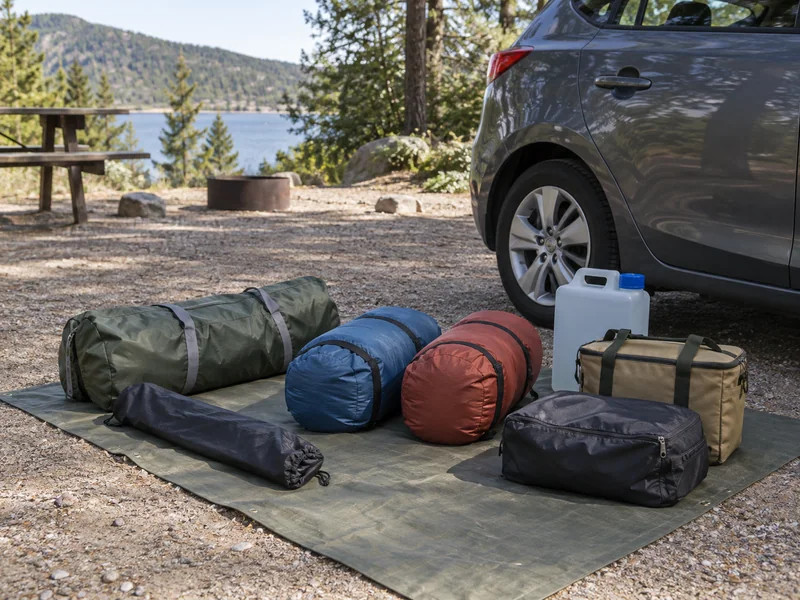
AI-generated illustration: group car camping equipment by the tasks it needs to cover.
For a weekend of tent camping with your car nearby, cover shelter, sleep, water, meals, clothing, light, personal care and a way to get help. Then add what your campsite, weather and activities require. Use the checklist to name who packs each item, where it travels and what must be checked before it leaves home.
A tent is on the list, but are its poles in the bag? The phone is charged, but is its cable in someone else’s car? Packing gets easier when each line ends with something you can actually check.
This car camping checklist is for a weekend at a designated campground, sleeping in a tent with the vehicle nearby. Start with the tasks below, then adjust the equipment and quantities for your group. Sleeping inside a car, operating an RV and carrying everything into the backcountry need different preparation.
Download the editable car camping checklist (CSV). It contains the same packing tasks as this guide, with extra columns for quantity, owned or borrowed equipment, the responsible person, packed location and return checks. No email or account is needed. Open it in a spreadsheet, or print this guide and mark the tables by hand.
Make a short trip card before packing
Write down the details that could change what you bring. “The campground has water” needs a source, an operating date and a backup if that supply is unavailable. “Two nights” still leaves the arrival meal, departure lunch and time on the road to account for.
| Trip detail | Your answer | What it changes |
|---|---|---|
| People, nights and activities | ________ | Quantities, sleeping spaces and any separate outing equipment |
| Campsite and distance from parking | ________ | What you can carry and how often you want to unload |
| Expected overnight and daytime conditions | ________ | Shelter, bedding, clothing and whether the trip suits your equipment |
| Potable water, toilets, table and dishwashing facilities | Confirmed source and date: ________ | Tasks the campsite covers and equipment you must supply |
| Food storage and current fire restrictions | Official source and date: ________ | Storage arrangement, cooking method and permitted fuel |
| Arrival window, warning updates and fallback | ________ | What must stay accessible and when to change the plan |
If the campground has not confirmed a facility, leave it marked unconfirmed. The National Park Service’s pre-trip guidance recommends matching equipment to the setting, season, access and duration, checking park rules and preparing an alternative when conditions change.
Put bookings and travel timing in the road trip planning sheet. Keep this packing card focused on what those decisions require you to carry.
Use the three checklist labels
Core task means the need must be covered for this trip. It does not mean buying every item shown. A suitable piece of equipment you already own, a borrowed item you have checked or a confirmed campsite facility may do the job.
Conditional means there is a specific trigger. A stove belongs on the list when the menu needs heat and its use is permitted. A cooler belongs when the food requires cold storage. Once a condition applies, its equipment is no longer an optional extra.
Optional means you can leave it behind without breaking your chosen plan. Individual needs can change that label. For example, a seat or sleeping support that one person treats as a comfort extra may be necessary for another.
Read the task, decide how you will cover it, then make the check. Mark Packed only after the actual item is verified and loaded. Write N/A with a reason when the task is covered another way. An empty box means the decision is unfinished.
The fields are blank because this is a planning worksheet. No complete kit, trunk fit, setup time or overnight performance has been tested for you.
Check shelter and sleep as one setup
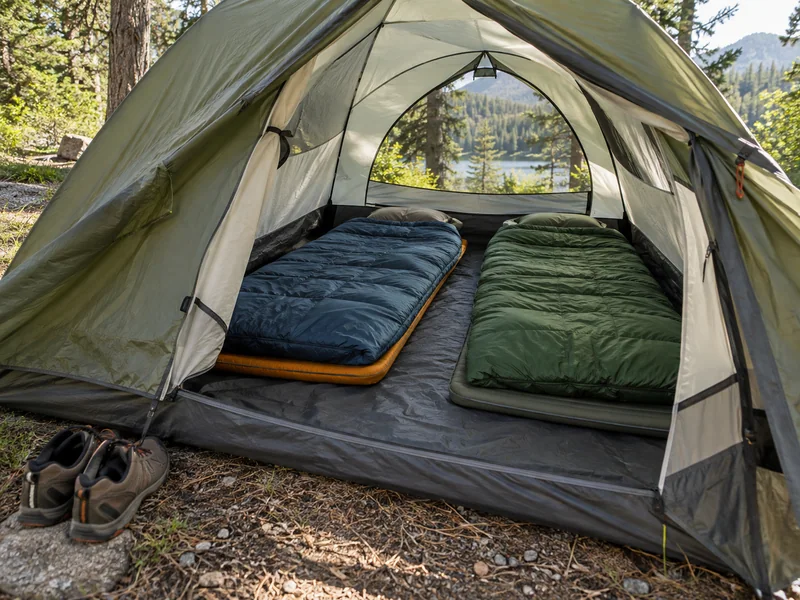
Lay out the tent and the sleeping equipment together before assigning them separate bags. A mattress that looks compact when deflated still needs to fit inside the erected tent, with room to use its entrance. Check that any pump has the right adapter and a usable power source.
The NPS camping equipment guidance connects sleeping equipment to the location, season and sleeper’s needs. Use the information for your own bag and pad, along with the forecast. A warmer afternoon or a large tent does not establish that the sleeping arrangement will suit the night.
| Task or condition | What covers it | Check before packing | Owner / location | Packed / N/A |
|---|---|---|---|---|
| Put up shelter | Suitable tent, poles, rainfly, stakes and guylines required by its instructions | Lay out the actual parts and practice the complete setup. | ________ | ________ |
| Stay warm while sleeping | Sleeping bag or bedding suited to the expected overnight conditions | Read its rating guidance; account for the sleeper and the rest of the sleep system. | ________ | ________ |
| Separate the sleeper from the ground | Suitable sleeping pad or mattress for each person; required inflation equipment | Check dimensions inside the tent, insulation information and inflation before departure. | ________ | ________ |
| Keep the sleeping kit dry | Dry storage for bedding and a separate set of sleeping clothes | Locate both without opening a bag of wet outdoor clothing. | ________ | ________ |
If you are borrowing a tent, ask for all its components and the setup instructions. Check it in time to resolve a missing part. Buying an accessory after arriving is only an option if you already know a suitable supplier will be available.
Cover meals, water and everyday care
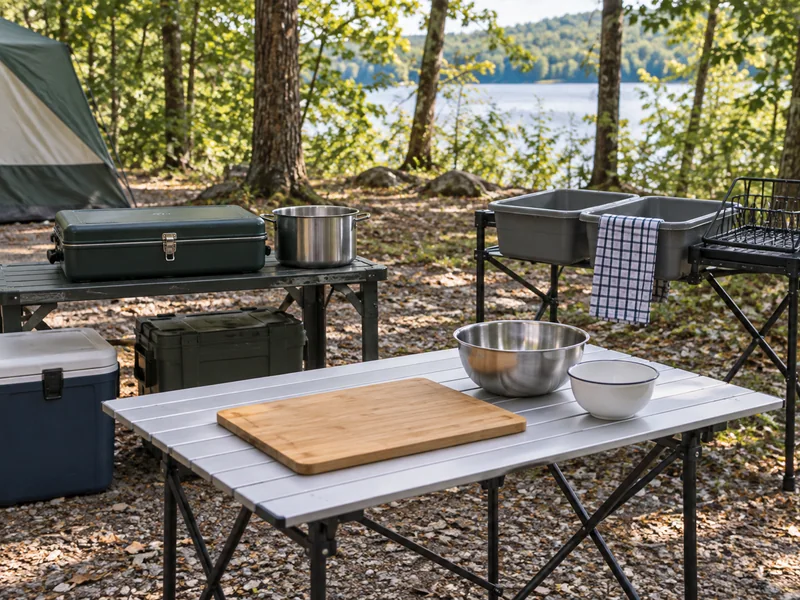
Choose the meals before packing the whole kitchen. The three-day camping meal plan offers an illustrative starting sequence; adapt its quantities to your own group. Use the camp kitchen setup checklist for the utensils, work surfaces and washing arrangements that menu requires.
Water has several jobs. The NPS what-to-bring guidance identifies drinking, cooking and cleaning. Record those demands separately, confirm potable refill access and account for a disruption. A container’s capacity alone cannot tell you whether the trip’s water needs are covered.
| Task or condition | What covers it | Check before packing | Owner / location | Packed / N/A |
|---|---|---|---|---|
| Drink and complete camp chores | Potable water, suitable containers and a confirmed refill plan | Count drinking, cooking and washing needs separately, plus a disruption allowance. | ________ | ________ |
| Feed the group | Food for the planned meals, snacks and a suitable backup | Include travel meals and each person’s dietary needs; check quantities against the menu. | ________ | ________ |
| Put food away between uses | Storage meeting both ingredient instructions and destination wildlife rules | Confirm the overnight arrangement and usable storage space before shopping. | ________ | ________ |
| Serve and eat | Suitable cup, bowl or plate and eating utensils for each traveler | Choose what the actual meals require and identify where clean items return. | ________ | ________ |
| Clean hands | Soap, suitable water access and drying supplies | Keep them accessible before unpacking food. | ________ | ________ |
| Clean used dishes | Dishwashing and drying supplies for the site’s permitted facilities | Confirm the washing location and wastewater disposal method. | ________ | ________ |
| Contain and remove waste | Trash bags or containers and separate storage for wet or dirty items | Allow room for return waste when the car is repacked. | ________ | ________ |
| Use the bathroom and manage personal care | Toiletries, toilet paper where needed, menstrual supplies and personal care items | Check toilet access and how required supplies or waste will be stored. | ________ | ________ |
| Dress for the whole day | Clothing, underwear, socks and layers suited to the trip | Include travel, camp and spare dry clothing; set quantities for your own stay. | ________ | ________ |
| Handle wind and precipitation | Appropriate outer layers and a way to keep spare clothing dry | Review the campsite forecast and the limits of your existing clothing. | ________ | ________ |
| Walk around camp | Footwear suited to the ground and planned activities | Check fit, condition and the walk to toilets after dark. | ________ | ________ |
| Protect exposed skin and eyes | Suitable sun protection and insect protection for the destination | Read product labels and choose supplies appropriate for each traveler. | ________ | ________ |
Food storage needs two checks: the ingredient’s storage instructions and the destination’s wildlife rules. At Yosemite, for example, food must not stay in a car or truck after dark; campground food lockers are required, and the rules include scented toiletries and trash. This is a local rule, not a universal instruction for every campground. Read the Yosemite food storage requirements if you are going there, or the equivalent rules for your destination.
Use the camping food storage guide to plan temperature control and storage between meals. Put the required containers on this checklist after that plan is workable. An empty space in the trunk is not a substitute for an approved overnight storage arrangement.
For the cleaning supplies, work through the camp dishwashing routine before marking them packed. Check both where you will wash and where you must take the used water.
Keep light, trip details and help within reach
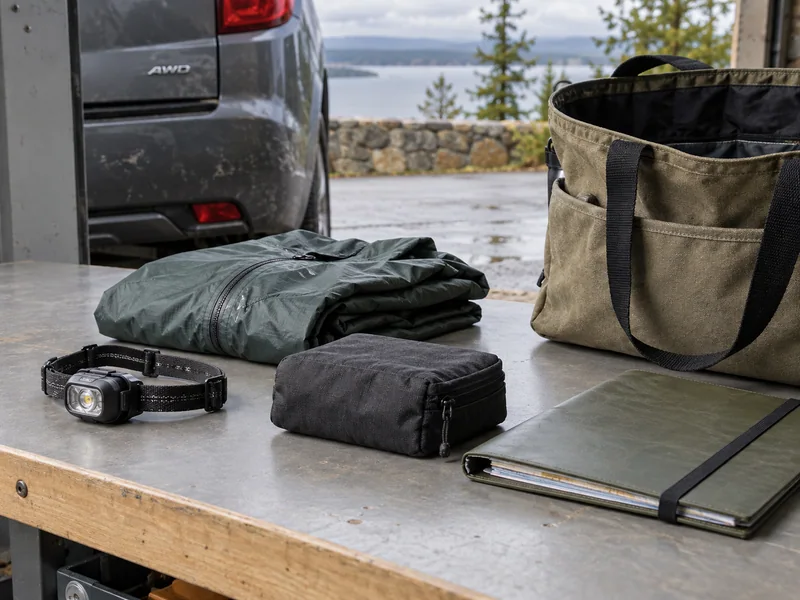
Some equipment needs to travel where you can reach it during the drive or before the first bag comes out. Give your personal light, trip information and emergency supplies specific locations. “Somewhere in the camping box” is difficult to act on after dark.
| Task or condition | What covers it | Check before packing | Owner / location | Packed / N/A |
|---|---|---|---|---|
| Move and set up after dark | Working personal light and compatible spare power | Turn it on; keep it reachable before unloading the tent. | ________ | ________ |
| Respond to a minor injury or seek help | First aid supplies you know how to use and local emergency information | Inspect contents and locate the kit without moving the main luggage. | ________ | ________ |
| Support individual health needs | Required personal medication or equipment, where applicable | Confirm storage and power requirements; keep private details on your own copy. | ________ | ________ |
| Reach the site and find the return route | Offline directions, appropriate maps and a shared trip plan | Open saved information without a connection and name the check-in contact. | ________ | ________ |
| Contact help and receive updates | A communication plan suited to coverage, with required devices and charging | Confirm coverage limits and how you would get help if the phone cannot connect. | ________ | ________ |
| Act on a weather warning | Current forecast, a way to receive warnings and a reachable suitable shelter or fallback | Record where to go, how to get there and when to change the plan; a tent is not a lightning refuge. | ________ | ________ |
| Check in and follow the site rules | Booking or permit details, identification or payment required by the operator | Save the arrival window, late-arrival procedure and current restrictions. | ________ | ________ |
| Handle a roadside interruption | Vehicle-appropriate emergency supplies and assistance information | Check the owner’s manual, tire arrangements and access to the roadside kit. | ________ | ________ |
Inspect the first aid kit rather than simply confirming the pouch exists. The American Red Cross advises replacing used or out-of-date contents and considering personal needs. Keep the relevant instructions with your supplies.
The vehicle needs its own preparation. Review NHTSA’s road trip guidance and the vehicle owner’s manual before leaving, including tire checks and roadside supplies. This camping worksheet does not replace the vehicle’s maintenance schedule.
For charging, list the device and its compatible cable together. If essentials depend on more energy than your current arrangement can provide, use the camping power budget before choosing additional equipment. An unused outlet at a campsite is not a confirmed power supply.
Traveling with children adds routines and adult handoffs as well as supplies. Use the family camping checklist for sleep, clothing changes and responsibilities. The rainy-day activity guide provides small-space games once suitable shelter and weather conditions are settled.
Add equipment when a condition calls for it
Work through these rows even when you hope to leave the item behind. Record the reason a condition does or does not apply. That prevents “we do not need a stove” from becoming a surprise when someone expects hot coffee at breakfast.
| Task or condition | What covers it | Check before packing | Owner / location | Packed / N/A |
|---|---|---|---|---|
| Your menu needs heat | Permitted stove, its specified fuel and ignition equipment, compatible cookware and utensils | Match the complete setup to its manual and current fire restrictions. | ________ | ________ |
| Ingredients require refrigeration | Appropriate cold storage, cooling supply and a thermometer | Confirm capacity and temperature management for the actual food and journey. | ________ | ________ |
| The site has no suitable work surface | A table or other suitable preparation surface | Confirm packed fit, working stability and whether cooking needs a separate approved surface. | ________ | ________ |
| The land manager requires specific storage | The locally accepted locker or portable storage arrangement | Confirm what must go inside it and whether your supplies fit. | ________ | ________ |
| No usable toilet is provided | A legal toilet and waste-disposal arrangement | Confirm destination requirements before choosing equipment or committing to the site. | ________ | ________ |
| Your shelter or sleeping equipment needs extras | Compatible footprint, repair supplies, pump adapter or other required accessories | Use the exact equipment instructions; do not assume a spare part fits. | ________ | ________ |
| Essential devices exceed the available charging | Compatible additional charging equipment or a different trip plan | Complete an energy budget and check each device’s supported connections. | ________ | ________ |
| An outing adds needs beyond the campsite | Activity-specific clothing, equipment, water, navigation and emergency supplies | Make a separate outing list; supplies left in the parked car cannot help on the trail. | ________ | ________ |
If you will cook, the camping stove selection guide covers the match between the menu, cookware and appliance. Keep the exact manufacturer’s instructions with the equipment. A fuel type or a portable fire pit is not automatically exempt from local restrictions.
Weather can require a different plan as well as different equipment. Before committing to a night outside, identify how you will receive warnings and reach appropriate shelter. If you hear thunder, move immediately into a substantial building or an enclosed, metal-topped vehicle with the windows closed, as described in the NWS lightning safety tips. Its outdoor guidance makes clear that tents do not provide lightning protection. Wait at least 30 minutes after the last lightning or thunder before returning outside, following the NWS safety overview.
A rainfly or extra tarp does not make an unsuitable forecast manageable. Change the campsite, timing or trip when your equipment and fallback cannot cover the conditions. Specialized winter camping, remote access and demanding outings require their own preparation beyond this weekend list.
Choose comfort extras after checking the space
Pick a few things that match how you expect to spend time at camp. Before adding them, leave room for the items that return larger or less neatly packed: wet shelter parts, separated dirty clothing and waste awaiting proper disposal.
| Task or condition | What covers it | Check before packing | Owner / location | Packed / N/A |
|---|---|---|---|---|
| Prefer your own seat | Camping chair or other suitable seating | Check site seating first; move this to required if an individual need makes it necessary. | ________ | ________ |
| Want familiar head support | Pillow or your preferred sleeping support | Try it with your sleeping arrangement; account for personal support needs. | ________ | ________ |
| Have room for quiet downtime | A book, cards or another compact activity | Choose something the group will use within campsite rules. | ________ | ________ |
| Want shared light at the table | An additional lantern | Keep its light and operating hours considerate of nearby sites. | ________ | ________ |
Do not remove a personal support item just to make the list shorter. Instead, remove an extra with no clear job or revise how the kit travels. The point is to arrive with a usable arrangement, not to achieve a particular item count.
For optional lighting, seating and other conveniences, the practical glamping guide compares the benefit with packing and cleanup work. Keep those extras separate from the essentials already assigned above.
Assign a person and a packed location
On a shared trip, make one person responsible for confirming each shared item. Others can help pack it, but someone should be able to answer whether the check is finished. Each traveler should also confirm their own clothing and personal requirements.
Use the downloadable sheet’s location column to name a specific bag or compartment. Add a note for anything needed before the rest of the vehicle can be unloaded.
| Access group | Examples to consider | Your location and responsible person |
|---|---|---|
| During the journey | Trip information, drinking water and reachable emergency supplies | ________ |
| Before full unloading | Light, tent components and immediate weather clothing | ________ |
| After the sleeping area is ready | Bedding, meal kit and the first meal’s ingredients | ________ |
| At repacking | Separate wet-item storage, waste containers and equipment still cooling or drying | ________ |
This is an access exercise, not a universal loading diagram. Position and secure equipment according to the vehicle and accessory instructions, including their load limits. NHTSA’s cargo guidance emphasizes securing the load, avoiding excess cargo and checking it again. A closing hatch does not prove the arrangement is suitable for travel.
Check access with the vehicle parked. Can you retrieve the roadside supplies? Is the light buried under the shelter it is supposed to help you pitch? If a planned location cannot be used safely, revise the loading plan instead of treating quick access as the only priority.
If the trip uses an RV, add the RV-specific arrival and departure checklist. Its vehicle documentation and campsite service checks address a different job from packing a tent trip into a car.
Finish with a rehearsal and a return check
Do the unfamiliar jobs at home while there is time to fix a problem: assemble the tent, inflate the pad, try the compatible charging equipment and locate the kit you expect to use first. The NPS recommends checking and practicing with equipment before the trip. Follow each item’s instructions during the rehearsal.
Before departure, close the remaining decisions:
- Each core task has a checked solution, with personal needs included.
- Applicable conditional rows have been resolved.
- The quantities cover the group and the actual travel dates.
- Current campsite rules, facilities, weather and arrival instructions are confirmed.
- Shared equipment has a responsible person and a recorded location.
- The vehicle load is suitable, secured and checked.
- Emergency information and the fallback are accessible.
- The group knows when and how the plan would change.
After returning, use the last column of the car camping checklist CSV to record what needs cleaning, drying, repair or replenishment before storage. Note what you could not reach and what you never used. Keep emergency and condition-specific equipment in perspective: not using it on one trip does not establish that you should leave it behind next time.
Save a copy for the next trip, then review the trip card again. Reuse the system; check the assumptions each time.
Sources & further reading
Use these original sources for the full context and the latest guidance.
- National Park Service: Camping safely before the trip (opens in a new tab)
- National Park Service: What to bring camping (opens in a new tab)
- Yosemite National Park: Bears and food storage (opens in a new tab)
- National Weather Service: Lightning safety overview (opens in a new tab)
- National Weather Service: Lightning safety outdoors (opens in a new tab)
- National Weather Service: Lightning safety tips (opens in a new tab)
- American Red Cross: Make a first aid kit (opens in a new tab)
- NHTSA: Summer driving and road trip preparation (opens in a new tab)
- NHTSA: Secure your load (opens in a new tab)
Prepared with AI assistance. Read our editorial approach.
This is a researched planning guide, not a report of a hands-on product test.
Last updated .