Choose a camping stove around your actual meals
A practical buying framework for matching a camping stove to your meals, cookware, fuel supply, and available cooking space.
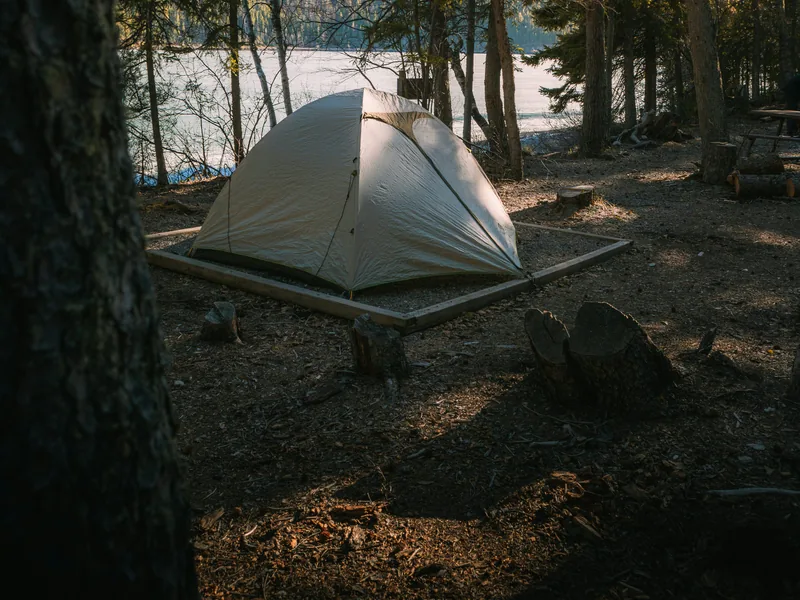
Editorial photograph. A researched guide; no hands-on product test is claimed. Image information
Choose your stove by working backward from the meals you want to cook, the pans you will carry, and the fuel you can obtain. This is a selection framework based on practical requirements and published guidance, rather than a product ranking or a hands-on stove test.
Start with the menu
A traveler who mainly heats water has different requirements from someone who cooks eggs and a pot of beans at the same time. List a few realistic breakfasts and dinners, including what you would make when tired. Count how often two things truly need heat together. Sometimes a second burner earns its space; sometimes changing the order of cooking is enough.
For meals that need gentle heat, investigate the manufacturer’s claims about flame adjustment and cookware compatibility. A headline boil time does not describe how easily you can simmer a sauce. Treat published performance figures as results under stated conditions, and look for the test setup before comparing numbers from different products.
Check the pan, stand, and table together
Write down your pan’s base diameter and its loaded weight, then compare them with the stove’s permitted cookware limits. Check the full footprint with supports extended. For two burners, confirm that your intended pans fit together without their handles or rims competing for the same space. Product photographs rarely answer every clearance question.
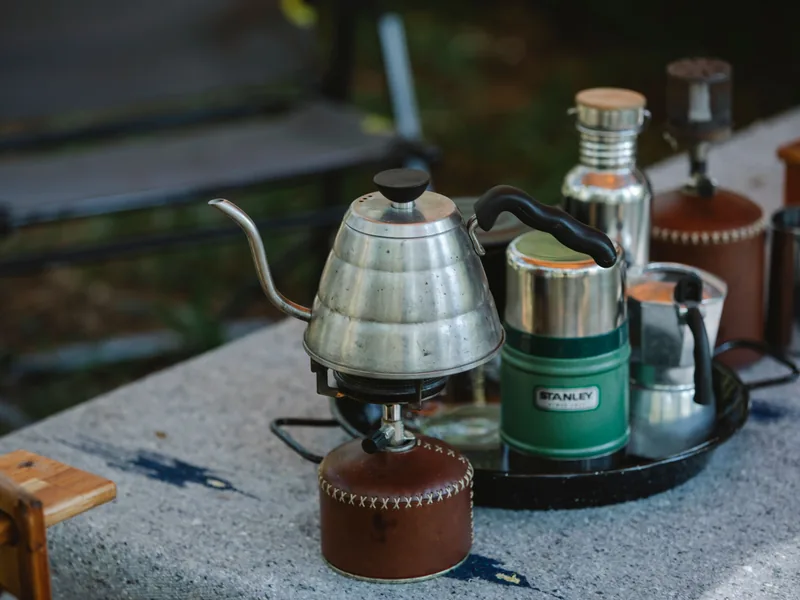
Think about the station as a whole: stove, approved fuel container, table, serving area, and distance from people moving through camp. Consult the actual instruction manual before buying. Manufacturer manuals specify model-dependent clearances, fuel connections, and operating procedures; a setup that is allowed for one design may be unsuitable for another.
Verify the fuel supply before committing
Record the exact approved fuel and connection, then check availability near the start of your route. Similar-looking cartridges are not enough evidence of compatibility. Factor the full kit into your packing decision, including fuel, any required regulator or approved accessories, and the storage arrangement specified by the manufacturer.
Match the documented operating conditions to your intended season. If cold-weather capability is a requirement, ask the manufacturer about that exact model and fuel combination. Avoid improvising ways to heat containers or surrounding them with homemade wind protection. Read the transport rules for each ferry, airline, or other carrier you plan to use before departure.
Make a weather and restriction plan
CDC guidance warns against using portable fuel-burning camping stoves inside tents, campers, or other enclosed shelters, even with doors or windows open. Choose an outdoor location that meets the manual’s requirements. A rainy evening should trigger your backup meal or another suitable cooking option, rather than moving an outdoor stove into the van.
Check the destination’s official fire restrictions close to departure and again when conditions change. Permission to camp does not by itself answer whether a particular stove is permitted. Keep a meal that needs no heat available so that a restriction, unsuitable wind, or equipment problem does not leave dinner dependent on a flame.
Build a shortlist you can explain
For each candidate, record your essential requirements and the published evidence that it meets them. Include packed dimensions, compatible pans, fuel availability, setup steps, and the total cost of the necessary kit. Mark unanswered questions explicitly. A smaller shortlist with complete manuals is easier to evaluate than a long list built around marketing labels.
Before traveling, read the manual and practice the approved setup, use, shutdown, and packing routine in a suitable outdoor place. Prepare a familiar meal and note the practical issues you encounter. That experience with your own cookware gives you a firmer basis for deciding what else belongs in the cooking kit.
Sources & further reading
Use these original sources for the full context and the latest guidance.
Prepared with AI assistance. Read our editorial approach.
This is a researched planning guide, not a report of a hands-on product test.
Last updated .