Small Campervan Kitchen Layouts That Fit Daily Routines
Compare small campervan kitchen layouts by prep space, access, storage, and cleanup. Use a measurement worksheet before choosing your cooking arrangement.
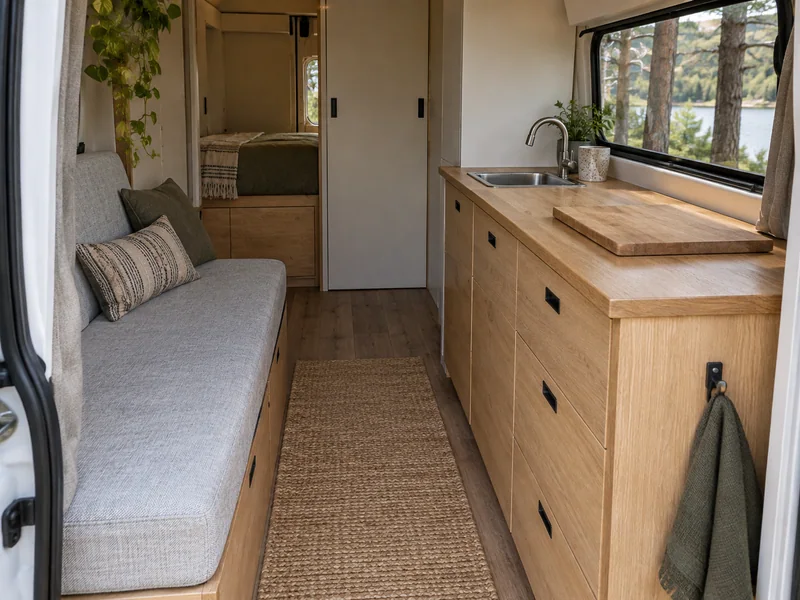
AI-generated illustration: A side-galley concept with preparation space beside the sink and a clear aisle; vehicle-specific fit remains to be checked.
A useful small campervan kitchen gives you somewhere to prepare food, reach everyday supplies, and wash up while the rest of the van is in use. Compare three arrangements below, then use your own cookware and vehicle measurements to decide what fits.
Compare three kitchen arrangements
The kitchen position affects more than cabinet space. It changes who can pass through the van, whether breakfast supplies are reachable with the bed made, and what happens when the weather rules out cooking outdoors.
These are layout concepts to evaluate in your own vehicle. They are not measured plans or instructions for installing appliances.
| Arrangement | Preparation space | Access with the bed made | What moves at mealtime | Measurement that decides it |
|---|---|---|---|---|
| Side galley along one wall | A permanent counter can remain available if sink and appliance cutouts leave a clear section | Depends on the aisle and where the bed ends | Usually the daily food box and cookware | Clear aisle with the largest drawer open and someone standing at the counter |
| Rear kitchen accessed through the back doors | A rear counter or pullout can provide outdoor workspace | Good for outdoor equipment only if the bed structure leaves access | Doors, slideouts, serving tray, and sometimes a separate table | Door opening, drawer travel, and space needed behind the parked vehicle |
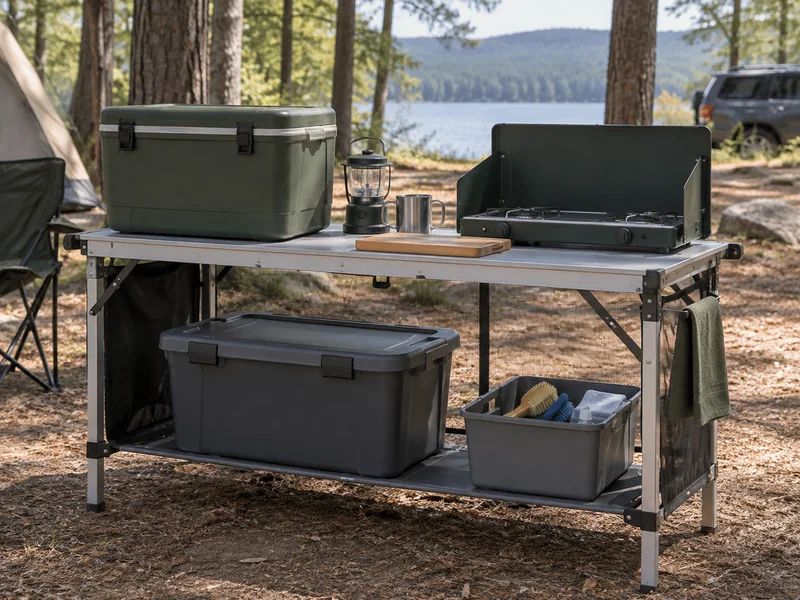
| Removable kitchen boxes with a separate outdoor station | Flexible, but the table must be carried and set up | Depends on where the boxes travel and whether they sit under bedding | Boxes, table, stove, and washing supplies | Full packed footprint and a secure travel location for every piece |
A side galley may suit someone who wants indoor food preparation and an easy morning routine. A rear arrangement may suit frequent outdoor meals when suitable weather and parking space are available. Removable boxes let you try an arrangement before permanent cabinetry, but include the lifting and packing in your comparison.
For the space shared by kitchen and bedroom, compare your drawing with the bed and storage layout worksheet. A kitchen that only works with the bed packed away may be a poor match for travelers who wake at different times.
When improving the existing arrangement requires a project, the camper-remodel planning guide helps define the work, information and budget categories before choosing finishes. Keep access improvements distinct from repairs or system changes.
Rehearse a meal before choosing cabinets
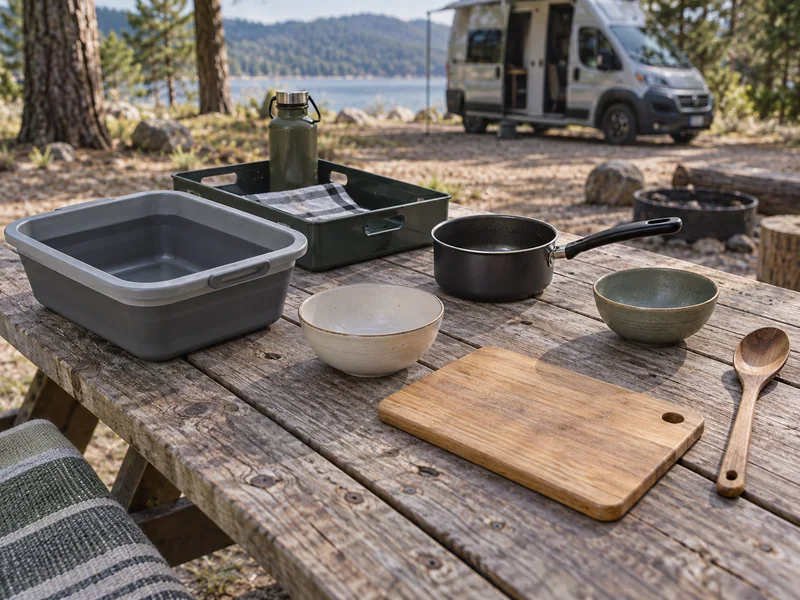
Choose one breakfast and one dinner you actually make. Set out the pan, bowls, cutting board, food packages, and washing basin. Include the pan handle, an open cooler lid, and a place for the spoon between uses. Those objects reveal the working space you need more clearly than an empty countertop does.
Mark the furniture footprint with tape and use boxes for a rough mockup. Walk through getting food out, preparing it, serving it, and clearing away. If you usually travel together, both people should take part. Note every time one person has to leave so the other can reach a drawer.
Example assumption: two travelers want to eat breakfast at different times and cook dinner outside when conditions permit. For that routine, a reachable breakfast bin and a carrying tray may matter more than a wide drawer of occasional cookware. This is an example to adapt, not a report from a van we tested.
Fill in the kitchen measurement sheet
Copy this table into your notes or print the page and fill it in by hand. Use either inches or centimeters consistently. Measure the finished interior where possible, including trim, hinges, handles, and anything projecting into the space.
| Item to measure | Your measurement | Check it in this position |
|---|---|---|
| Counter area remaining with sink uncovered | ________ | Cutting board and serving bowl both in use |
| Narrowest clear aisle | ________ | Largest drawer open; bed in its nighttime position |
| Cooler or refrigerator access | ________ | Lid or door fully open; normal food container being removed |
| Pan, including handle | ________ | On the intended outdoor stove supports, within its manual’s limits |
| Water container, including cap and spout | ________ | Full container being removed for filling |
| Washing basin and drying space | ________ | Dinner dishes in the basin |
| Rear workspace, if applicable | ________ | Doors and pullouts fully open |
Protect one clear working surface
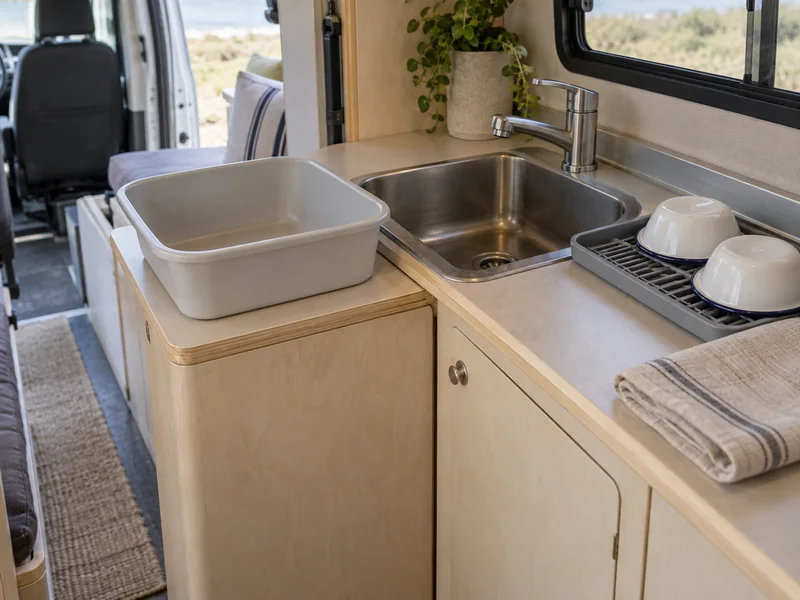
Give the cutting board a home that stays available when you need water. A sink cover is useful extra space, but making it the only worktop forces you to move food every time you wash your hands or rinse a utensil. A folding extension also needs somewhere for its contents to go before you fold it away.
Keep portable fuel-burning camp stoves outdoors. The CDC warns against using portable gas camp stoves indoors; an open van door is not a reason to bring an outdoor stove inside. Plan a stable outdoor station that meets the exact stove manual’s clearances. Permanently installed appliances require a suitable vehicle installation and qualified advice.
Before sizing that station, choose the stove around your pans and meals. The stove, its approved fuel setup, and the serving area all need space, including room to keep people clear of hot cookware.
Store by frequency, then by shape
Put mugs, bowls, daily seasonings, and a safely stored knife where you can reach them without moving another box. Pack occasional baking or coffee equipment farther away. A removable bin is useful when it lets you bring a whole meal’s supplies into view, but measure it with the lid and handles in place.
If the kitchen is already built, work through the cabinet, drawer, and counter storage checks before replacing furniture. For belongings spread across several parts of the vehicle, use the RV storage zone guide to decide which area needs attention first.
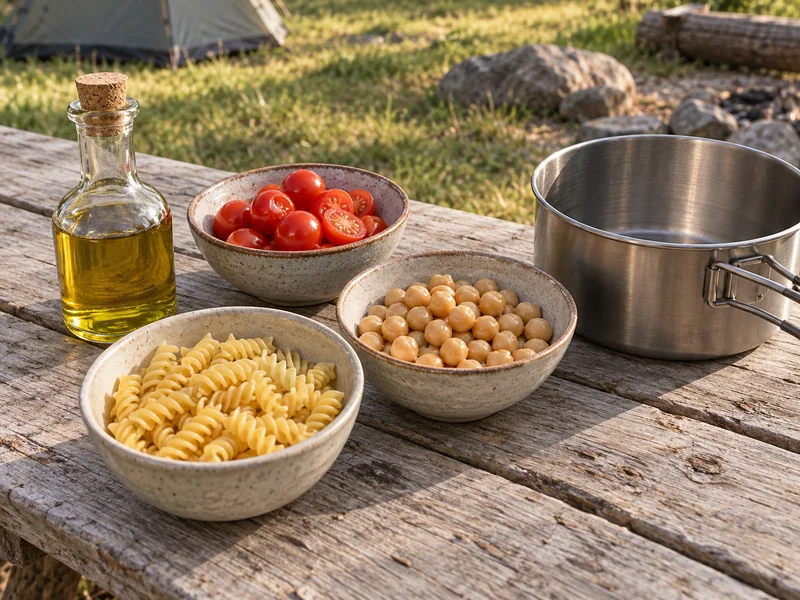
Keep the food plan narrow while deciding how much pantry space to build. These one-pan meals from shelf-stable ingredients show how a few compatible ingredients can share a food box. For anything refrigerated, allow access to a thermometer and follow the camping food storage plan, including the destination’s wildlife rules.
Every box also needs a secure position while driving. NHTSA advises securing cargo and checking that it cannot shift or escape. Decorative shelf edges and friction-fit baskets do not establish that a load is properly restrained. Use suitable attachments and get conversion-specific advice where necessary. NHTSA’s cargo guidance is a starting point for the travel check.
Give water and cleanup equal attention
After dinner, the washing basin needs a resting place, dirty dishes need somewhere to wait, and damp equipment needs somewhere to dry. Keep cleaning products separate from food. Make water containers removable for cleaning and filling without taking the kitchen apart, and confirm the campsite’s wastewater disposal arrangements.
Cabinetry, filled water containers, passengers, and packed supplies contribute to the travel load. Check the ratings for your particular vehicle and conversion, then have the finished travel load and axle loads verified. Ford’s weight rating definitions explain the distinction between total vehicle weight and individual axle limits; the figures that apply to your van come from its own labels and documentation.
Try the full routine
Run the mockup from breakfast to departure, then record changes before ordering furniture. Use this checklist while the van is in its normal packed state:
- Breakfast supplies are reachable with the bed made.
- The food storage opens without moving the washing basin.
- Someone can pass or reach the exit during preparation.
- The outdoor cooking station has a suitable location and a no-cook backup meal.
- Clean dishes have a drying place that does not become the bed.
- Water containers can be filled, cleaned, and secured.
- Every loose item has a secure travel position.
Write down the three objects you moved most often: ________, ________, ________. Relocate those first. Improving a repeated movement can be more useful than adding another cabinet.
Sources & further reading
Use these original sources for the full context and the latest guidance.
Prepared with AI assistance. Read our editorial approach.
This is a researched planning guide, not a report of a hands-on product test.
Last updated .