Small Campervan Bed and Storage Layouts Compared
Compare fixed and convertible campervan beds by daily setup, storage access, and usable space. Map your routine before committing to a sleeping layout.

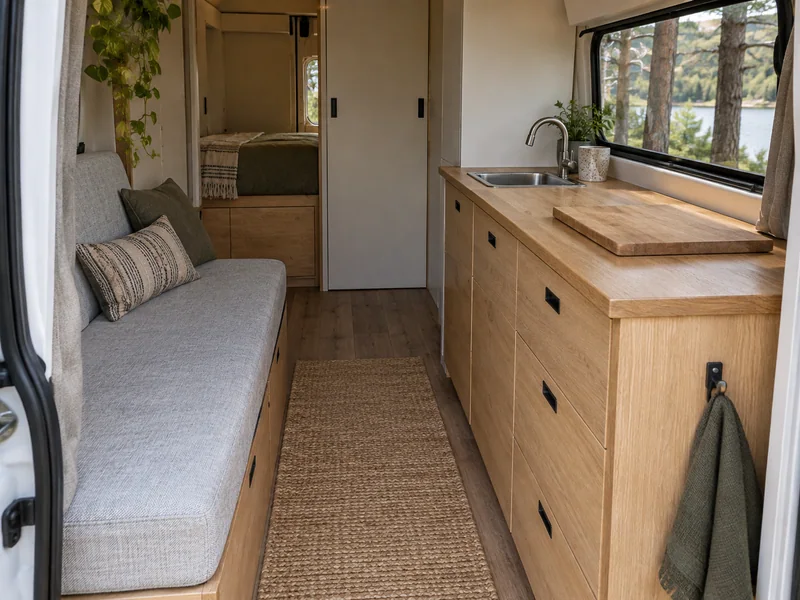
AI-generated illustration: A fixed-bed concept keeps bedding in place while preserving an access route; no bed dimensions or occupant fit are established.
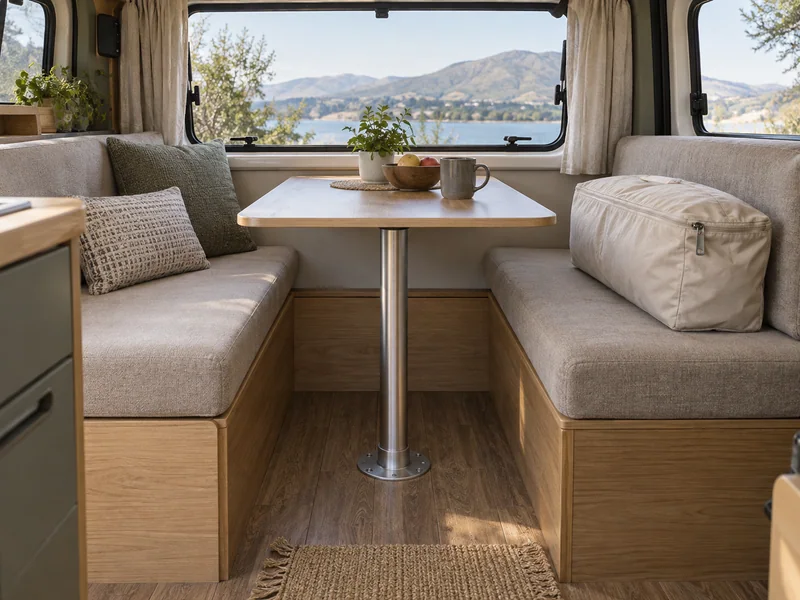
A fixed bed keeps bedding in place; a convertible bed gives its footprint back to daytime use. The better choice depends on your sleeping space, where the bedding goes, and which belongings you can reach with someone still in bed. Use the comparison and blank access sheet to work through those decisions.
Measure a real night’s space
A floor plan can show room for a mattress while hiding the space lost to curved walls, trim, or a pillow pressed against a cabinet. Start with the sleeping surface you find comfortable at home. Measure its useful length and width, then notice where shoulders, elbows, and bent knees sit when you turn over.
In the van, mark the proposed mattress height before measuring across the interior. Include the mattress thickness and the space above it. Try sitting up, getting dressed, and getting out without stepping on a bag. If two people share the bed, have both try the movements together.
There is no universal bed size in this guide. Vehicle models, wall finishes, sleeping positions, and occupants differ. Record your own dimensions in one unit throughout:
| Measurement | Your result | What to include |
|---|---|---|
| Comfortable sleeping length | ________ | Pillow position and normal leg position |
| Comfortable sleeping width | ________ | Both sleepers turning over, if applicable |
| Available length at mattress height | ________ | Finished walls, trim, cabinets, and door hardware |
| Available width at mattress height | ________ | Narrowest point across the usable sleeping area |
| Space above the mattress | ________ | Sitting up and the route into bed |
| Clear path to an exit | ________ | Bedding in place and all travel bags aboard |
Use a safely supported mockup for movement checks. Tape and boxes can mark boundaries; they are not a load-bearing bed design.
Compare the daily routines
The practical question is what you want that floor area to do during the day. Compare the options against the same packed inventory, rather than an empty van.
| Question | Fixed bed | Convertible bed |
|---|---|---|
| Where does bedding stay? | Usually on the bed, with a way to keep it tidy | Needs a dedicated daytime destination |
| What happens at bedtime? | Clear the sleeping surface and retrieve night items | Move table or cushions, position supports, and arrange bedding as the design requires |
| What occupies the space by day? | The bed remains in place | Seating, a work area, or open floor space may return |
| How is storage reached? | Drawers or doors can be convenient; lifting the mattress is awkward for frequent access | Access can change when seating becomes a bed |
| What needs a separate travel position? | Loose bedding and items stored around or below the bed | Removable boards, table parts, cushions, and loose belongings |
| Main compromise to rehearse | Permanent use of floor space | Repeated setup and finding homes for displaced items |
Example assumption: two travelers have different morning schedules, and one needs a laptop workspace before breakfast. A fixed bed may let one person sleep, but only if the other has somewhere else to sit. A convertible bed may create that workspace by day, yet be unusable for work while someone is sleeping. Neither layout solves the conflict without an accessible second place.
Write the evening conversion as individual steps and reverse it in the morning. Do not assign a setup time from a product photo. Time your own rehearsal if that matters to the decision, including clearing possessions and putting bedding away.
Divide storage by when you need it
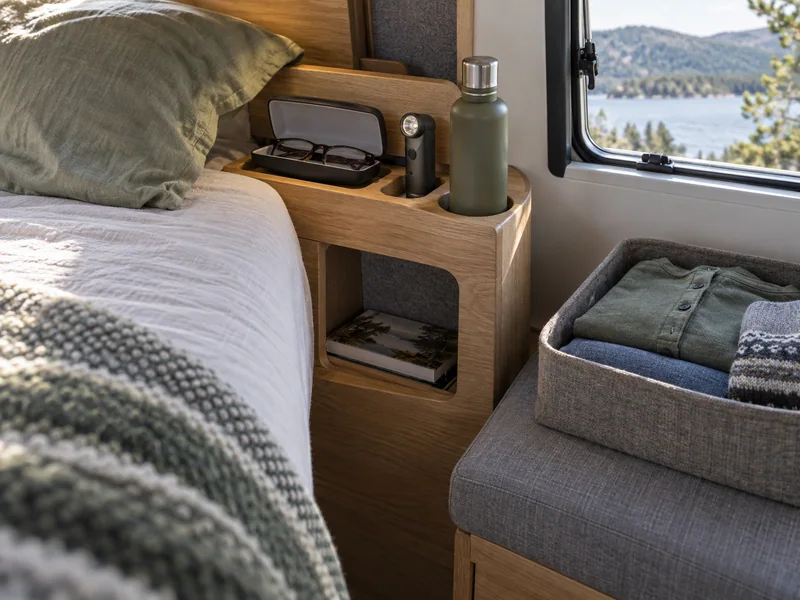
Sort belongings into three groups: things reached from bed, things used inside during the day, and things taken outdoors. Glasses and a light need different access from chairs and muddy shoes. A large under-bed cavity is not convenient storage if you have to lift a sleeping person to reach breakfast.
For an existing compartment, use the RV under-bed storage guide to check the opening, removal path and items needed while the bed is occupied. That storage decision comes after choosing how the bed itself works.
Make a day and night access map
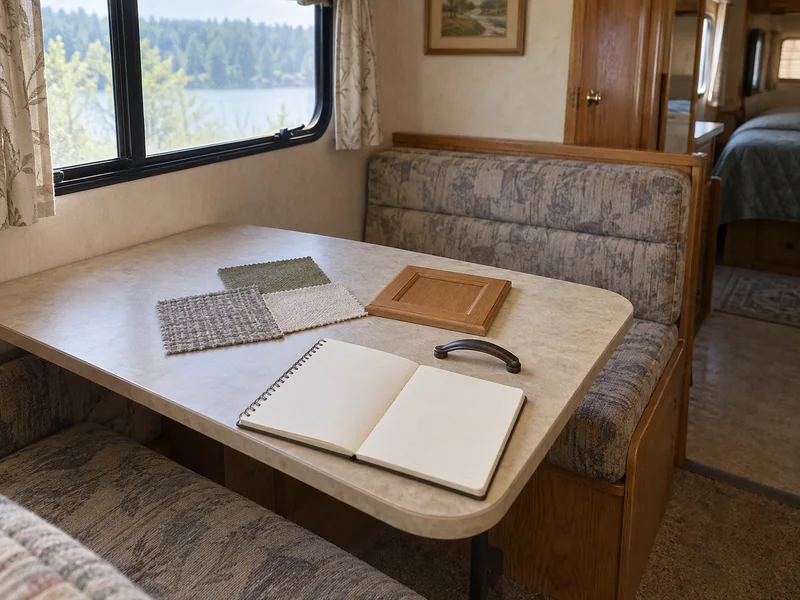
Copy or print this blank sheet. Write the proposed compartment, then try reaching each item with the van in both configurations. In the final column, name the object or person that must move. A blank answer is more useful than assuming access will work.
| Item | Proposed home | Reachable by day? | Reachable with bed occupied? | What must move? |
|---|---|---|---|---|
| Glasses, light, and drinking water | ________ | ________ | ________ | ________ |
| Breakfast supplies | ________ | ________ | ________ | ________ |
| Clean clothes | ________ | ________ | ________ | ________ |
| Shoes and wet layers | ________ | ________ | ________ | ________ |
| Bedding and removable bed parts | ________ | ________ | ________ | ________ |
| Emergency supplies | ________ | ________ | ________ | ________ |
If breakfast fails the access check, change the bin position before redesigning the bed. The small campervan kitchen comparison includes checks for drawers and food storage with the sleeping area in use.
Keep device access in the drawing too. A charging cable stretched across the exit is a layout problem, and portable electrical equipment still needs the clearances its manufacturer specifies. List the devices and their charging requirements in the camping power budget worksheet before assigning a storage compartment to the equipment.
Plan the travel position as carefully as the parked one
Removable boards, bins, and tables need secure places while driving. NHTSA’s load securement guidance asks drivers to consider sudden braking and bumps, rather than just whether an item stays put at rest. Have suitable attachment and restraint arrangements specified for the conversion; a snug fit alone does not establish that a heavy object is restrained.
Include furniture and all trip supplies when verifying the finished vehicle’s load. Total vehicle capacity and each axle’s capacity are separate limits. Ford explains those terms in its vehicle weight guidance; use the values and loading instructions for your exact vehicle and conversion, including any updated labels.
A bed or bench made for use while parked is not automatically a travel seat. Confirm approved seating positions and any proposed seating or restraint changes with the manufacturer and a qualified conversion professional. Keep required exits accessible in both daytime and sleeping configurations.
Leave a home for the awkward items
The last objects packed often become the first layout problem: a damp coat, tomorrow’s shoes, a laptop bag, or the table top removed to make the bed. Give each a named location in the drawing. If the answer is always “on the bed,” the bed is serving as overflow storage.
Reserve some accessible space for these temporary items. Do not fill every compartment just because it exists. An empty hook or bin can prevent several rounds of moving belongings when the weather changes.
Use the room-by-room RV storage plan to assign those belongings outside the bed area. If damp towels are the recurring problem, the bathroom storage guide separates their drying place from the storage needed for clean linens.
If moisture appears around the sleeping area, keep a dated observation record before changing materials or covering surfaces. The RV condensation guide helps separate the conditions you can record from questions that need manufacturer guidance or inspection.
Rehearse from arrival to departure
Try the complete sequence with normal bags aboard: arrive, put away wet layers, make dinner, change clothes, sleep, retrieve breakfast, and prepare to drive. Add the inconveniences you expect on your own trips, such as one person reading after the other goes to bed.
- Both sleepers can enter and leave the bed without moving stored equipment.
- Nighttime essentials are reachable without opening an outside door.
- Breakfast and clothing access work with one person still in bed.
- Bedding and removable parts have real storage destinations.
- Wet items stay separate from bedding.
- The exit remains accessible.
- Loose components can be secured for travel.
After the rehearsal, record the change that would remove the most repeated work: ________. Make that adjustment and repeat the affected part of the routine before committing to a build.
Sources & further reading
Use these original sources for the full context and the latest guidance.
Prepared with AI assistance. Read our editorial approach.
This is a researched planning guide, not a report of a hands-on product test.
Last updated .