RV Storage Ideas Organized by Space and Daily Use
Organize a small RV by storage zone, access, and daily use. Compare practical ideas for the kitchen, bathroom, bed, and cabinets before buying organizers.
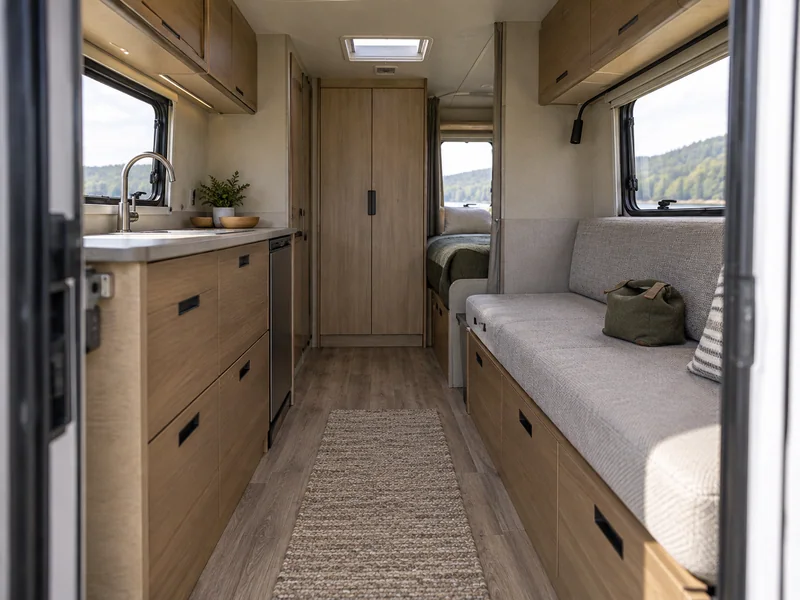
AI-generated illustration: A whole-RV view illustrates distinct storage zones and clear circulation before individual organizers are chosen.
Start with the storage problem that interrupts your day. Map each item to a usable zone, check the opening and travel requirements, then improve one area before buying a matching set of organizers.
Start with the task that keeps getting interrupted
Good RV storage lets you reach what you need without unpacking another part of your day. A cabinet can look orderly and still make breakfast awkward. A deep compartment can hold plenty while leaving the one item you need at a roadside stop out of reach.
Before shopping, finish this sentence: “Every time I need ___, I have to move ___.” That gives you a specific problem to solve. “We need more storage” does not tell you whether the answer is a different container, less inventory, or another home for an item.
This guide provides a whole-vehicle decision map. The worksheets are for your own observations and measurements. They are not measured RV plans, product tests, or proof that an organizer will fit a particular model. A travel trailer, motorhome, and converted van can have very different access and loading constraints.
Start with one routine, such as making coffee, getting dressed, or finding the leveling equipment. Set out only the things that routine requires. Include the items you handle afterward: lids, dirty utensils, a wet towel, or the bag the equipment travels in. Those return items need a place too.
Mark the spaces that must stay available
Draw a rough plan of your RV and label the existing storage openings. Next mark the places storage must not interfere with: exits and their operating space, appliance ventilation, required clearances, controls, service panels, and moving furniture. Use your vehicle and component manuals to identify these areas. An apparently empty recess is not automatically available storage.
For example, the Winnebago Towables 2025 owner’s manual identifies model-dependent equipment locations and cautions against combustible storage around the furnace. That is a reason to check the equipment behind a grille or panel before treating the surrounding space as another shelf.
Keep two views of the plan: parked and ready for travel. A bin that sits beside a chair at camp may need a different, properly secured travel location. Record both rather than letting the travel position become a last-minute search for floor space.
Storage volume also does not establish carrying capacity. Ford’s weight definitions distinguish the vehicle’s weight rating from towing capacity and include passengers, cargo, and accessories in vehicle loading. Use the ratings and loading guidance for your actual RV and tow vehicle where applicable. An empty cabinet or compartment is not evidence that it can accept any load that fits.
Use the zone map to find the right next step
Choose the row that matches your interrupted task. The opening to measure is the route an item must pass through, not just the space behind it.
| Zone | Daily task | Opening or movement to record | Common access problem | Approach to consider | Check before choosing |
|---|---|---|---|---|---|
| Kitchen cabinets | Prepare and serve a meal | Door opening, hinge intrusion, drawer travel | The daily pan is behind occasional cookware | Group tools by the meal task | Cabinet limits, latches, appliance clearances |
| Food shelves | Find the next ingredient | Usable shelf space and package access | New purchases hide open packages | Separate current food from unopened reserve | Label instructions, permitted load, travel restraint |
| Bathroom | Wash and put toiletries away | Door swing, fixture access, service opening | The caddy blocks a control or stays wet | Give wet items a temporary use position | Surface compatibility, ventilation, travel location |
| Bed and seating | Reach bedding or stored gear | Lift, drawer, or hatch movement | Daily supplies require clearing the entire bed | Move frequent items to an accessible edge | Furniture instructions and clear exit route |
| Clothes and entry | Get dressed or leave the RV | Door, pocket, and walking clearance | Clean clothes mix with used or damp layers | Separate ready-to-use items from returns | Drying arrangements and secure travel storage |
| Exterior compartment | Set up or break camp | Hatch opening and retrieval depth | Arrival equipment is buried by leisure gear | Pack around the order of setup | Compartment rating and vehicle loading plan |
The map should reveal a choice, not send you shopping for six zones at once. A bathroom with a clear routine may need nothing. A single kitchen drawer that must be emptied at every meal may deserve attention first.
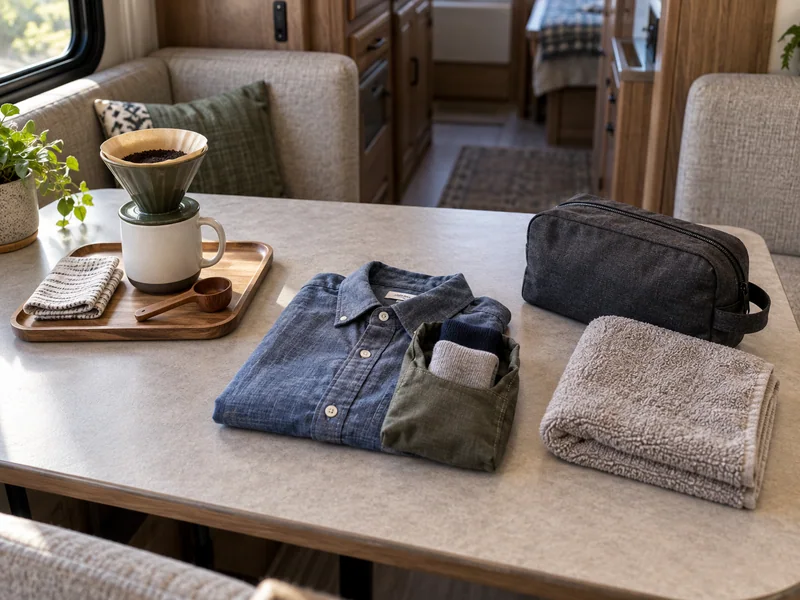
Kitchen and pantry problems need different fixes
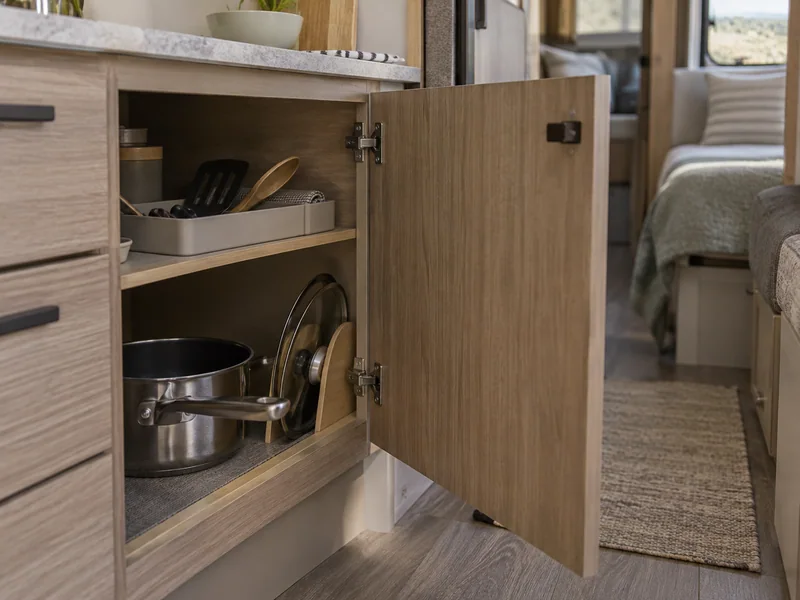
If you cannot remove a pan without disturbing everything beside it, begin with physical access. Measure the opening, the item including its handle, and the space needed to pull it out. The RV kitchen storage guide walks through cabinet, drawer, and counter decisions.
If the pan is easy to reach but you keep buying ingredients you already have, the problem is inventory. Use the pantry stock and restocking routine to track opened packages, remaining amounts, and the next meal. Buying another food bin will not provide that information by itself.
Sometimes the obstacle is the kitchen position itself. If preparing food always blocks the main walkway or requires dismantling the bed, compare the small campervan kitchen arrangements. Organizing existing cabinets and selecting a new layout are different projects.
Keep the whole-vehicle decision simple: identify which of these problems you have, then work in that guide. There is no benefit in performing a full cabinet rearrangement to solve a missing shopping note.
Bathroom, clothing, and sleeping spaces follow a daily cycle
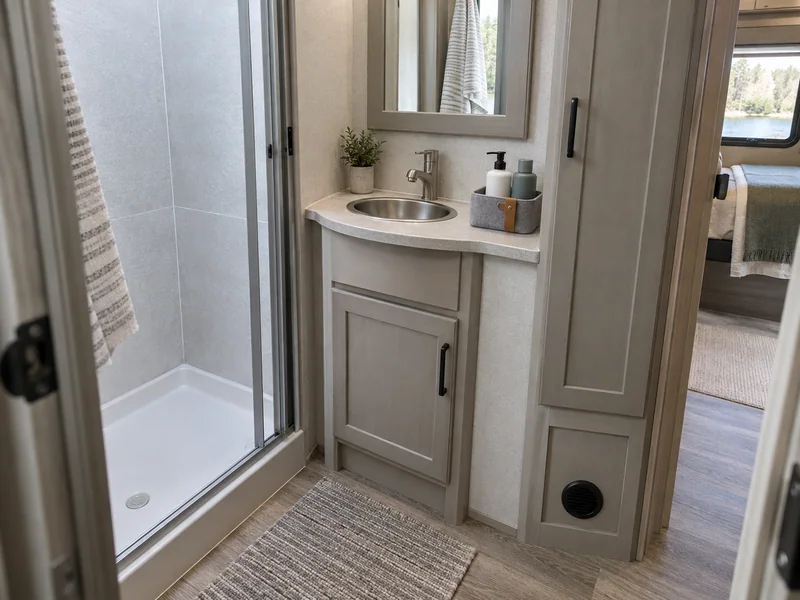
A bathroom has at least three storage states: ready to use, wet after use, and secured for travel. A closed container for dry toiletries may be useful, but it is not automatically a good destination for a dripping item. Plan where things go between showering and packing. The small RV bathroom storage guide includes door clearance and wet-versus-dry worksheets.
For clothing, start with three groups: clean and ready, used but dry, and wet items awaiting appropriate drying. Decide where each group enters the RV and where it leaves. A laundry bag that works when empty may block a door when full, so include the filled shape in your own check.
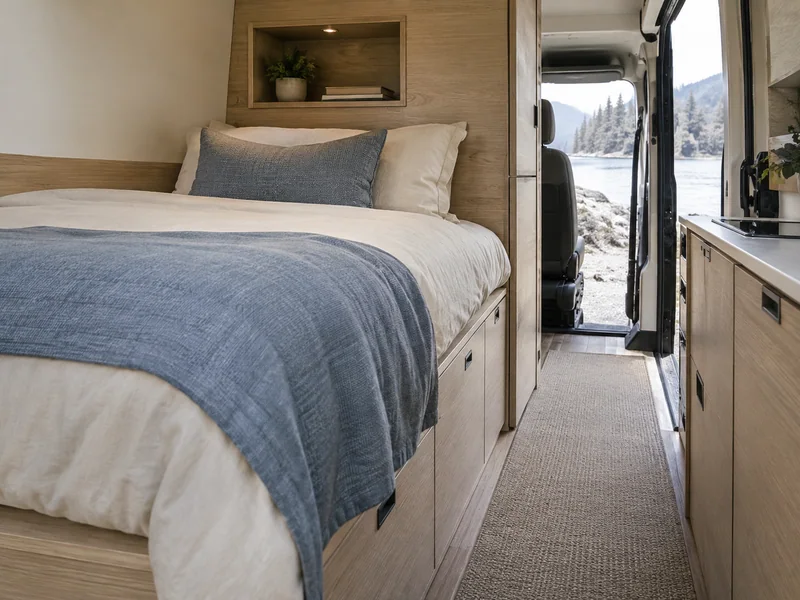
Under a bed, frequency matters as much as depth. An item used once during setup may belong farther from the opening than something needed every evening. Keep the vehicle’s loading and furniture limits in the decision; frequency alone does not determine a safe position for a heavy item.
If the bed conversion creates the access problem, the sleeping and storage layout worksheet helps you compare furniture arrangements. Here, the task is only to decide whether the item should remain in that zone or move somewhere you can reach without converting the bed.
Use the RV closet organization guide when the recurring problem is clothing rotation, hanging space or laundry. For items reached through an interior sleeping compartment, the under-bed access guide focuses on the opening and removal route.
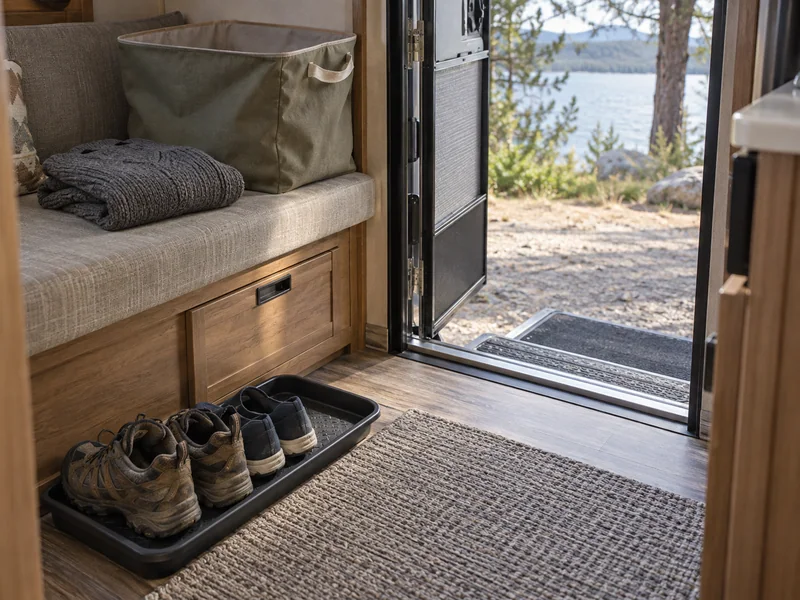
Pack exterior equipment in the order you need it
Write your arrival sequence before filling a compartment. What do you need before anything else comes out? What will you use only after setup? What is likely to come back dirty or damp?
Make separate notes for retrieval order and travel loading. They must both work. Do not move dense gear to a convenient location unless the compartment and vehicle guidance allow it. Avoid placing a frequently needed item behind something you cannot comfortably remove.
Outdoor cooking equipment is easier to plan as one task group: preparation, cooking, serving, and washing. Use the camp kitchen setup worksheet to decide which pieces belong in that group. Then return here to choose an approved travel home for the packed equipment.
A label is most useful when it names the task, such as “arrival equipment,” rather than merely saying “gear.” Keep the contents list short enough to update when you move something. A detailed inventory that no longer matches the box can waste more time than a simple accurate label.
For an exterior bay, the RV pass-through storage guide separates door clearance, tray travel and unload order. It keeps vehicle loading limits and actual equipment fit alongside the organization plan.
Choose one change with this planning card
Copy the card into a notebook or print the page. Fill it out before ordering an organizer. A measurement you have not taken remains blank; do not substitute a product photograph or another owner’s dimensions.
| Decision | Your record |
|---|---|
| Vehicle, model year, and storage zone | ___ |
| Interrupted task | ___ |
| Items needed for that task | ___ |
| Items that currently have to move | ___ |
| Clear opening and usable depth | ___ |
| Space needed to remove the item or open its lid | ___ |
| Required vent, exit, control, or service access | ___ |
| Relevant manual section and limits to verify | ___ |
| One proposed change | ___ |
| Parked location and secured travel location | ___ |
| What would make you reject the change? | ___ |
Hypothetical example: imagine your mugs are easy to reach, but a serving tray must be removed to get to the breakfast pan. Your proposed change is to give the tray a separate permitted location and keep the same cookware. The useful outcome to check is whether you can remove and replace the pan with the other items undisturbed. No extra capacity or time saving is assumed.
If the new arrangement needs a mounted rack, pause the purchase until you have confirmed the surface, installation requirements, permitted load, and travel use. A promising sketch is enough to shortlist an idea. It is not an installation approval.
Review access at camp and restraint before travel
While parked, walk through the actual task using the supplies you intend to carry. Check whether another person can still pass, whether the item has a return location, and whether the storage opens in the furniture configuration you use. Do not cycle powered furniture against an obstruction; follow its operating instructions.
Before driving, use the vehicle’s departure procedure. NHTSA’s cargo guidance emphasizes properly securing a load and checking what could happen during braking or a bump. A tidy arrangement while parked does not answer that question.
- The needed item can be removed and returned without blocking an exit.
- Doors, drawers, and furniture can reach their required positions.
- Vents, controls, and service access remain available.
- The actual load and installation comply with the relevant manufacturer guidance.
- Loose camp-use items have an appropriate secured travel home.
- Damp or dirty returns have somewhere to go after use.
- The contents label matches what is actually packed.
After using the arrangement, record the remaining inconvenience in one sentence. Keep the change if it solves the original problem without creating another. If it does not, revise that zone before expanding the system across the RV.
Sources & further reading
Use these original sources for the full context and the latest guidance.
Prepared with AI assistance. Read our editorial approach.
This is a researched planning guide, not a report of a hands-on product test.
Last updated .