A Compact Camp Kitchen Setup, from Packing to Cleanup
Build a compact camp kitchen around prep, cooking, washing, and storage. Use a packing checklist to separate essentials from items your menu does not need.
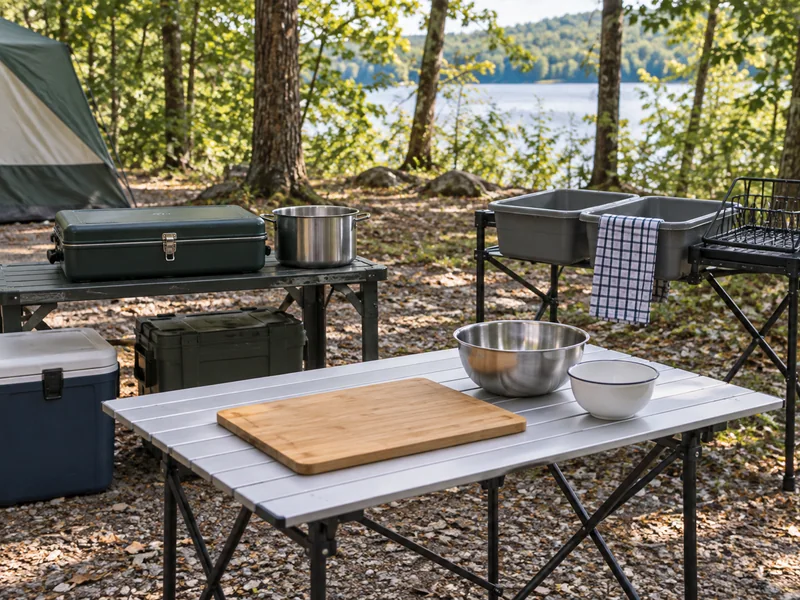
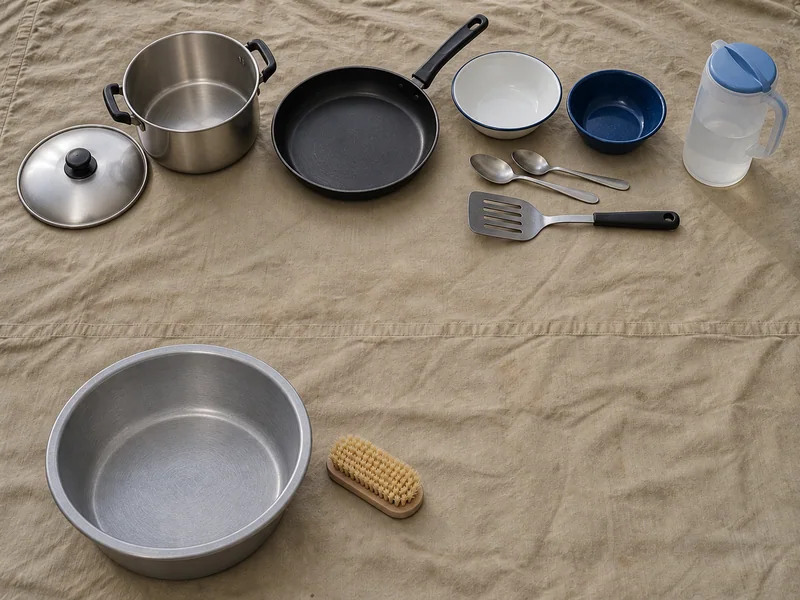
AI-generated illustration: a conceptual arrangement of preparation, washing and storage spaces.
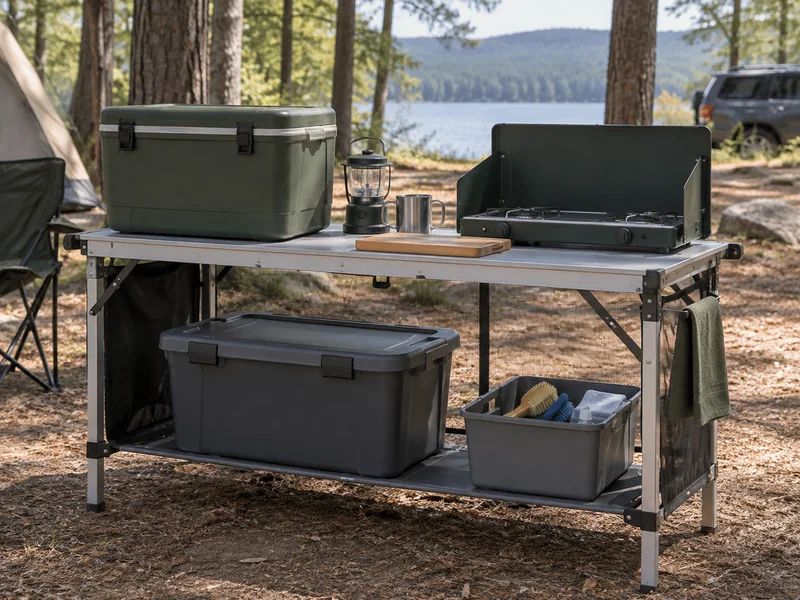
A compact camp kitchen needs a place to prepare food, cook, wash, and store supplies. Start with the meals you will make, confirm the campsite's water and wastewater rules, then assign each tool a working position and a packed position. Four functions do not require four separate tables.
The awkward moment in a small camp kitchen often comes between jobs. Dinner is ready, but the clean plates are under the stove case. The washing bowl is available, but nobody knows where the dirty water goes. A box can hold all your equipment and still be difficult to cook from.
Plan those transitions before choosing more storage. The worksheets below help you build an outdoor kitchen around your own menu, vehicle, and campsite. The examples are planning scenarios, not a tested equipment bundle or a promise that everything fits a particular container.
Start with meals, then list the jobs
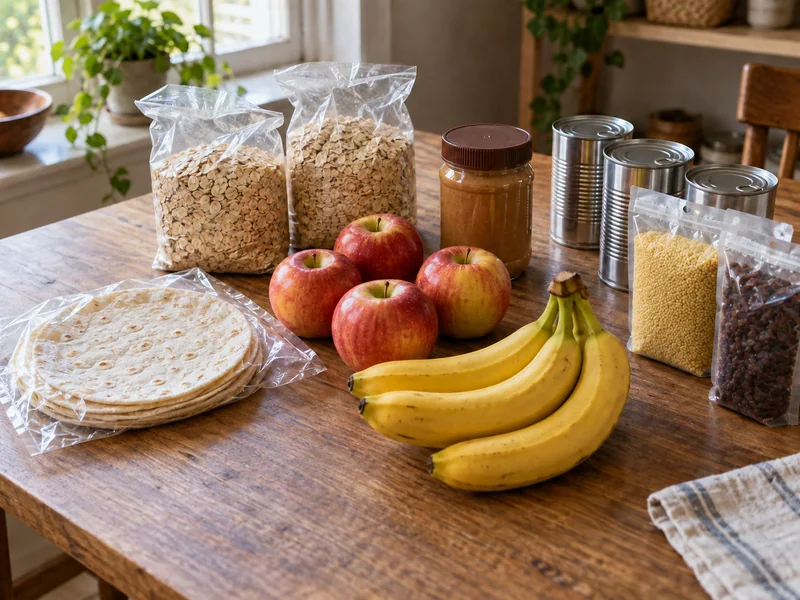
Write down each meal and what happens at camp. Include drinks, snacks, and the meal you would choose after arriving later than expected. For a starting sequence, use the three-day camping meal plan for two and change it to match your appetite and equipment.
Describe actions rather than dishes: boil water, open a package, chop vegetables, stir a pan, serve, and wash. A sandwich can require a cutting board, knife, clean hands, and cold storage even though it needs no burner. A dinner prepared at home can still require a suitable pan and a way to stir and check it as it reheats.
Give morning drinks their own row. The camping coffee setup guide helps you match serving amounts to the brewer, schedule hot water around breakfast, and include the used grounds and cleaning job in the plan.
Here is an illustrative task map. It is not a complete menu or a food-storage schedule.
| Meal idea | Jobs left for camp | Equipment implication |
|---|---|---|
| Hot drink and instant oatmeal | Measure water, heat, pour, stir | A compatible vessel for heating water, mugs, bowls, and spoons |
| Wraps assembled from packed ingredients | Retrieve, portion, assemble, return ingredients | A clean work surface and appropriate storage for the fillings |
| A one-pan dinner | Prepare ingredients, cook in sequence, serve | One suitable pan, the utensils its ingredients require, and clean serving dishes |
| A meal needing no heat | Open, assemble, serve | No stove for this meal, but preparation and washing still need a place |
Mark tasks that can move home. The make-ahead camping meal guide helps separate useful advance preparation from work that remains at camp. Removing a chopping job may remove one item from the packing list; adding a second cooked side may add a pan and complicate serving.
Confirm the campsite’s kitchen rules before packing
Save a short site note with the booking information. It should answer these questions:
- Is the exact stove and fuel type permitted during your stay, and are there current restrictions?
- Where can you obtain potable water, and is that supply operating for your dates?
- Where may you wash dishes?
- Where must collected wastewater go?
- What food, waste, and cooking-equipment storage rules apply when you leave the site or go to sleep?
A campground sink is not automatically a dishwashing station. At Fruita Campground in Capitol Reef, the published rules direct campers to wash at their site and collect the water for gray-water disposal sinks. Washing at those disposal sinks, restroom sinks, or spigots is prohibited. That is a specific local example of why the washing location and disposal location need separate entries in your plan. See the Capitol Reef campground regulations.
If the rules are unclear, ask the campground operator before relying on the facilities. The National Park Service’s trip guidance also calls for checking current closures, fire restrictions, and weather. A saved packing list cannot confirm conditions on arrival.
Give four kitchen functions a place
Think of a station as an assigned job and location. The same table can support different jobs at different times, provided it is suitable for them and cleaned as needed. A serving tray can carry clean equipment outside and return it to storage. Neither idea makes an unsuitable surface safe for a stove.
| Function | What needs to be reachable | What to check in the layout |
|---|---|---|
| Preparation | Ingredients for the next task, board, utensils, and hand-cleaning supplies | Enough usable room to work without reaching over the cooking area |
| Cooking | Compatible stove, fuel, cookware, and the utensil currently in use | Exact manual requirements, a suitable supporting surface, and an unobstructed working position |
| Washing | Wash container, cleaning supplies, wastewater container if needed, and a clean drying place | The site’s permitted washing location and a practical route to disposal |
| Storage | Food storage, clean equipment, and separate places for waste and used items | Access during cooking and the required secured arrangement between meals |
Preparation: protect the clean work area
Put hand-cleaning supplies out before food. The FDA advises cleaning hands, utensils, and surfaces and separating raw meat, poultry, and seafood from ready-to-eat food. Its outdoor guidance includes a water jug, soap, and paper towels when running water is unavailable. Plan separate boards for raw meat and fresh produce, and clean serving utensils. These requirements come from the FDA’s outdoor food-handling guidance.
Keep packaging and used utensils out of the space where finished food will land. If your table is too small to maintain that separation, change the preparation sequence or the menu before adding more objects to it.
Cooking: draw the operating space, not just the stove outline
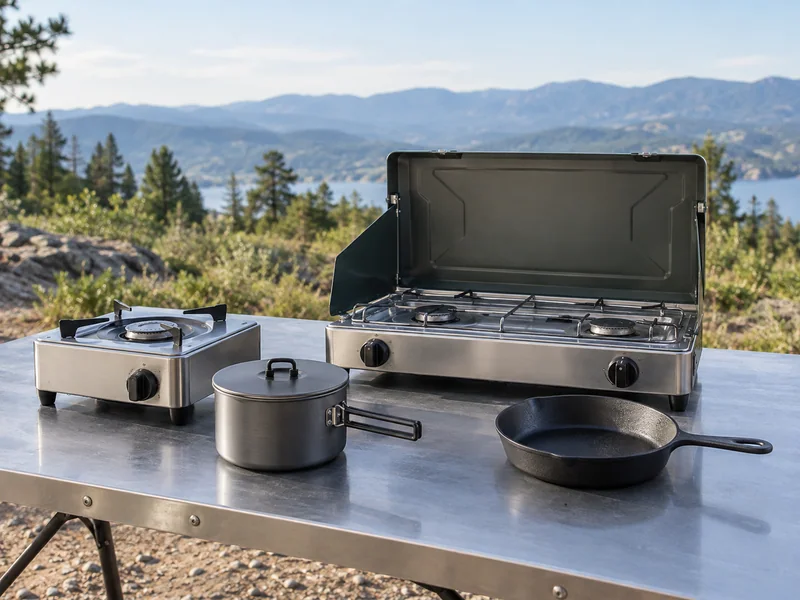
An appliance’s folded size describes storage. Its working space also includes cookware, handles, the approved fuel arrangement, and the clearances in its instructions. The camping stove selection guide covers those compatibility checks in detail.
Use the exact model manual when assigning its position. For example, the MSR PocketRocket Deluxe manual specifies a stable, even surface, restricts cookware, and prohibits windscreens for that stove. Its requirements are not a spacing or accessory standard for other models. Do not sketch a generic clearance around every stove or assume a kitchen-box lid can support one.
Place the other stations so getting a plate or washing hands does not require reaching across the cooking position. Walk through the movements with the equipment cold and disconnected as appropriate to its instructions before considering an outdoor cooking rehearsal.
Washing: include the return journey
Choose where clean dishes will drain before making them wet. Keep that area distinct from the place used utensils arrive. Account for washing, rinsing, carrying wastewater, and cleaning the containers themselves when deciding what to bring.
Leave No Trace’s waste guidance advises keeping washing out of lakes and streams, packing out food scraps, and asking campground hosts about wastewater disposal in developed sites. Biodegradable soap does not make washwater harmless to waterways. Its general backcountry advice is not permission to scatter wastewater in a campground with collection rules.
For the full sequence after a meal, follow the camp dishwashing routine, including rinsing, cookware-specific drying, and a log for your own water use.
Storage: plan both the meal and the time between meals
Pull out the equipment for the next job without unpacking the entire kitchen. Give frequently used items reachable positions, while preserving the food-storage arrangement required at your destination. A tidy plastic tote is not automatically approved wildlife-resistant storage.
Use the camping food storage guide to plan refrigeration, time out of cold storage, and local wildlife precautions. This layout worksheet does not establish how long a cooler can hold food safely.
Build an equipment inventory from actual tasks
Use this as a working camp kitchen checklist. Cross out a row only when the task genuinely disappears. An alternative still needs to perform the job safely; one object’s ability to nest inside another says nothing about its suitability for cooking.
| Task | Essential tool or provision | Possible alternative to assess | Needed for this menu? / packed location |
|---|---|---|---|
| Provide suitable water | Water supply and a clean container for its intended use | Confirmed campsite refill plus sufficient carrying capacity | ________ |
| Clean hands | Appropriate washing supplies | An available permitted handwashing facility | ________ |
| Prepare ingredients | The board and utensils your preparation requires | Do suitable preparation at home | ________ |
| Heat a meal or drink | Approved stove and fuel combination; compatible cookware | Choose meals that require no heat | ________ |
| Check cooking | Food thermometer where the food requires a temperature check | Choose a different menu, rather than guessing doneness | ________ |
| Serve and eat | Clean plates or bowls, cups, and eating utensils | One suitable vessel used for successive meals after cleaning | ________ |
| Store food | Storage appropriate to each ingredient and destination | Revise the menu around the storage available | ________ |
| Wash and rinse | Suitable containers and cleaning supplies | A designated dishwashing facility, if confirmed | ________ |
| Collect waste | Wastewater provision where required, food-scrap and trash containers | The site’s approved disposal arrangements | ________ |
If two items do the same job, explain why both are traveling. A spare serving spoon may be useful for separate dishes; a second frying pan may have no task at all. Record the reason instead of pursuing the smallest possible item count.
Add the kitchen kit to your car camping checklist and assign who packs it, where it travels, and what needs checking before departure.
Measure the packed kit and its access route
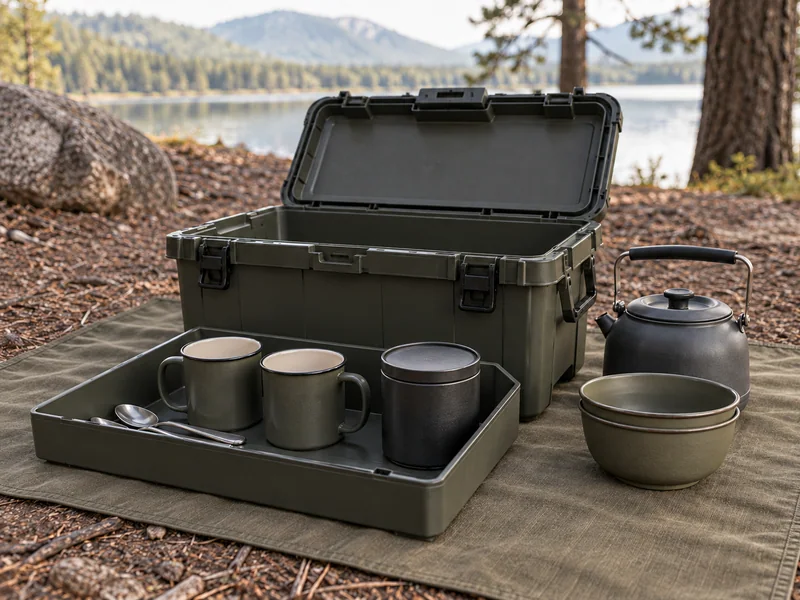
Gather the actual items before selecting a box. Record their packed configuration, including lids and handles. Check the opening through which each item must pass, not just the container’s advertised external dimensions.
The following is a blank fit worksheet for your measurements. No dimensions, carrying limits, or nesting combinations have been verified for you.
| Check | Your measurement or observation | What must be resolved |
|---|---|---|
| Largest awkward item | Item and packed dimensions: ________ | Fits through the opening without forced bending or unsuitable disassembly |
| Box interior and opening | Usable dimensions: ________ | Allows for internal ribs, hinges, handles, and the intended contents |
| Travel location | Opening, available space, and restraint plan: ________ | Fits and can be secured appropriately for the vehicle and container |
| Retrieval at camp | First item needed and objects above it: ________ | Can be reached without unloading unrelated luggage |
| Carrying the packed kit | Measured weight and your assessment: ________ | A manageable lift and a carrying route you can use |
| Returning used equipment | Separate space or container: ________ | Wet or dirty items do not contaminate clean equipment |
Keep food, cleaning chemicals, and waste appropriately separated. Store fuel according to the fuel container and stove instructions, rather than treating unused space in the kitchen tote as a suitable fuel compartment. The MSR manual above, for instance, has specific disconnection and fuel-storage requirements; use the instructions for your own setup.
If the travel location is an RV cupboard, the RV kitchen storage worksheet covers doors, drawers, restraints, and reach. This guide covers the outdoor workflow after those supplies leave the vehicle.
If a custom cabinet is the next project, use the DIY chuck-box planning guide to map the closed carrying envelope, equipment removal and return of used tools. Check the inventory and carrying route before choosing a construction plan.
Use one checklist for setup, reset, and pack-down
Keep this beside your inventory. Assign jobs between travelers, but leave one person responsible for confirming each stage is finished. It is an order of work, not a timed setup claim.
| Stage | Check before moving on |
|---|---|
| Arrival | Confirm current site instructions, potable water, washing location, disposal route, and permitted cooking conditions |
| Unloading | Put out the working surfaces and hand-cleaning supplies before unpacking food |
| Before preparation | Set clean tools and serving dishes within reach; establish where used items will go |
| Before cooking | Follow the exact stove’s checks and setup instructions; keep its working space available |
| After serving | Manage food storage promptly under the food-safety plan; collect packaging and scraps |
| Washing | Follow the permitted washing and wastewater process; return clean equipment to its assigned place |
| Stove pack-down | Follow shutdown, cooling, disconnection, and storage instructions before handling or packing the appliance |
| Departure | Check for scraps and small litter, finish approved disposal, and secure the packed equipment for travel |
Leave cooling and cleaning accessible until they are finished. Packing the empty kitchen box deep in the vehicle while its contents are still in use creates another unloading job. Keep anything awaiting cleaning identified separately and finish cleaning and drying it before long-term storage.
Change the menu when the setup cannot work
Rain, unavailable water, or a restriction can invalidate the arrangement you planned. Carry a suitable meal that does not depend on operating the stove. The no-cook camping meal guide distinguishes options that need refrigeration from those based on unopened shelf-stable ingredients.
Do not move a portable gas camp stove into a van, tent, or other enclosed space to keep cooking. The CDC warns against indoor use of portable gas camp stoves because of carbon monoxide. A meal change is part of the kitchen plan when there is no safe, permitted outdoor cooking position.
After the trip, update the inventory with what actually happened: the utensil you kept searching for, the container that blocked another, the washing item you missed, and the tool with no job. Record your own measurements and observations before buying replacements. Your next setup should answer those specific problems.
Sources & further reading
Use these original sources for the full context and the latest guidance.
- FDA: Handling food safely while eating outdoors (opens in a new tab)
- National Park Service: Capitol Reef campground regulations (opens in a new tab)
- Leave No Trace: Dispose of waste properly (opens in a new tab)
- MSR: PocketRocket Deluxe instruction manual, 33-266-5 (opens in a new tab)
- CDC: Carbon monoxide poisoning basics (opens in a new tab)
- National Park Service: Recreate responsibly (opens in a new tab)
Prepared with AI assistance. Read our editorial approach.
This is a researched planning guide, not a report of a hands-on product test.
Last updated .