Blackstone Camping Recipes for a Small Griddle Setup
Choose Blackstone camping recipes by preparation, griddle space, and serving order. Compare manufacturer methods and plan batches and cleanup for your model.
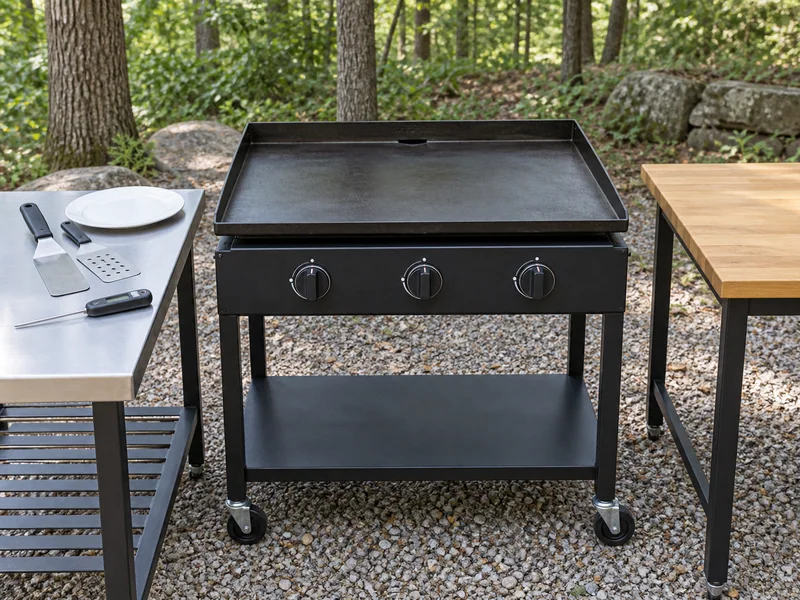
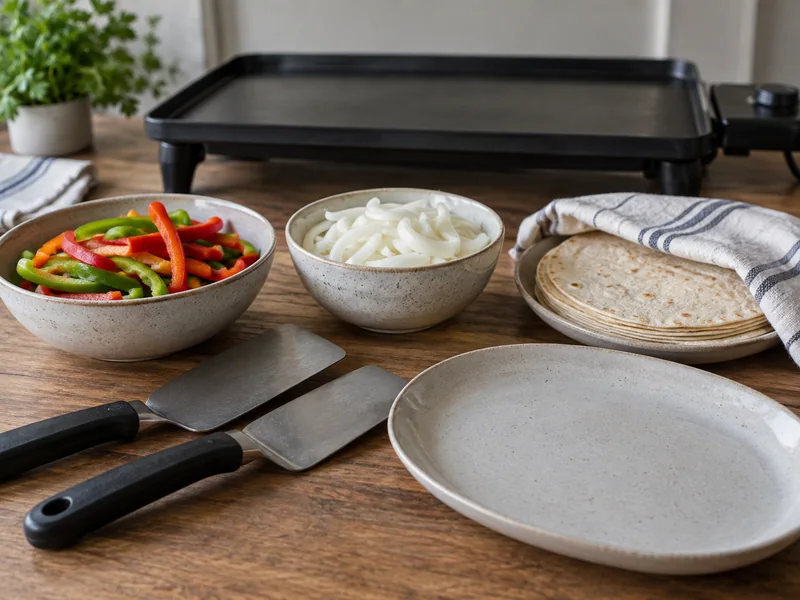
AI-generated illustration: a generic planning scene, not a verified Blackstone model or cooking test.
A compact Blackstone menu works best when each food has an assigned turn on the surface and a place to go afterward. Compare six meal directions, read two manufacturer recipes for their preparation sequence, and record your model's actual setup and batch needs. Surface area, burner settings and food doneness answer different questions.
On a small griddle, breakfast potatoes can occupy the space where the eggs need to go. At dinner, warming tortillas can compete with cooking the filling. Those conflicts matter more to a camping menu than a long list of foods that can touch a flat top.
Choose Blackstone camping recipes by their sequence: what arrives prepared, what cooks first, what can leave the surface, and what must be served immediately. Plan the preparation table and cleanup at the same time. The griddle handles cooking, but ingredients, bowls, dirty utensils and finished plates still need room elsewhere.
This is a researched recipe-selection and setup guide. The linked recipes belong to Blackstone. We have not cooked them, measured a model’s heat distribution or verified its serving capacity, and this article does not represent a product test or a brand partnership.
Start with the model you own
Read the model number before relying on a recipe video or a packing list. Blackstone’s manual library is organized by model and equipment type. Use the matching instructions for setup, fuel, clearances, operation and care.
For a concrete size reference, the manufacturer’s Original 22in Stainless Front Panel Tabletop Griddle lists 361 square inches of cooking space. That number describes the surface. It does not establish how many of your sandwiches fit with enough space to turn them, or how a whole meal will cook in your conditions.
The equipment name matters during cleaning too. Do not assume that the instructions for a seasoned steel surface apply to every product carrying the Blackstone name. Confirm the actual surface material and follow the care directions that belong to it.
| Detail to identify | Why it affects the menu | Record for your unit |
|---|---|---|
| Exact model and surface material | Establishes which instructions apply | ________ |
| Cooking area and controls | Sets the space and control options available | ________ |
| Approved support and installation | Determines where the cooking station can stand | ________ |
| Required fuel or power arrangement | Must match the unit and campsite | ________ |
| Transport dimensions and lifting needs | Determines whether the packed setup fits | ________ |
| Grease collection and care supplies | Adds work after the last serving | ________ |
Blackstone specifies a heat-resistant support surface and correctly installed stabilizing feet for the tabletop models described in its guidance. Check the support’s load capacity as well; heat suitability does not tell you how much weight a folding table holds.
Propane models belong outdoors. Blackstone explicitly says not to use a propane tabletop griddle indoors. Rain is a reason to change the meal or cooking plan, not to move that unit into the camper. The outdoor camp kitchen guide helps arrange the wider station.
Six meal directions and their main surface conflict
The following ideas help you choose a complete recipe. They are not measured formulas or verified batch sizes. Read the full method before shopping so you can see any home preparation, extra appliance or off-griddle stage.
| Meal direction | Work before cooking | What competes for space | A useful menu adjustment |
|---|---|---|---|
| Pancakes with fruit | Prepare batter as directed and organize toppings | Each pancake needs room to spread and turn | Serve fruit without assigning it griddle space |
| Egg breakfast sandwiches | Prepare bread, toppings and any separate filling | Eggs, bread and meat may need different stages | Choose a complete method with a clear order |
| Bean and cheese quesadillas | Check ready-to-eat filling and assemble in manageable rounds | Wide tortillas occupy more space than loose filling | Keep a cold side off the griddle |
| Tofu and vegetable wraps | Prepare the tofu and vegetables according to a suitable recipe | Vegetables and tofu may need separate cooking stages | Serve wraps without also griddling a side dish |
| Chicken fajitas | Prepare raw chicken separately from ready-to-eat foods | Chicken, peppers and tortillas share the surface | Make raw-food handling and the serving stage explicit |
| Burgers with simple sides | Prepare patties and organize clean toppings | Patties and toasted buns use the same working area | Choose a side that needs no additional cooking |
For more breakfast structures, use the camping breakfast comparison. If the griddle seems to make dinner more complicated, the camping dinner guide compares meals with other cooking methods.
What the chicken fajita source demonstrates
In Karina’s Chicken Fajitas, Blackstone cooks the peppers first, moves them aside, then cooks the chicken before combining the components. The useful lesson for a compact setup is that the surface changes jobs during the meal.
Read the original for its ingredients and directions. Before adopting it, identify where the vegetables wait on your unit and how you will keep raw chicken and its utensils away from food ready to serve. A recipe shown on a larger surface may need a different batch plan on yours.
What the breakfast quesadilla source demonstrates
Blackstone’s Colorado-Style Breakfast Quesadillas makes a filling before the tortilla assembly stage. Choosing that recipe means allowing for both jobs, rather than counting only the time spent browning a finished quesadilla.
Check whether the full sequence suits your breakfast. If everyone needs to leave camp at the same time, a meal requiring several filling and assembly rounds may not match the schedule. Keep the original instructions intact instead of assuming that skipping preparation stages produces an equivalent dish.
Draw a surface plan that changes as the meal cooks
Sketch a rectangle for your griddle, then make a separate sketch for each stage. A single drawing showing all ingredients on the surface at once can hide a conflict that only appears midway through cooking.
In a quesadilla plan, the first drawing might show filling preparation, while the second shows assembled tortillas. In a burger plan, it might show patties followed by bun toasting. These are work sequences to evaluate, not promises that one part of the surface will have a particular temperature.
Leave working room around food for the spatula and for controlled turning. Include the space occupied by food waiting to be served if your method calls for it. Do not treat the narrow gaps between pieces as unused capacity that must be filled.
| Stage | Food using the surface | Food waiting elsewhere | What permits the next stage? |
|---|---|---|---|
| First cooking job | ________ | ________ | Required preparation or doneness reached |
| Main cooking job | ________ | ________ | Appropriate check for that food |
| Assembly or finishing | ________ | ________ | Serving space and clean utensils ready |
| Next batch | ________ | ________ | Surface and handling sequence suitable again |
If your unit has separately controlled zones, those controls can help organize the sequence. They do not make the zones physically isolated compartments. A cooler side is also not automatically a safe hot-holding area. Use an actual temperature-control plan when food needs to wait; see the group-meal serving guide.
Check the food, not just the cooking surface
A surface-temperature reading describes the cooking surface, not the center of a chicken piece or burger. For doneness, FoodSafety.gov specifies 165°F for poultry and 160°F for ground beef, measured with a food thermometer. See its minimum internal-temperature chart.
Make room in the cooking sequence for that check. Set out the appropriate thermometer before the food goes on, and follow its instructions for placement and cleaning. A browned exterior does not replace the required measurement.
Keep the raw-food plate out of the serving area. Plan separate clean utensils and plates for food that is ready to eat, and keep uncooked batches under appropriate temperature control until their turn. The camping food-storage guide covers those handling decisions without tying them to a particular griddle brand.
Dietary separation needs its own plan as well. The two sides of a shared cooking surface are not a verified barrier against gluten cross-contact. Use the gluten-free camping meal guide to decide whether a different preparation arrangement is needed.
Plan the last meal around cleaning and departure
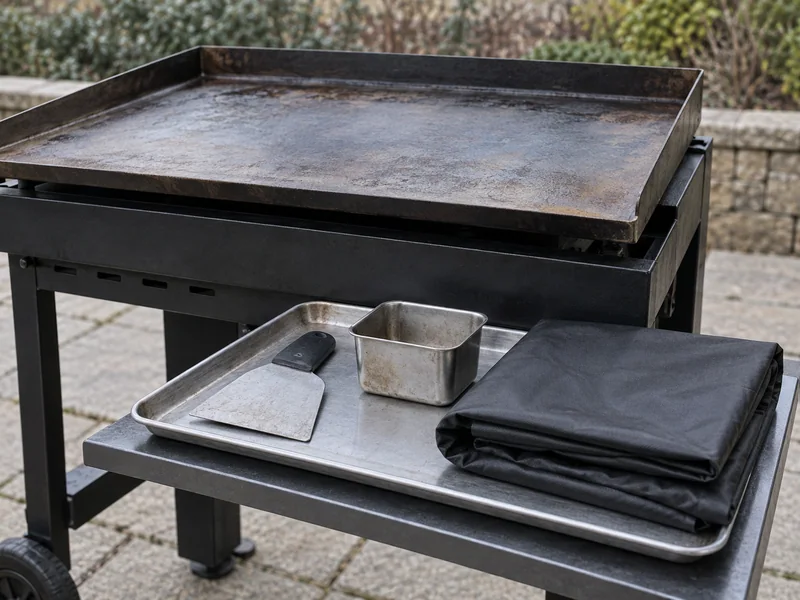
The cooking station is not ready to pack when the last plate leaves it. Grease needs containment, utensils need washing, the unit needs its prescribed care, and everything must reach a condition suitable for handling and transport.
For a seasoned steel plate, Blackstone’s rust-prevention guidance calls for cleaning after cooking, a thin protective oil layer and storage protected from water. Follow the matching model instructions for the procedure and for cooling before covering or moving the unit.
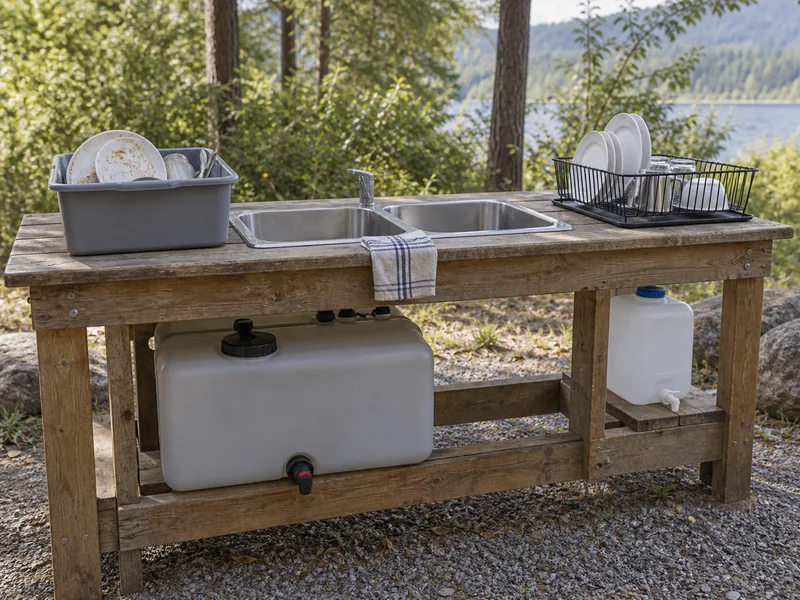
Pack the supplies for those jobs with the cooking equipment. Identify the grease receptacle and how its contents will be contained for disposal. Keep oily cleanup materials away from food supplies and follow applicable disposal directions. The camp dishwashing guide covers the separate bowls, tools and serving dishes.
A departure-day meal may be better cooked earlier, or changed to something that lets you pack the griddle sooner. Make that choice from the actual cleanup sequence you observe, not an assumed number of cooling minutes.
Keep a useful record of the first cook
| Record field | Before the trip | After actually cooking |
|---|---|---|
| Recipe and model | Source link and exact equipment | Any mismatch found |
| Ingredients and preparation | Complete list and home tasks | What was missing or unnecessary |
| Surface sequence | Planned stages and serving order | Where crowding or waiting occurred |
| Batches | Initial plan, clearly unverified | Actual batch count and food dimensions |
| Doneness checks | Thermometer and food-specific target | Checks completed |
| Cleanup and transport | Supplies and packing sequence | Work needed before departure |
Use that record to choose the next meal. A recipe that leaves room to turn food, serve the group and clean the equipment is a better fit than one that merely lists ingredients you like.
Sources & further reading
Use these original sources for the full context and the latest guidance.
- Blackstone: Original 22in Stainless Front Panel Tabletop Griddle (opens in a new tab)
- Blackstone: Product manuals (opens in a new tab)
- Blackstone: Suitable tables for tabletop griddles (opens in a new tab)
- Blackstone: Propane tabletop griddles and indoor use (opens in a new tab)
- Blackstone: Karina's Chicken Fajitas (opens in a new tab)
- Blackstone: Colorado-Style Breakfast Quesadillas (opens in a new tab)
- Blackstone: Preventing rust (opens in a new tab)
- FoodSafety.gov: Safe minimum internal temperatures (opens in a new tab)
Prepared with AI assistance. Read our editorial approach.
This is a researched planning guide, not a report of a hands-on product test.
Last updated .