Campfire Nachos: Plan the Ingredients, Pan, and Heat
Plan campfire nachos with ready-to-eat ingredients, compatible cookware, and an allowed heat source. Arrange toppings, heating checks, and serving.
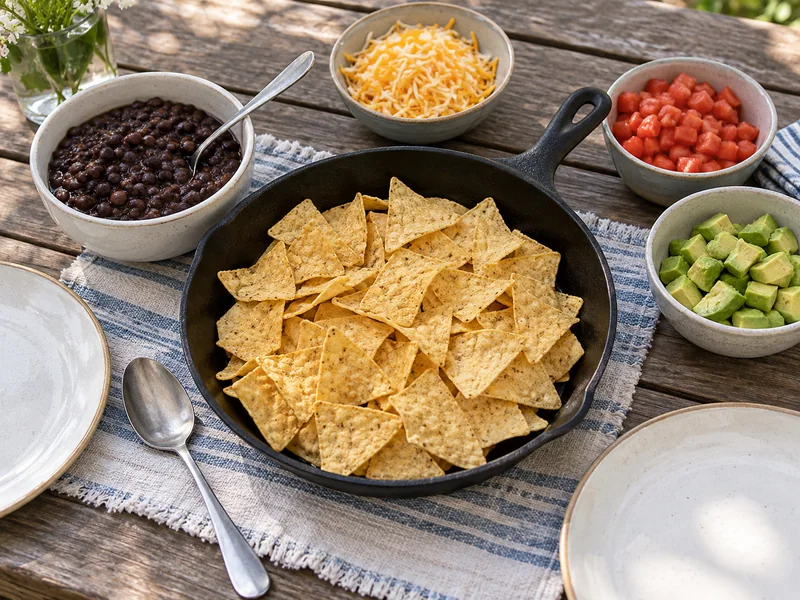
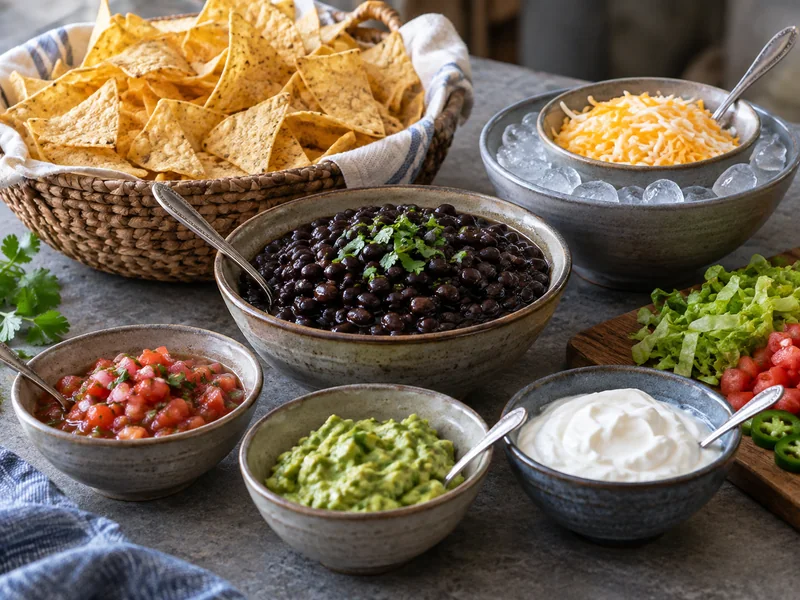
AI-generated illustration: conceptual assembly before heating, not a cooked dish or tested recipe.
Build a campfire nachos plan around ingredients that are already ready to eat, a pan approved for the heat source, and a place to serve the hot cookware. Keep cold toppings separate, check reheated leftovers by temperature, and decide whether one pan serves the group or requires several batches. This is an assembly and heating guide without a tested recipe yield or cooking time.
Campfire nachos are easiest to organize when heating the pan is the last food preparation job. The chips, beans and other main ingredients should already be ready to eat. Chopped toppings should have a place to wait, and the hot pan should have somewhere safe to land.
That leaves a clear task at the fire or stove: heat the assembled food using a method suitable for the cookware, then serve it. Adding raw meat to a pile of chips makes the job much harder to control. Cook it separately with a suitable complete recipe and verify doneness before it joins the dish.
This guide explains how to choose ingredients, arrange the work and check the heat method. It is not a tested nachos recipe. We have not established a pan size, measured ingredient ratio, serving yield or cooking time. Use the planning card below to connect your chosen recipe or product instructions to the equipment you actually have.
Choose what the nachos need to do
A pan shared as a snack before dinner has a different job from the only dinner for several people. Decide which one you are making before buying toppings. If nachos are dinner, consider the beans or other main ingredient, the food people want alongside them, and whether everyone will eat from the same pan.
Keep the first version manageable. Chips, a suitable cheese and ready-to-eat beans make fewer preparation jobs than a pan with several meats and separately cooked vegetables. Extra variety can come from toppings added at the table, where each person can choose them.
For a group with different dietary needs, settle those needs before assembly. Removing a topping after it has been scattered over the food is not the same as keeping it separate. Our gluten-free meal planning guide explains label and preparation checks when that distinction matters.
| Meal decision | What changes in the plan | Write down before shopping |
|---|---|---|
| Shared appetizer | Another meal still needs preparation and equipment | What cooks next, and in which pan? |
| Main meal | The pan must fit the chosen food and serving demand | What accompanies it, and are batches needed? |
| Separate dietary requirements | Ingredients, utensils and preparation may need separation | Which portions will be prepared separately? |
| Different arrival times | One shared pan may not suit everyone | What will late arrivals eat? |
If the group will need several rounds, read the large-group cooking schedule before promising that everyone can eat together. A bigger grocery bag does not create more pan space.
Give each ingredient a clear job
Think about what belongs in the heated pan and what can wait until serving. Keeping those jobs separate makes the shopping list easier to check and lets you return unused cold toppings to suitable storage without mixing them into the entire dish.
| Component | Its job | Preparation decision |
|---|---|---|
| Tortilla chips | Carry the other ingredients and provide a crisp base | Check ingredients, protect from crushing and reserve some outside the pan |
| Suitable melting cheese | Connect the chips and toppings | Check the product and keep it under its required storage conditions |
| Ready-to-eat canned beans | Add a substantial component without raw-meat preparation | Follow the exact product’s directions; decide whether its liquid or sauce belongs in the dish |
| Already cooked meat, if included | Adds a separate main ingredient | Establish whether it is a refrigerated leftover requiring reheating |
| Prepared vegetables | Add flavor and texture | Decide which are cooked beforehand and which remain cold toppings |
| Salsa, sour cream or other sauce | Finishes individual servings | Bring an appropriate serving utensil and follow the label after opening |
Bush’s canned-bean guide explains that its canned variety beans are already cooked. That makes a checked canned bean different from a dry bean requiring a full cooking process. Sauced products also change how much liquid enters the pan. Read the product you selected instead of treating every can as interchangeable.
Avoid emptying every opened ingredient into the nachos simply to use it up. If you want to use leftover chili, for example, account for its sauce and reheating needs before combining it with chips. A separate bowl of properly reheated chili with chips on the side may fit the situation better than an unplanned deep layer.
Match the cookware to the available heat
The word campfire does not require putting a pan directly in flames. The suitable setup depends on the vessel, its handles and lid, the supporting surface, and the current campsite rules. Check those details before packing.
The National Park Service says to check local campfire restrictions. A recipe’s use of charcoal or wood does not establish that either is permitted where you are staying. Have a meal option that works if the intended cooking method is unavailable.
| Proposed method | Confirm first | Consequence for the meal |
|---|---|---|
| Camp cookware with heat above and below | Manufacturer permits the configuration, lid heating and fuel | Hot lid handling becomes a separate task |
| Suitable covered pan on a camping stove | Pan size, weight, cover and burner setup are compatible | Bottom heat needs attention; it is not an oven setting |
| Cookware on an approved grill or fire grate | Vessel and support are appropriate for that heat source | Plan stable placement and removal before filling the pan |
| No usable cooking setup | Every chosen component is suitable to eat without heating | Serve a cold bean-and-chip meal with checked toppings |
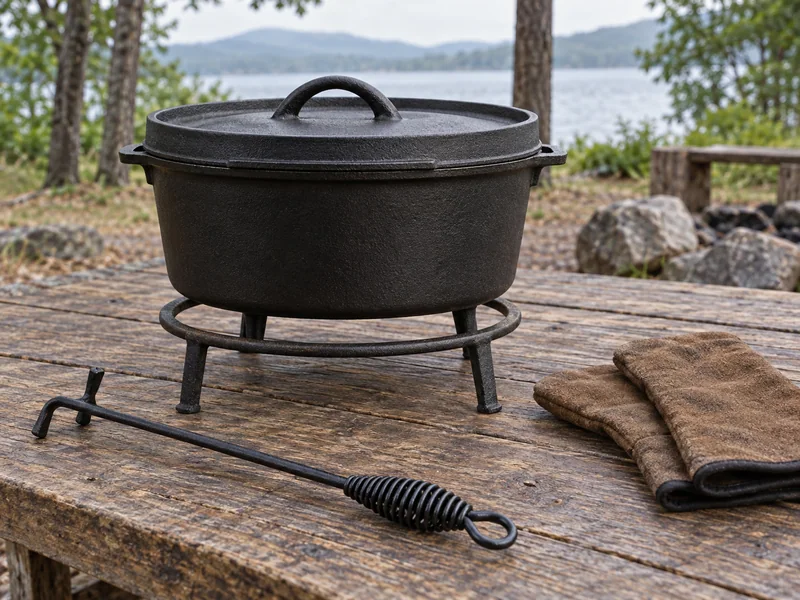
As an equipment example, Lodge describes several Cook-It-All configurations, including a Dutch oven arrangement. Those instructions apply to that cookware system. They do not give a kitchen skillet permission to hold coals on an improvised lid.
For a conventional camp oven, the Dutch oven recipe-selection guide explains the difference between pot capacity, lid design and heat method. Check the source recipe against those details before assuming an identical result in another pan.
Arrange the food before lighting the cooking setup
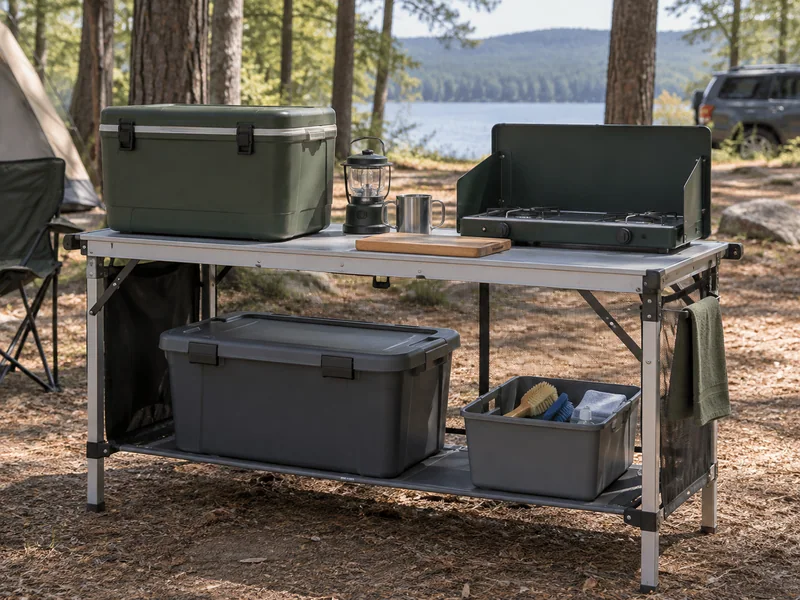
Put the toppings, serving utensils, thermometer if needed, and heat-resistant landing place within the planned work area. Keep chips away from raw-food preparation and keep refrigerated ingredients cold until needed. The camping food-storage guide covers the cooler and preparation setup.
When choosing a recipe, examine the depth of its assembled ingredients as well as its pan diameter. A full vessel can contain much more food than the same vessel holding a shallow layer. Increasing depth changes the heating problem; it does not simply add servings to an unchanged method.
For your assembly plan, distribute the intended toppings across the chips so one section does not receive the entire filling. Keep cold finishing ingredients separate. Reserve additional chips in their bag so you can serve them alongside the finished food without repeatedly opening the hot pan.
If the ingredients do not fit the layout described by the chosen recipe, reduce the batch or choose a recipe developed for the larger quantity. Do not solve a crowded pan by pressing down chips and piling on more wet ingredients. A second batch requires its own time in the serving plan.
Separate melted cheese from a food-safety check
Melted cheese shows what happened to the cheese. It does not establish the temperature of a refrigerated meat or chili layer underneath it. Reheated leftovers need to reach 165°F according to FoodSafety.gov. Use an appropriate food thermometer where a temperature check is required.
A practical way to reduce that conflict is to reheat a leftover filling separately, verify it, and then add it as directed by your chosen method. That gives you access to the filling for stirring and temperature checks before chips cover it. It also adds a pan and a preparation stage, which belong on the packing list.
Ready-to-eat ingredients still need appropriate handling and storage. FDA’s outdoor food guidance includes the two-hour limit for perishables outside temperature control, reduced to one hour above 90°F. Track preparation and serving together, rather than restarting the clock each time the food moves.
Serve without turning the table into a cooking station
Choose the landing place while the cookware is cold. It must support the filled vessel and tolerate its heat. Keep handles and hot lid tools away from the edges where people reach for food. Tell everyone which parts remain hot.
Separate serving utensils from personal eating utensils. Put cold sauces in suitable smaller serving containers if that suits your storage plan, keeping the remaining supply properly stored. Let people add their own cold toppings after the heated portion is served.
Check the first batch against what the meal needs: how many people it actually served, which toppings remained, and whether the next batch can begin without blocking the table. These are observations to record after cooking, not numbers that can be supplied from an untested pan description.
Complete a nachos planning card
| Planning field | Your choice or actual observation |
|---|---|
| Snack or main meal; people eating | ________ |
| Full source recipe or selected product instructions | ________ |
| Exact pan, capacity and permitted heat method | ________ |
| Ready-to-eat base ingredients | ________ |
| Any separately cooked or reheated filling | ________ |
| Cold toppings and serving utensils | ________ |
| Stable hot-pan and hot-lid landing places | ________ |
| One batch or several; serving order | ________ |
| After cooking: quantity served, texture and changes needed | ________ |
Keep the next meal in mind when putting food away. Unmixed reserve ingredients may still have a useful role within their storage limits; a fully dressed pan is harder to redirect. If nachos no longer fit the weather, equipment or group, use the camping dinner comparison to choose a meal with fewer unresolved cooking steps.
Sources & further reading
Use these original sources for the full context and the latest guidance.
- Lodge: Five ways to use the Cook-It-All (opens in a new tab)
- Bush's Beans: How to cook canned beans (opens in a new tab)
- FoodSafety.gov: Safe minimum internal temperatures (opens in a new tab)
- FDA: Handling food safely while eating outdoors (opens in a new tab)
- National Park Service: Campfires (opens in a new tab)
Prepared with AI assistance. Read our editorial approach.
This is a researched planning guide, not a report of a hands-on product test.
Last updated .