Foil Packet Camping Meals by Ingredient and Heat Source
Compare foil packet camping meals by ingredients and heat source. Check source recipe methods, safe doneness, serving space, and the work beyond the packet.
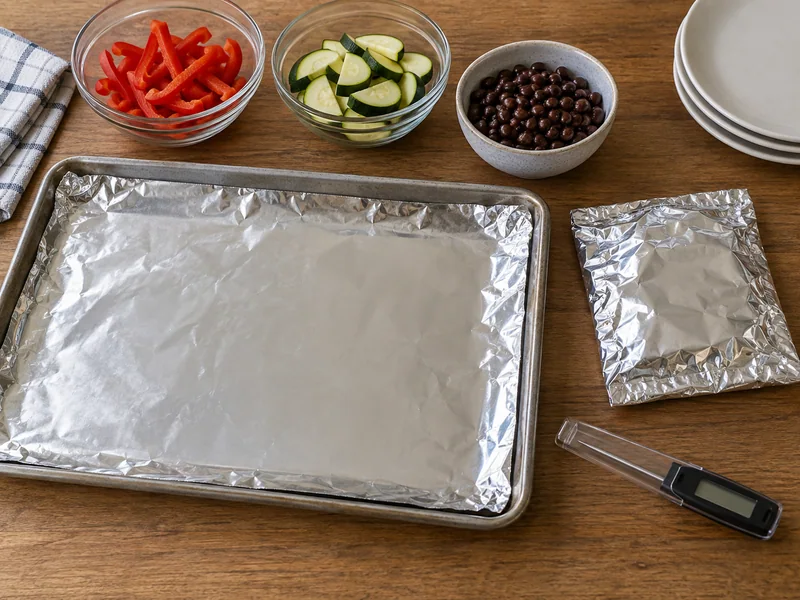
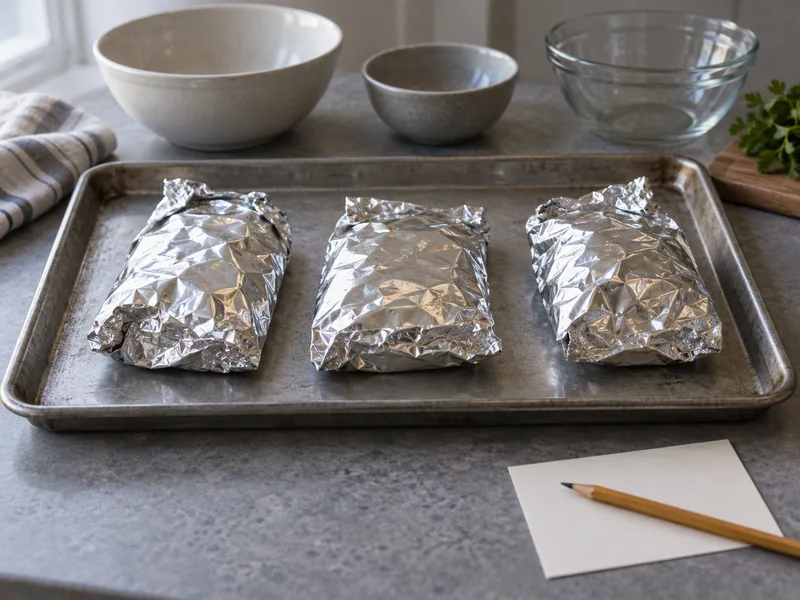
AI-generated illustration: conceptual packet preparation, not a tested recipe or doneness result.
Choose a foil-packet meal only after checking the recipe's heat source, ingredient sizes and doneness instructions. A closed packet hides the food and still needs a clean place to open and serve it. Compare the whole method, including preparation, temperature checks and the foil you will carry away.
A foil packet makes a convenient parcel, but it does not make every combination of food cook at the same rate. A thick piece of meat, a dense potato and a thin strip of pepper have different needs. Closing the foil hides those differences until you open it.
Start with a complete recipe that matches your ingredients and heat source. Then check whether you can prepare, move, inspect and serve its packets at your campsite. The most useful packet dinner is one whose whole process fits the evening, not simply one that avoids washing a cooking pot.
This guide compares methods and manufacturer recipe examples. We have not tested packet sizes, cooking times or ingredient substitutions. Use the source recipe and the actual food and equipment instructions for preparation; the worksheets help you identify decisions that the name of a meal leaves unanswered.
Match the recipe to the heat you can actually use
An oven, a covered grill and a grate over a permitted campfire are different cooking environments. Do not copy a time from one and treat it as established for another. Even when a recipe offers several methods, read the full directions for the one you intend to use.
| Heat source | What the recipe needs to explain | What to check at camp |
|---|---|---|
| Covered grill | Heat setting, packet placement and whether the lid stays closed | Space for all packets, safe handling tools and access for checking food |
| Campfire grate | Whether this method is expressly included and how the fire is managed | Current fire rules, stable grate, appropriate cookware and a safe working area |
| An oven in a suitable vehicle or accommodation | Temperature, tray and placement instructions | Oven and tray fit, appliance instructions and the actual recipe method |
| Camp stove | A method designed for that stove and cookware arrangement | Do not put a packet directly on a burner merely because the recipe says grill |
Check the destination before packing a fire-dependent dinner. NPS campfire guidance advises asking about restrictions shortly before or on arrival. The presence of a fire ring does not itself establish that a fire is permitted today.
Keep a separate meal available if you cannot use the intended heat source. The easy dinner guide includes assembly options that do not depend on a fire, and the no-cook guide helps plan a whole day without cooking.
Compare four packet directions before shopping
These rows identify the main compatibility questions. They are not interchangeable recipes.
| Packet direction | Main question | Extra work outside the foil | Reason to choose another method |
|---|---|---|---|
| Chicken with peppers | Does the recipe specify the chicken preparation and temperature check? | Raw-food preparation, chilled transport and clean serving tools | You cannot keep raw chicken cold or inspect doneness reliably |
| Salmon with vegetables | Do the vegetable cuts and fish portions match the recipe? | Sauce preparation, fish handling and a serving tray | You need to substitute dense vegetables without an established method |
| A vegetable-and-bean combination | Are the beans ready to eat, and does the recipe explain how the vegetables cook? | Draining, seasoning and deciding whether a separate base is needed | The chosen vegetables need incompatible preparation |
| Fully cooked sausage with potatoes | Are the sausage and potato preparation states explicitly defined? | Product-label checks and any separate potato preparation | The idea relies on assuming raw potato finishes with the sausage |
The last two are meal directions to investigate in a complete recipe, not instructions to wrap arbitrary ingredients together. If you cannot find a suitable method for the combination, a skillet or pot may be easier to manage.
What the chicken example tells you
Reynolds’ Chicken Fajita Foil Packets provides a particular chicken-and-vegetable preparation and names oven, grill and campfire-grate methods. The page also lists toppings served with the cooked filling. Read those directions before buying, and apply the poultry temperature check below rather than judging safety by the scheduled minutes.
The toppings create separate storage and serving work. Cheese, sour cream and prepared vegetables need the conditions appropriate to them. Tortillas or another side need their own place in the plan. Finishing the packet does not necessarily finish dinner.
What the salmon example tells you
Reynolds’ Asian-Infused Salmon Packets distinguishes covered-grill and oven directions, uses a tray to move the packets and warns about escaping steam when they are opened. It also serves the fish with cooked rice. That rice is a separate cooking job, even though the fish is wrapped in foil.
Choose a side you can provide alongside the packet without creating a second bottleneck. The source recipe’s specific cut sizes and ingredients should guide its preparation. A new mixture of vegetables needs its own suitable recipe or trial.
Prepare the food before solving the folding problem
Read the complete ingredient list, including oil, seasonings and additions. Then distinguish raw ingredients from foods already cooked. A packet containing leftovers has a reheating job; a packet containing raw poultry has a cooking job. Neither is settled by the appearance of the outside of the foil.
Keep raw-food preparation away from ingredients intended to be eaten as served. Use clean equipment for finished food. FDA’s outdoor food guidance warns against transferring raw-meat contamination through plates or utensils.
If you prepare ingredients at home, retain the recipe and product labels with the meal record. Write what was actually done: raw vegetables cut, a filling fully cooked and cooled, or unopened items packed together. “Prepped” is too vague when someone else will do the cooking.
Use the make-ahead guide to separate preparation from cooking, cooling and transport. It is particularly useful when different people handle the home and campsite stages.
Choose the foil and leave room for the method
Reynolds’ foil guide says either side can face food for its ordinary and heavy-duty foil; its non-stick foil has a designated dull side that should face the food. Read the exact roll instead of relying on a general shiny-side rule.
Its packet guidance describes folded, securely crimped edges with space inside for steam. The amount of food, sheet size and folding details should follow the chosen recipe. An overfilled packet with barely closed edges is a different package from the one described in its instructions.
Do not add a paper liner merely because you use one for baking at home. Reynolds’ paper-and-foil comparison cautions that parchment must not contact open flames or oven heating surfaces. Only use a lining arrangement allowed by the material, equipment and recipe instructions.
Give each packet an identity
When packets contain different foods, record their positions and who each is for. Keep the record away from the heat and use only identification methods suitable for the materials involved. Do not rely on remembering that one crumpled parcel looked slightly larger.
| Packet record | Fill in before cooking |
|---|---|
| Packet identifier and intended eater | ________ |
| Recipe and selected heat method | ________ |
| Raw, commercially cooked or leftover components | ________ |
| Ingredient cuts and amounts from the recipe | ________ |
| Food or allergen distinction to preserve | ________ |
| Position on cooking surface | ________ |
| Required doneness check and actual result | ________ |
Do not let the record substitute for observation. Moving packets changes the arrangement; update it when that happens. Different foods may need separate checking and serving times.
Open the packet to check the food
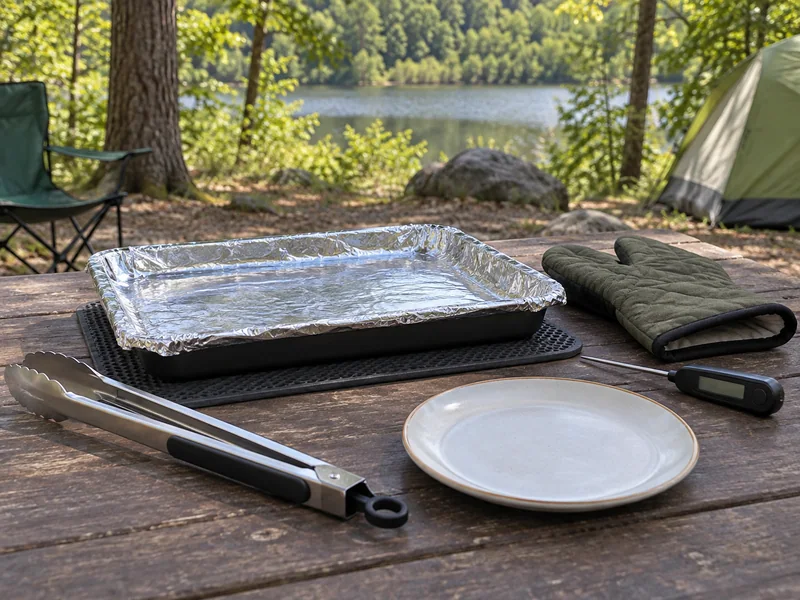
Use appropriate heat protection and open packets where escaping steam cannot reach your face or hands. Support them on a suitable heat-resistant surface. Follow the recipe’s opening method and keep raw juices, if the food is not yet done, away from clean serving areas.
Use a food thermometer for the foods that require a temperature check. FoodSafety.gov lists these minimums:
| Food in the packet | Minimum internal check |
|---|---|
| Chicken or other poultry | 165°F |
| Ground beef or pork | 160°F |
| Fish | 145°F, or flesh opaque and separating easily with a fork |
| Reheated leftovers | 165°F |
A browned sausage surface or a soft vegetable does not establish the doneness of another component. If a packet contains foods with different requirements, account for each one. Do not assume checking one packet proves that every packet received the same heat.
Count the cleanup that foil does not remove
You may still have a preparation bowl, knife, board, tray, serving utensil and plates to wash. Foil can change which cooking vessel gets dirty, but it does not remove those jobs. Compare that complete list with a one-pan meal before deciding which is easier for your trip.
Let used foil cool before containing it for disposal. Keep food residue and packaging secured under the campsite’s rules, and check local recycling acceptance rather than assuming food-soiled foil belongs in recycling. The dishwashing guide covers the equipment that still needs cleaning.
If you prefer a shared vessel that can be opened and stirred more easily, compare the Dutch oven recipe-selection guide. For either method, record actual results only after making the meal with the equipment you intend to bring. A successful home trial is useful evidence for that particular setup, while this guide remains a researched planning resource.
Sources & further reading
Use these original sources for the full context and the latest guidance.
- Reynolds: Grilling tips and techniques (opens in a new tab)
- Reynolds: Chicken Fajita Foil Packets (opens in a new tab)
- Reynolds: Asian-Infused Salmon Packets (opens in a new tab)
- Reynolds: Aluminum foil guide (opens in a new tab)
- Reynolds: Parchment paper versus aluminum foil (opens in a new tab)
- FoodSafety.gov: Safe minimum internal temperatures (opens in a new tab)
- FDA: Handling food safely while eating outdoors (opens in a new tab)
- National Park Service: Campfires (opens in a new tab)
Prepared with AI assistance. Read our editorial approach.
This is a researched planning guide, not a report of a hands-on product test.
Last updated .