One-Burner Camping Meals: Easy Ideas and Cooking Order
Make one-burner camping meals easier with six meal combinations, two worked cooking sequences, cold sides, serving tips, and a practical cleanup plan.
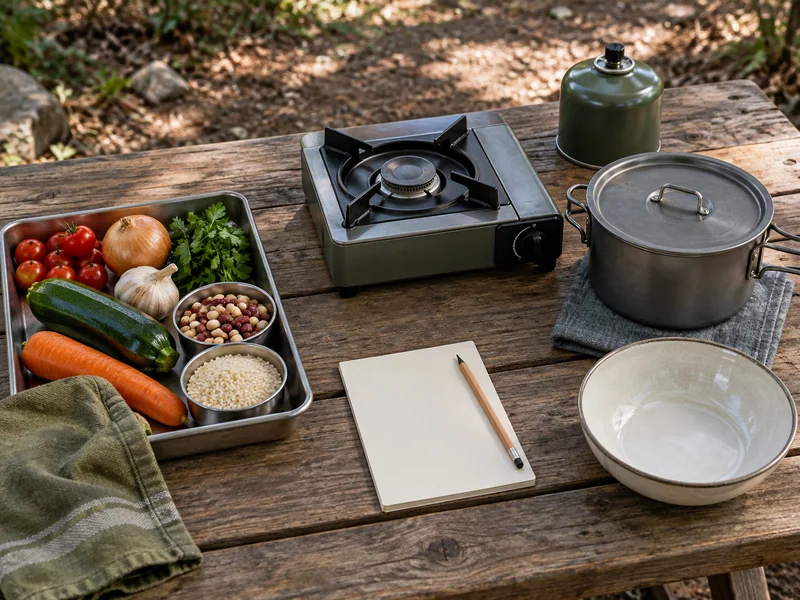
AI-generated illustration: an unlit single-burner stove beside cookware, ingredients and a serving bowl.
Build a one-burner meal around one hot dish, with bread, salad or toppings ready before cooking starts. Compare six meals by their burner jobs, follow worked gnocchi and soup assembly sequences, and decide when a second hot component is worth the extra transfer. Plan serving, cold storage and cleanup alongside the cooking.
Good one-burner camping meals give the flame one job at a time. Cook a hot centerpiece, have the rest of dinner ready to serve, and eat before starting another hot task. Soup with bread, skillet gnocchi with a bean salad, or an egg-and-tomato skillet with flatbread all fit that order.
The difficulty usually appears when a simple meal acquires extras. Rice for the curry, toasted bread for the soup, and a hot drink can each sound reasonable until they all need the same burner. Count those jobs before packing.
These are meal-assembly suggestions, not tested recipes. Use your products’ complete directions or a familiar recipe for quantities, cooking methods and doneness.
Start with one hot dish and a side that needs no heat
Choose the food you most want hot when you sit down, then build the meal around it.
Bread, tortillas served at room temperature, a prepared salad, or a ready-to-eat topping can add substance without a second pan. The side still needs appropriate storage, but it does not need a turn on the flame. A curry with flatbread asks less of one burner than the same curry with separately cooked rice.
One burner and one pot are different limits. Two pans can use one burner in succession, but the first needs somewhere safe to stand. A single pot can require several rounds of cooking, draining and reheating. Check the sequence before deciding how easy a meal will be.
Confirm that your cookware fits the stove’s permitted size and weight, and follow its manual for setup and operation. The camping stove guide covers that equipment decision. Use a portable fuel-burning camp stove outdoors only, never inside a tent, camper or other vehicle. CPSC identifies those enclosed spaces as carbon monoxide hazards, and CDC says never to use a portable gas camp stove indoors.
Choose meals by the job they give the burner
These combinations leave the accompanying food off the stove. Choose amounts for your group and check that the hot portion fits the pan with room to stir or turn it.
| Meal | The burner’s job | Prepare away from the flame | Avoid adding this extra job |
|---|---|---|---|
| Skillet gnocchi with white-bean and tomato salad | Cook gnocchi using a product with skillet directions | Assemble the salad from ready-to-eat beans, tomatoes and dressing | Boiling gnocchi first when the selected product does not require it |
| Lentil soup with bread and a yogurt topping | Heat a fully prepared soup as directed | Portion bread; keep yogurt chilled until serving | Toasting every slice before anyone can eat |
| Tortellini with ready-to-serve pesto and a green salad | Cook tortellini, then drain safely if required | Prepare salad and check that the pesto can be served without cooking | Making a separate hot sauce |
| Egg-and-tomato skillet with flatbread | Cook a complete egg-and-tomato recipe in its specified order | Set out flatbread and ready-to-eat accompaniments | Frying potatoes as a second side |
| Savory oatmeal with cheese and tomatoes | Cook the oats according to their directions | Prepare the toppings and keep cheese cold | Frying a separate topping at the same time |
| Fully prepared chickpea curry with flatbread and cucumber | Heat the curry using its stovetop directions | Portion flatbread and prepare cucumber | Starting a separate pan of rice |
Refrigerated gnocchi, tortellini, yogurt and cheese need reliable cold storage. If your trip depends on pantry food, use the one-pan shelf-stable meal guide to choose ingredients that suit those conditions.
Work through a skillet-gnocchi dinner
For this meal, the gnocchi is hot and the white-bean salad is served cold. Make the salad first and keep the skillet free for its one job.
Before lighting the stove: wash your hands and tomatoes. Prepare ready-to-eat canned white beans and a dressing you enjoy, draining the beans if appropriate. Mix the salad in its serving container, cover it and keep it chilled until dinner. Set out plates, utensils and a heat-safe place for the skillet.
Choose gnocchi explicitly sold with skillet instructions. Giovanni Rana’s Skillet Gnocchi, for example, goes into a buttered skillet without a separate boiling step. It is a refrigerated product. Follow the package you buy, including its required additions; another gnocchi product may have a different method.
While the burner is occupied: cook the gnocchi as directed. Keep the salad separate. Adding it to the skillet would change the cooking method and create a larger hot dish to manage.
When cooking is finished: turn off the stove, put the skillet on the prepared heat-safe surface, and serve the gnocchi with salad alongside. Return unused perishable ingredients to the cooler promptly. Everyone can eat while the skillet begins cooling for washing.
If the gnocchi requires batches, serve each promptly or choose a pot meal when everyone needs to eat together. Extra ingredients do not create more skillet space.
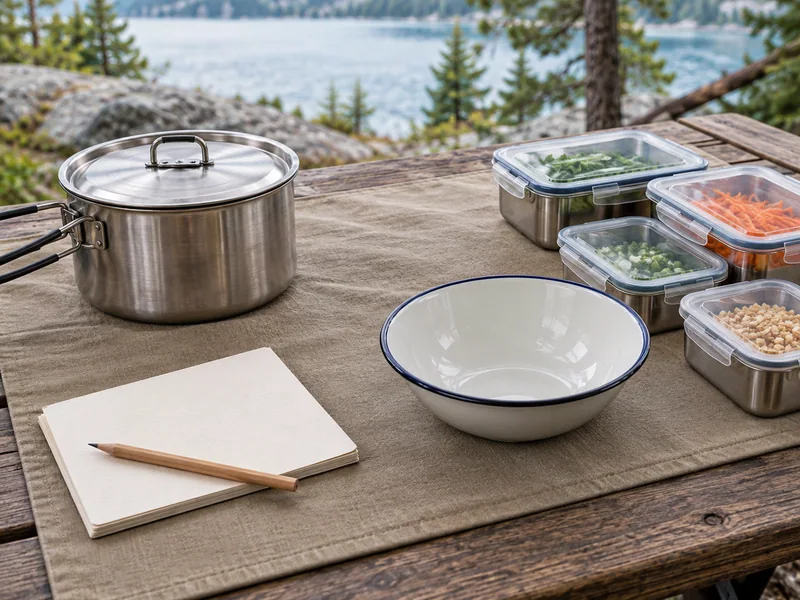
Use the same order for soup, bread and a cold topping
A fully prepared lentil soup gives the burner one continuous task. Bread makes the meal more substantial without another heating step; yogurt and herbs can finish individual bowls.
- Set up the serving area. Put out bowls, spoons and bread. Prepare the herbs and keep the yogurt in the cooler. Check whether the soup needs added water, and measure that before heating.
- Heat the soup. Use its stovetop directions and a suitable pot, stirring as required. A commercially packaged soup follows its own preparation instructions. Homemade soup brought as cooked leftovers must reach 165°F (74°C) throughout when reheated, checked with a thermometer, according to FoodSafety.gov’s temperature chart.
- Finish at the table. Turn off the stove, serve the soup, and bring out only the topping needed for the meal. Add yogurt and herbs to individual bowls. Serve the bread directly from its container.
- Deal with the remainder. Put leftovers in shallow containers and refrigerate promptly if your cooler can maintain a safe temperature. Include the yogurt and any unused soup in that decision.
Toast is optional. If you want it, you have added a cooking stage and possibly another vessel. Decide where it belongs before putting soup on the flame. Otherwise, let the bread do its useful job as it is.
When a second hot component is worth the transfer
You can still cook pasta and sauce or a grain and vegetables on one burner. It takes a deliberate handover: the first component leaves the stove, the second cooks, and the finished food is combined or served promptly.
Read the complete recipe to establish that order. Before cooking, identify the receiving bowl, draining tool, clean serving utensil and landing place for the hot pan. If the first component must remain actively hot while the second cooks, a covered bowl on the table does not solve the problem.
Avoid a menu that depends on guessing how long food will stay hot. Either use a method with appropriate temperature control, serve in rounds, or change the side. Switching rice for flatbread is often a more useful adjustment than adding another pot to the packing list.
Hot drinks count too. Prepare them before the food if you have a suitable insulated container, or make them after dinner. Heating coffee while a finished meal waits turns serving into another changeover.
Keep waiting food in its proper storage
Prepare the cold components first, then return them to the cooler until serving. This clears the preparation area and avoids leaving cheese, yogurt or a prepared salad on the table throughout cooking.
FoodSafety.gov’s four food-safety steps call for cold food at 40°F (4°C) or below, and hot food held after cooking at 140°F (60°C) or above. Refrigerate perishable food within two hours, or within one hour when exposed to temperatures above 90°F (32°C). Discard food that exceeds those limits. A lid helps protect food but does not verify its temperature.
Keep raw meat and its utensils separate from salad ingredients and cooked food. For the egg-and-tomato option, follow a complete recipe and cook eggs until both whites and yolks are firm; FoodSafety.gov lists 160°F (71°C) for egg dishes. Use the safe-temperature chart for any other raw ingredients you add.
The camping food-storage guide covers the cooler and campsite arrangements behind these meal decisions. Keep a separate no-cook backup meal for conditions or restrictions that prevent using the stove outdoors.
Finish serving before starting cleanup water
Set out clean plates before the pan is hot, and leave a clear route between stove and serving area. Keep the landing place stable and heat-safe. Turn off the burner once cooking is complete rather than leaving it running beneath an empty pan while people eat.
After serving, collect food scraps in the appropriate waste container and handle leftovers promptly. Let cookware cool as its care instructions require. Budget potable water for washing as well as cooking, and follow the campground’s dishwashing and wastewater rules.
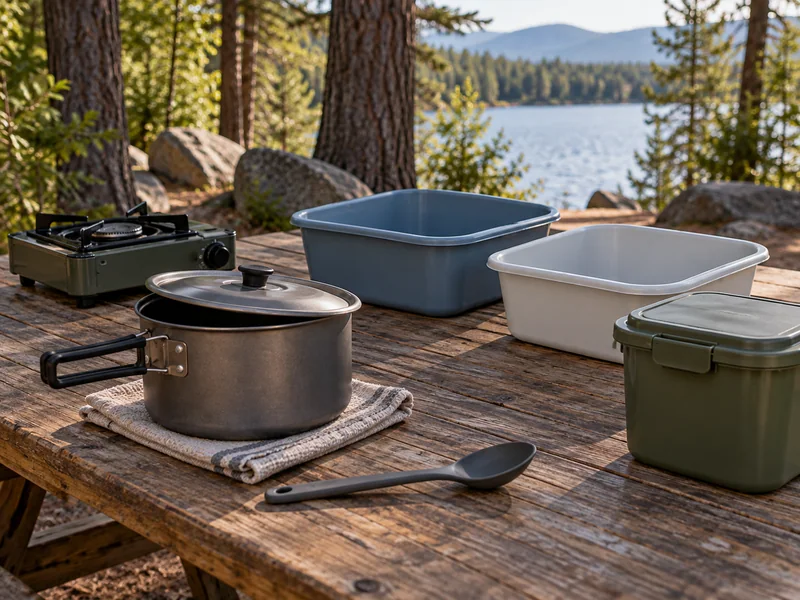
If you need to heat washing water, give that task its own place after the food is served. One cooking pot does not eliminate the bowls, utensils and preparation container. The camp dishwashing guide covers the wash, rinse, drying and disposal setup. NPS recommends cleaning the cooking area as soon as the meal is finished to avoid attracting insects and animals.
Pack a short one-burner meal card
Keep the product directions or recipe with the ingredients, then add a few lines that describe your camp setup:
| Meal decision | Fill in before packing |
|---|---|
| Hot dish and amount | __________ |
| Cold or ready-to-eat sides | __________ |
| Burner order, including any drinks | __________ |
| Pan, lid and safe landing place | __________ |
| Water for cooking and washing | __________ |
| Serving together or in batches | __________ |
| Leftovers, waste and cleanup | __________ |
Read the burner line once more. If it contains two jobs that need to happen together, simplify the meal now, while changing the menu is still easy.
Sources & further reading
Use these original sources for the full context and the latest guidance.
- National Park Service: Cooking in camp (opens in a new tab)
- CPSC: Portable heaters and camping equipment (opens in a new tab)
- CDC: Carbon monoxide poisoning basics (opens in a new tab)
- FoodSafety.gov: Four steps to food safety (opens in a new tab)
- FoodSafety.gov: Safe minimum internal temperatures (opens in a new tab)
- Giovanni Rana: Skillet Gnocchi product and preparation directions (opens in a new tab)
Prepared with AI assistance. Read our editorial approach.
This is a researched planning guide, not a report of a hands-on product test.
Last updated .